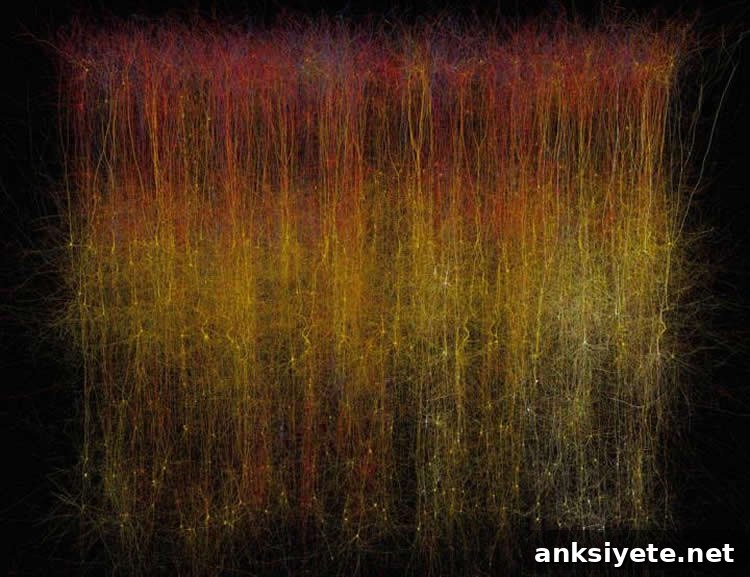
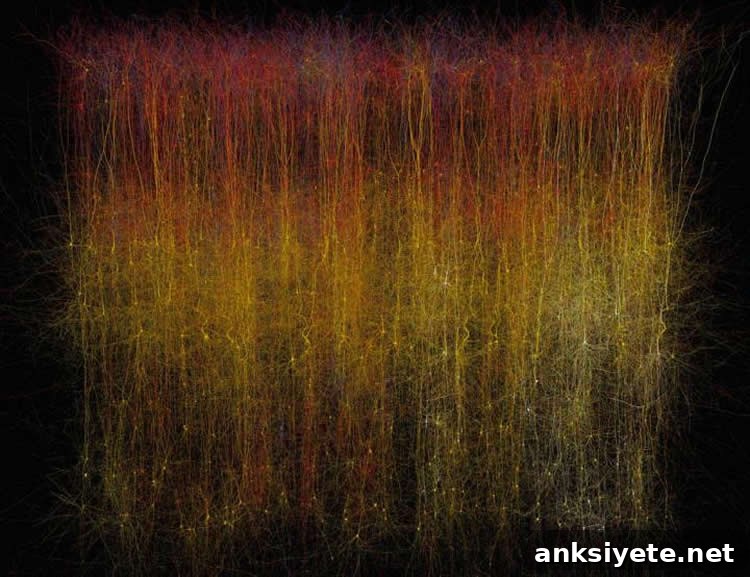
For a decade, the Blue Brain Project at the École Polytechnique Fédérale de Lausanne (EPFL) has pursued a bold engineering approach to understand how brain circuits work by digitally rebuilding a portion of juvenile rat neocortex. On October 8, the team published a first-draft reconstruction in Cell describing a virtual brain slice that captures key anatomical and physiological details: roughly 31,000 neurons, 55 layer-specific morphological types, 207 morpho-electrical neuron subtypes, about 8 million inter-neuronal connections, and nearly 37 million synapses.
Researchers worldwide are engaged in painstaking experiments to classify neuron types, record their electrical behaviors, and trace the web of synaptic connections that form neural circuits. Those experimental data reveal essential building blocks of brain wiring, but obtaining a complete, high-resolution picture that links single-cell properties to circuit-level dynamics remains a formidable challenge. The Blue Brain Project tackles this gap by integrating diverse datasets into a coherent in silico reconstruction that can be probed and simulated at scale.
Led by Henry Markram at EPFL, the team combined anatomical, electrophysiological, and synaptic measurements to algorithmically reconstruct a defined volume of somatosensory cortex. They used objective anatomical criteria to define a neocortical patch of about 0.29 ± 0.01 mm3, populated it with digitally reconstructed neurons representing layer-specific morphologies and electrical behaviors, and constrained synapse formation by biological bouton densities and plausible synapse counts per connection. The result is a detailed virtual microcircuit whose overlapping arbors yield millions of biologically grounded synapses.
“The reconstruction required an enormous number of experiments,” Markram notes. By assembling those data into a single, explicit model, the team created a platform able to predict not only the locations and numbers of synapses but also the distribution of ion currents that flow through them under different conditions.
After assembling the anatomical and physiological model, the researchers ran large-scale simulations on powerful supercomputers to observe circuit dynamics. A striking finding was that modest changes to a single global parameter—extracellular calcium concentration—could shift the network into qualitatively different modes of activity. In particular, altering calcium levels produced transitions between asynchronous firing and slow, synchronous waves of activity similar to patterns seen during sleep. These results show that circuit-level phenomena can emerge from the interaction of many elements and may not be directly predictable from single-neuron properties alone.
Markram likens the phenomenon to a reconfigurable processor: the same hardware can adopt different modes to prioritize distinct computational strategies. The discovery of a spectrum of network states with a sharp transition between synchronous and asynchronous regimes suggests new questions about how the brain flexibly switches modes and how dysregulation of those state transitions could relate to behavior and pathology. For example, the authors propose that state changes triggered by stress hormones could help explain shifts in attention and behavior associated with fight-or-flight responses.
The Blue Brain Project intends to refine and extend this model while continuing to test hypotheses about state-dependent computation in cortical circuits. All model components, data, and simulation results reported in the study have been made available to the scientific community to enable further validation and exploration: bbp.epfl.ch/nmc-portal.
About this neuroscience research
Funding: The work was primarily supported by EPFL, the ETH Domain, and the European Union Seventh Framework Program.
Source: Joseph Caputo – Cell Press
Image Credit: Image credited to Markram et al., Cell 2015
Original Research: Abstract for “Reconstruction and Simulation of Neocortical Microcircuitry” by Henry Markram et al., Cell. Published online September 11, 2015. DOI: 10.1016/j.cell.2015.09.029
Abstract
Reconstruction and Simulation of Neocortical Microcircuitry
Highlights
• The Blue Brain Project digitally reconstructs and simulates a portion of neocortex.
• Interdependencies between structure and function allow dense in silico reconstruction from sparse experimental measurements.
• Simulations reproduce a range of in vitro and in vivo experimental observations without manual parameter tuning.
• The neocortical microcircuit can dynamically reconfigure to support diverse information-processing strategies.
Summary
This paper presents a first-draft digital reconstruction of juvenile rat somatosensory cortex microcircuitry. By applying cellular and synaptic organizing principles, the authors algorithmically reconstruct detailed anatomy and physiology from limited experimental samples. An objective anatomical method defines a neocortical volume of approximately 0.29 ± 0.01 mm3 containing about 31,000 neurons. Patch-clamp and morphological studies identify 55 layer-specific morphological neuron categories and 207 morpho-electrical neuron subtypes. When digitally reconstructed neurons are placed in the modeled volume and synapse formation is restricted by biological bouton densities and realistic numbers of synapses per connection, overlapping arbors yield roughly 8 million connections and nearly 37 million synapses. Large-scale simulations reproduce many experimental findings recorded in vitro and in vivo without parameter tuning. The team reports a spectrum of network states, with a sharp transition from synchronous to asynchronous activity modulated by physiological mechanisms. Reconfiguration around this transition supports a variety of information-processing strategies.
“Reconstruction and Simulation of Neocortical Microcircuitry” by Henry Markram et al., Cell. Published online September 11, 2015. DOI: 10.1016/j.cell.2015.09.029