
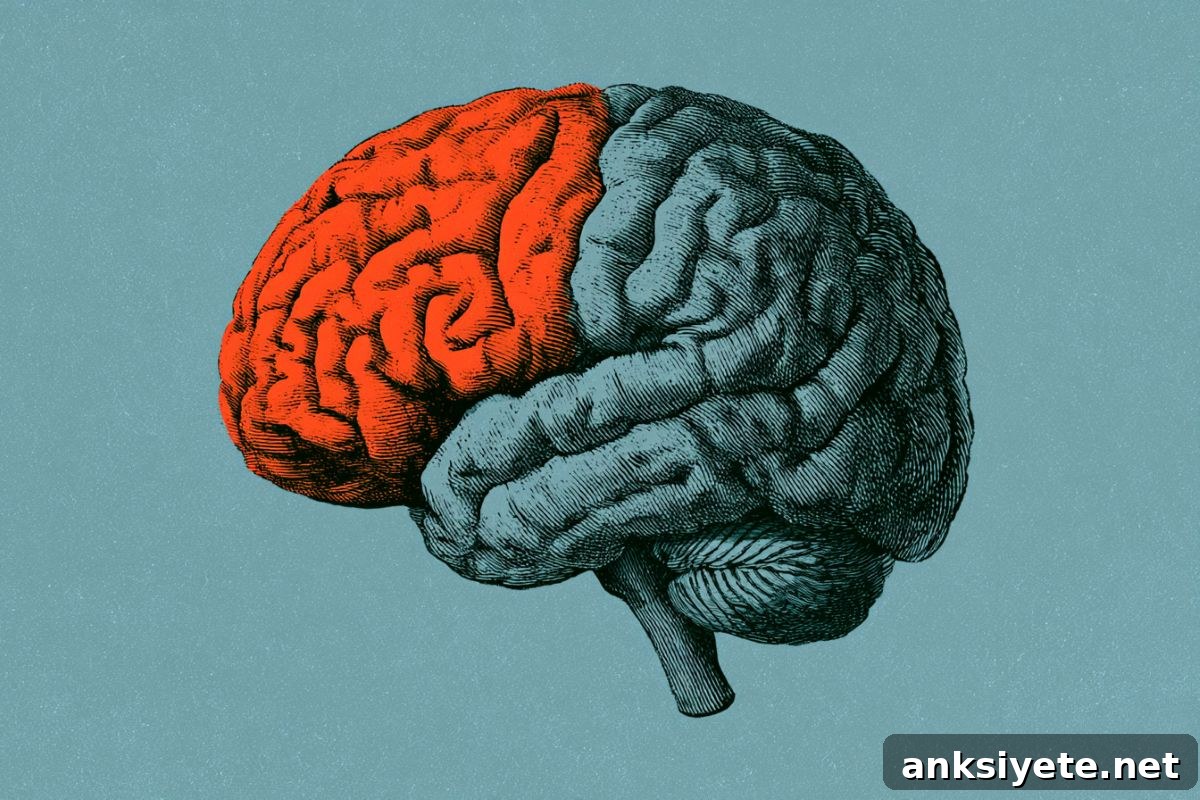
Summary: Researchers have identified an unexpected role for the medial prefrontal cortex (mPFC). Rather than always promoting behavioral flexibility, this brain region can sometimes hinder problem-solving by anchoring animals to a memory-driven default strategy — a “win-stay” habit that keeps mice returning to where they last found a pup instead of switching to a more reliable sensory cue.
Using a naturalistic pup-retrieval task in a T-maze, scientists tracked how female mice learn to override that default and adopt a superior, sound-guided strategy. When the mPFC was chemogenetically silenced, mice abandoned the habit and learned the auditory cue significantly faster: most animals shifted in two to three days versus up to eight days for control groups.
These results indicate that adopting new, sensory-driven strategies sometimes requires quieting an executive brain region that favors past experience. The work offers fresh perspectives on executive function, neurodiversity and potential approaches to cognitive disorders.
Key Facts
- Revising prefrontal assumptions: The prefrontal cortex, often portrayed as the brain’s hub for flexible thinking, can in some contexts block the adoption of more efficient, creative solutions.
- Default memory-based “win-stay” behavior: Unstressed adult female mice naturally return to the location where they last retrieved a pup, relying on memory instead of present sensory information.
- Faster learning when mPFC is silenced: Inactivating the medial prefrontal cortex accelerated the shift to a sound-guided search strategy, typically within two to three days versus four to eight days in control animals.
- Essential role of auditory cortex: Disabling auditory cortex activity selectively impaired acquisition of the sound cue and left animals stuck in the win-stay strategy even after extended training.
- Translational potential: The Liu Lab is extending these findings to autism-model mice and exploring non-invasive modulation of mPFC activity in humans as a possible way to improve therapies for executive-function disorders.
Source: Emory University
The prefrontal cortex, a region widely linked to flexible learning, can sometimes prevent animals from adopting better problem-solving strategies, according to a new mouse study published in Science Advances by researchers at Emory University.
“This was surprising,” says Robert Liu, senior author and professor of biology. “For this ethological behavior, the prefrontal cortex actually prevents mice from switching to a better strategy. In other words, thinking outside the box may require suppressing this executive region.”
The finding refines our understanding of how the prefrontal cortex balances past experience with present sensory information — a balance that matters for human neurodiversity and cognitive disorders characterized by rigid or repetitive thinking.
Focusing on the present
Animals and humans often default to strategies that worked in the past — a so-called win-stay approach. When a more effective option appears, the challenge is to override the old habit and adopt the new behavior. The authors liken this to learning a game: novices may rely on memory and calculation, but skilled players adapt moment-to-moment by reading subtle sensory cues.
Studying an ethological task
The Liu Lab studies how stimulus-driven behaviors arise and change, using sound cues in rodents and combining experimental, computational and chemogenetic methods. Instead of imposing arbitrary training rules, the team focused on a natural behavior: female mice retrieving displaced pups and returning them to the nest.
Female mice typically search where they last found a pup. However, they can learn to follow a consistent auditory cue that indicates the pup’s location, a strategy that is faster and more reliable once learned.
Experimental approach and neural recordings
Researchers trained adult female mice in a T-shaped maze. Mice began in a “nest” at the base of the T while an artificial sound signaled which arm contained a pup reward. Initially, animals defaulted to the win-stay location regardless of the sound. Over repeated trials, they gradually learned to use the sound to choose correctly and retrieve the pup faster. In one group, half the mice made the switch by day four and all had learned by day eight.
To measure brain activity, the team implanted silicon probes in the auditory cortex and the medial prefrontal cortex, recording neuronal firing as mice performed the task.
Targeted silencing reveals competing roles
Using chemogenetic techniques, the researchers silenced either the auditory cortex or the mPFC in different cohorts. Disabling auditory cortex impaired — but did not erase — sound learning, leaving some mice stuck in the win-stay strategy even after extended training. By contrast, silencing the mPFC accelerated the switch to sound-guided behavior, with many mice adopting the auditory strategy within two to three days.
When mPFC activity was restored, mice reverted to the default strategy, confirming that the mPFC actively supports the win-stay habit rather than enabling the newer sensory-guided approach.
Implications: overcoming entrenched habits
The work suggests that learning a better strategy can require overcoming a brain system that maintains established habits. The authors propose that the mPFC biases attention toward prior experience or planning, which can interfere with focusing on immediate sensory signals. As one researcher notes, learning to suppress rumination and attend to a cue is akin to shifting attention from past or future thoughts to the present moment.
The Liu Lab is extending these experiments to mouse models carrying genetic markers linked to autism and collaborating with colleagues to test analogous paradigms in adult humans using non-invasive methods such as transcranial magnetic stimulation (TMS) to modulate prefrontal activity.
“Our goal is to explore whether modulating the balance between prefrontal control and sensory-driven processing could inform therapeutic approaches for disorders involving rigid thinking and impaired executive function,” Liu says.
Co-authors include Kelvin Wong, Chengcheng Yang, Lin Zhou, Yike Shi and Maya Costello.
Funding: Supported by grants from the U.S. National Institutes of Health (R01DC008343, P50MH100023).
Key Questions Answered:
A: Rather than always promoting flexible behavior, the medial prefrontal cortex can enforce a memory-driven default strategy (win-stay) and thereby suppress the adoption of more efficient, stimulus-guided solutions.
A: Surprisingly, silencing the mPFC accelerated learning: mice abandoned the inefficient default and learned to follow an auditory cue within two to three days, compared with four to eight days for control animals.
A: The study suggests that reducing prefrontal dominance could help the brain attend to immediate environmental cues instead of entrenched habits or rumination. This insight points to potential interventions — including non-invasive brain stimulation — to improve executive function in certain cognitive disorders.
Editorial Notes:
- This article was edited by a Neuroscience News editor.
- The underlying journal paper was reviewed in full.
- Additional context was provided by the editorial staff.
About this neuroscience research news
Author: Carol Clark
Source: Emory University
Contact: Carol Clark – Emory University
Image: The image is credited to Neuroscience News
Original Research: Open access. “Neural competition between prefrontal and auditory cortex constrains novel sound strategy learning” by Kai Lu, Kelvin T. Wong, Chengcheng J. Yang, Lin N. Zhou, Yike T. Shi, Maya L. Costello, Robert C. Liu. Science Advances.
DOI: 10.1126/sciadv.aeb3005
Abstract
Neural competition between prefrontal and auditory cortex constrains novel sound strategy learning
Animals often replace predisposed behaviors with new strategies, but the neural limits on such transitions are not fully understood. Using an ethological search task, the study reveals medial prefrontal cortex (mPFC) activity correlated with a predisposed win-stay strategy that declines as animals learn to follow a more reliable auditory cue.
Auditory cortex (ACx) activity predicts correct sound-guided choices from the first day of training, and this predictive coding strengthens with learning. ACx contributions to improved performance were confirmed by chemogenetic disruption.
Unexpectedly, global silencing of mPFC sped successful adoption of sound-tracking, challenging its canonical role in flexible, stimulus-dependent behavior. A decentralized competition model between multiple neural experts best accounts for the observed behavior and causal perturbations.
These findings indicate that the mPFC enacts a default strategy based on prior knowledge, which can actively impede the expression of more efficient, sensory-guided strategies.