
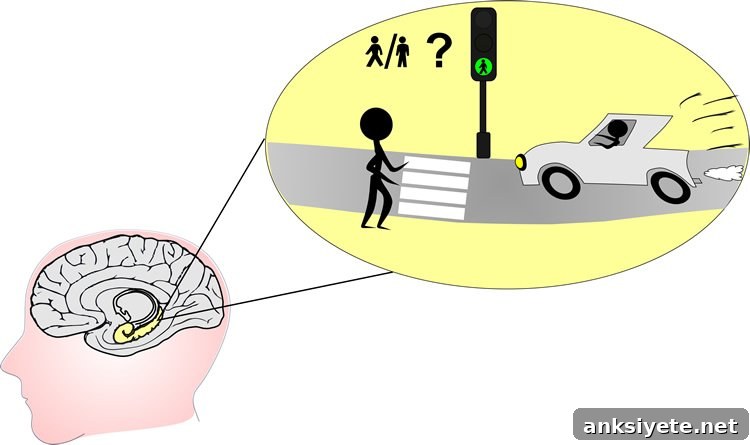
The hippocampus, a structure located in the temporal lobe, does more than support long-term memory. For the first time, researchers have shown that it also plays an active role in rapid and successful resolution of response conflicts. This discovery comes from a team led by Dr. Nikolai Axmacher at Ruhr-Universität Bochum, working with collaborators in Bonn, Aachen, and Birmingham, and was reported in the journal Current Biology.
Everyday decision conflicts and the experimental task
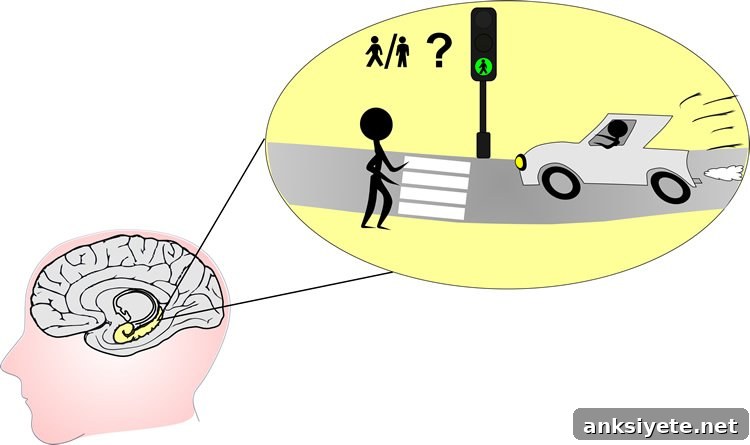
People encounter decision conflicts constantly in daily life, particularly when an automatic or habitual response must be suppressed because the situation requires a different action. For example, a pedestrian normally steps forward when the light turns green, but if a speeding car appears, they must inhibit that instinct and remain still. To study such response conflicts under controlled conditions, the researchers used an auditory conflict task. Participants heard the words “high” or “low” spoken in either a high or low pitch and were instructed to report the pitch of the voice regardless of the word’s meaning. When the spoken word’s meaning and pitch were mismatched, a conflict arose: responses became slower and more error-prone, mirroring the behavioral signatures of conflict in everyday decisions.
Converging evidence from fMRI and intracranial EEG
The team tested the same hypothesis with two complementary neurophysiological methods to ensure robust results. In healthy volunteers, they measured brain activity using functional magnetic resonance imaging (fMRI) and found hippocampal activation during conflicting trials. To test whether the hippocampus itself produced relevant electrical signals, the researchers also analyzed intracranial electroencephalography (iEEG) recorded from epilepsy patients who had electrodes implanted in the hippocampus for clinical monitoring. Both approaches converged: hippocampal activity increased in response to conflict, particularly when participants resolved the conflict quickly and accurately.
Implications for memory and learning from resolved conflicts
Because the hippocampus is central to memory formation, the authors consider how its involvement in conflict processing might relate to learning. Carina Oehrn from the Department of Epileptology at the University Hospital of Bonn emphasizes that these data reveal a previously unrecognized function of the hippocampus: processing activity conflicts. The team proposes that the hippocampus may be engaged selectively when conflicts are resolved, allowing the memory system to encode useful information for future behavior. As Nikolai Axmacher explains, ongoing unresolved conflicts are less useful as sources for learning; the brain may act like a filter that responds strongly to resolved conflicts but not to unresolved or routine situations. The researchers stress that this is a hypothesis requiring further experimental verification.
Source: Dr. Nikolai Axmacher — Ruhr-Universität Bochum
Image Source: Image credit: RUB/Bierstedt
Original Research: Abstract for “Human Hippocampal Dynamics during Response Conflict” by Carina R. Oehrn, Conrad Baumann, Juergen Fell, Hweeling Lee, Henrik Kessler, Ute Habel, Simon Hanslmayr, and Nikolai Axmacher in Current Biology. Published online August 20, 2015. doi:10.1016/j.cub.2015.07.032
Abstract
Human Hippocampal Dynamics during Response Conflict
Highlights
• Hippocampal iEEG and BOLD signals increase during response conflicts in humans.
• Theta-band hippocampal oscillations (3–8 Hz) predict behavioral performance during conflict resolution.
• Conflict-related effects in the medial temporal lobe appear to be specific to the hippocampus.
• These results indicate a functional role for the hippocampus beyond declarative memory and spatial navigation.
Summary
The hippocampus is well known for supporting declarative memory, but previous work has also linked it to detecting unexpected contextual changes and distinguishing similar inputs. Conflicts can emerge at multiple levels, from perception to response selection. Animal studies have suggested that the hippocampus contributes to inhibiting dominant response tendencies and suppressing automatic stimulus-response mappings, potentially through increases in theta oscillations. To investigate whether the hippocampus plays a similar role in human cognitive response conflicts, the researchers combined intracranial EEG recordings from hippocampal electrodes in epilepsy patients with region-of-interest fMRI in healthy participants performing a Stroop-like task. Both recording methods provided convergent evidence that the hippocampus is recruited in a regionally specific way during response conflict. Intracranial recordings further showed that hippocampal theta oscillations underlie this activation and relate to successful conflict resolution, supporting a broader role for the hippocampus in adaptive behavior.
“Human Hippocampal Dynamics during Response Conflict” by Carina R. Oehrn et al., Current Biology. Published online August 20, 2015. doi:10.1016/j.cub.2015.07.032