
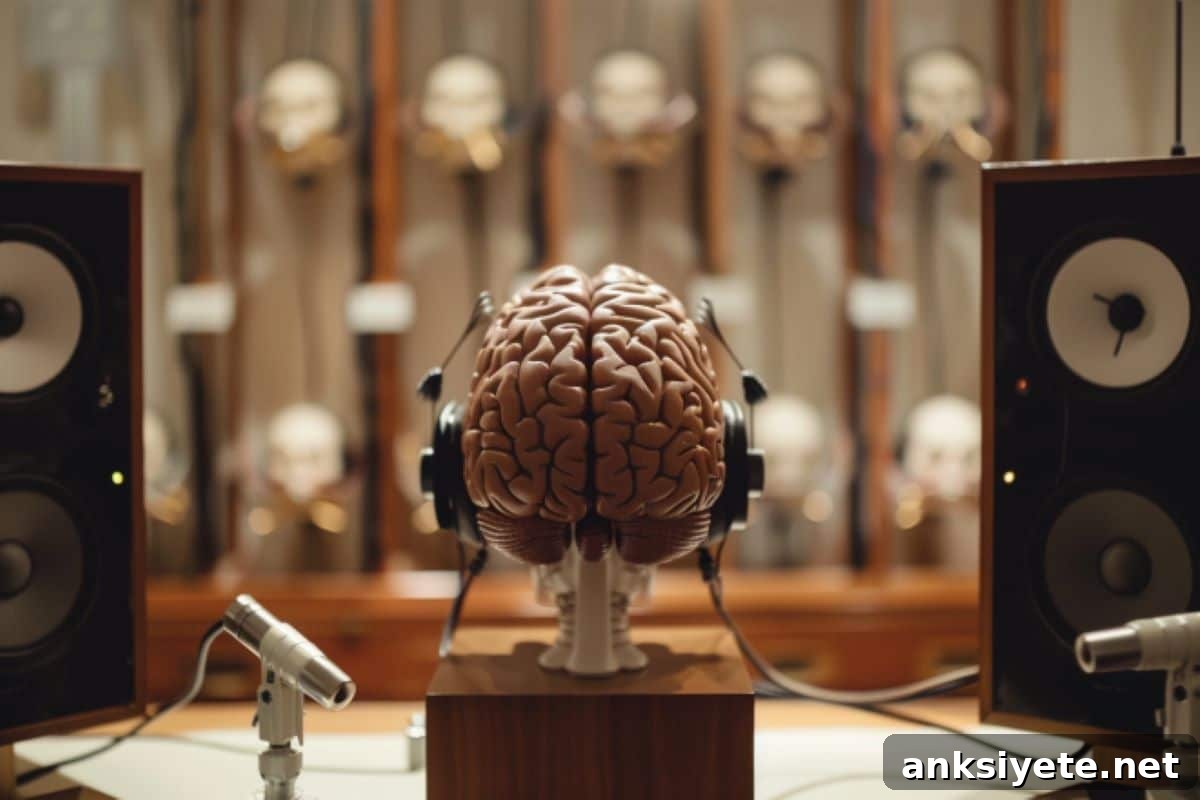
Summary: Scientists have uncovered how the brain converts sounds into actions, advancing our understanding of sensory decision-making. Their study shows that both sound-related and future action–related signals coexist across the cortex, challenging the idea that sensory and motor cortical areas are strictly separate in function.
Using a carefully designed behavioral task in mice, the research team separated neural activity tied to hearing from activity tied to choosing and preparing an action. These results clarify when and where sensory and choice signals appear in the auditory cortex and suggest how higher brain regions shape those signals.
Key facts:
- The cortex represents sensory inputs and action-related information, and movement-linked signals can appear within sensory regions.
- A novel two-choice auditory discrimination task with a delay allowed researchers to disentangle stimulus-driven responses from decision-related activity in mice.
- Choice-related signals in the auditory cortex emerge later than sensory responses, are concentrated in deeper cortical layers, and are likely shaped by feedback from higher motor or planning areas rather than directly causing the action.
Source: Champalimaud Centre for the Unknown
You hear a ring, a bark, or footsteps. Is it yours or someone else’s? Friend or stranger? The choices you make in those moments determine what you do next.
Researchers at the Champalimaud Foundation have taken a major step toward explaining how the brain turns auditory perceptions into actions. Their work illuminates how sensory evidence and behavioral choices are represented across the layers of cortex that process sound.
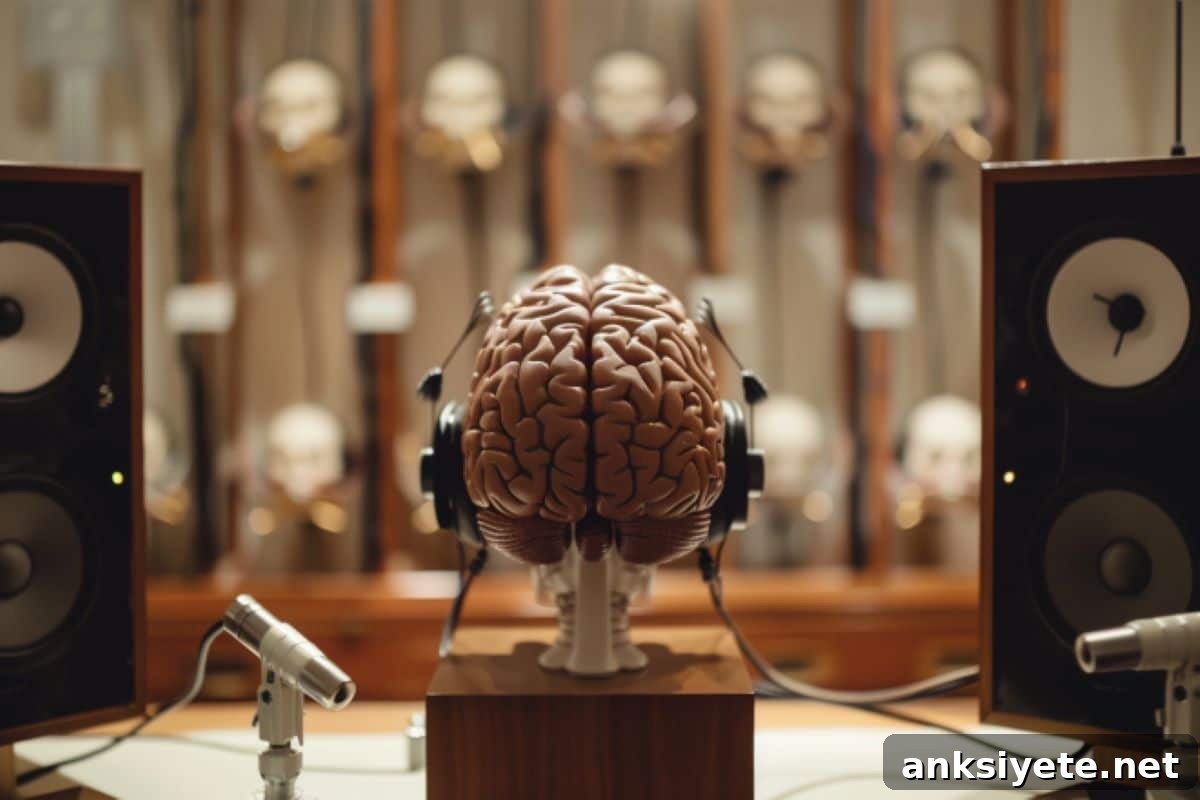
Every day we make split-second decisions based on sound without thinking about the neural processes involved. The new study from the Renart Lab, published in Current Biology, probes those processes by tracking neural activity across cortical layers while mice perform a controlled auditory discrimination task.
The cortex is organized into layers with distinct inputs and outputs. Sensory layers receive incoming signals about the world, while other layers are better connected to downstream motor structures. Previously, movement-related signals observed in sensory cortex raised the question: are these signals driving behavior, or are they feedback from decision-making centers?
Designing a task to separate sound from choice
To untangle sensory signals from decision signals, the team developed a two-choice auditory task for mice. Instead of a simple Go/No-Go paradigm, which confounds action with inaction, mice learned to compare tones to a frequency threshold and indicate their choice by licking one of two spouts—left or right.
A critical element was a half-second delay between the sound and the permitted response. This delay forced the animals to withhold immediate action, creating a window to observe how stimulus-related activity decays and how choice-related signals emerge before movement.
The experiment was also calibrated to produce some errors. Allowing mistakes ensured that identical sounds could sometimes lead to different choices, making it possible to distinguish neurons that encoded the sensory stimulus from those that reflected the animal’s eventual choice.
Layer-specific recordings reveal distinct dynamics
After extensive training, the researchers recorded neural activity simultaneously across all six layers of the auditory cortex as mice performed the task. They found clear temporal and spatial differences between stimulus- and choice-related signals.
Sound-driven responses were rapid and widespread across layers but short-lived, fading roughly 400 milliseconds after the tone ended. By contrast, choice-related activity appeared later—during the delay before the response—and was concentrated in the deep cortical layers, which are known to send signals to motor-related structures.
Intriguingly, neurons tuned to particular sound frequencies tended to become more active for the action associated with those frequencies. This relationship was not fixed: across animals, the same neuron could be more active for leftward or rightward licks depending on the sound–action mapping learned during training. That suggests these choice signals are learned representations reflecting task contingencies rather than hardwired links between stimulus and action.
Where do choice signals come from, and what do they do?
The delayed emergence of choice signals and their deep-layer localization point to a top-down origin: higher brain regions involved in planning or selecting actions likely compute the decision and feed that information back to the auditory cortex. Early sensory responses in the auditory cortex did not reliably predict the animal’s choice, supporting the view that stimulus encoding there is not the direct cause of the behavioral decision.
If these movement-related signals are not driving behavior, they may serve other functions. They could help align sensory representations with an unfolding decision, stabilizing perception as an action is prepared. Alternatively, they might prepare the cortex for expected sensory consequences of movement—filtering out predictable self-generated sounds so that unexpected external sounds stand out.
The study does not rule out a causal role for auditory cortex activity in behavior—especially since deep-layer neurons project to regions like the posterior striatum, which contributes to action selection and habits. Future experiments will aim to trace the precise pathways that generate choice signals and to test whether manipulating these signals changes behavior.
For now, this work adds an important piece to the puzzle of how perception becomes action and reveals how sensory and choice information coexist and interact across cortical layers when an animal decides how to respond to sound.
About this auditory neuroscience research news
Author: Hedi Young
Source: Champalimaud Centre for the Unknown
Contact: Hedi Young – Champalimaud Centre for the Unknown
Image: The image is credited to Neuroscience News
Original Research: Open access. “Differential representation of sensory information and behavioral choice across layers of the mouse auditory cortex” by Raphael Steinfeld et al. Current Biology
Abstract
Differential representation of sensory information and behavioral choice across layers of the mouse auditory cortex
Highlights
- Stimulus-related information is distributed across cortical layers but is transient, vanishing within a few hundred milliseconds after the sound.
- Choice-related information emerges later in time and is localized to the deep layers of the auditory cortex.
- Choice signals reflect learned task contingencies, indicating they develop with experience rather than being innate sensory responses.
- Correlations between early stimulus-selective and late choice-selective ensembles suggest choice signals reflect the sensory–motor mapping required by the task and arrive via feedback pathways.
Summary
Neural activity in sensory cortex sometimes correlates with upcoming choices during decision tasks, but the prevalence, origin, and role of these choice-related signals are debated. Understanding how decision signals are routed through cortical layers requires recordings that capture activity across those layers during behavior. This study provides such recordings from the mouse auditory cortex during a delayed two-choice frequency discrimination task that depends on auditory cortex function.
The results show that stimulus information is brief and widespread, while choice selectivity arises later and only in deep layers, consistent with a top-down source. Moreover, the relation between stimulus and choice ensembles indicates that the feedback arriving in auditory cortex reflects the learned mapping between sounds and actions imposed by the task.