
Summary: Researchers are developing mathematical and data-driven models to translate the brain’s complex dynamics into interpretable representations, with the goal of improving our understanding of human cognition and neurological health.
Source: Rensselaer Polytechnic Institute
Translating Brain Activity into Data Models
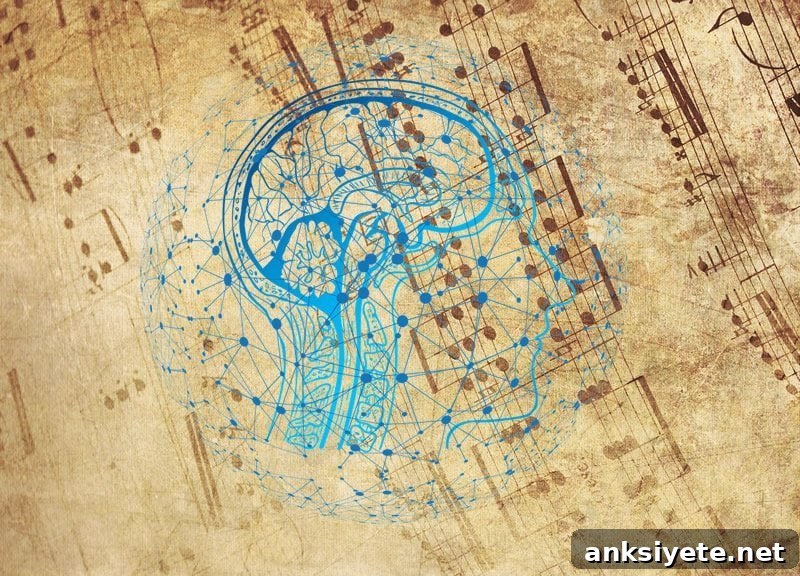
When Sergio Pequito envisions the brain, he imagines a piano: each key corresponds to a distinct region or circuit, and the pressure of a pianist’s fingers represents the external stimuli and internal drives that shape neural activity. This metaphor captures the core idea guiding his research — that the rich, coordinated activity of the brain can be represented, analyzed, and ultimately better understood through structured mathematical models.
Pequito, an assistant professor of industrial and systems engineering at Rensselaer Polytechnic Institute, leads a team working to transcribe the brain’s dynamic behavior into new data models. Supported by a grant from the National Science Foundation, the effort aims to convert time-varying brain signals into compact, interpretable representations that reveal intrinsic features of neural function across space and time.
“By thinking of brain activity in this way, we have been able to mimic and capture sizable portions of neural dynamics,” Pequito said. “The mathematical frameworks and models we are developing help isolate the underlying patterns that drive how the brain behaves during different tasks and states.”
Using Public fMRI Data to Build and Validate Models
The research team will leverage publicly available functional magnetic resonance imaging (fMRI) data provided by the National Institutes of Health to refine and validate their models. fMRI measures changes in blood flow and oxygenation associated with neural activity, offering a noninvasive window into which regions become active during cognitive tasks or at rest. By applying systems-engineering tools to this data, the researchers aim to identify consistent, reproducible dynamics that characterize healthy brain function as well as deviations associated with neurological conditions.
With collaborators, including researchers from the University of Southern California, the team will combine domain knowledge from neuroscience with tools from control theory, network analysis, and systems engineering. The interdisciplinary approach seeks to reveal how different brain regions interact, how activity propagates across networks, and how external inputs or internal states modulate that activity.
Interpreting Deviations and Diagnosing Dysfunction
Extending the piano metaphor, Pequito explains that a pianist hitting an unexpected key or applying unequal pressure can produce dissonance — similarly, deviations from the expected dynamics in the brain’s activity could indicate dysfunction or disease. The models are designed to detect such departures from normative patterns, offering a principled way to flag atypical behavior in neural signals and to characterize the nature of those anomalies.
By identifying intrinsic features of brain dynamics, these models could contribute to multiple areas: advancing basic neuroscience understanding of processes like attention, learning, memory, decision-making, and language; informing clinical research on neurological and psychiatric disorders; and guiding efforts to reverse-engineer aspects of human cognition to inspire new technologies. Improving our mathematical descriptions of neural systems also aligns with broader engineering goals, including challenges highlighted by the National Academy of Engineering.
Industrial and Systems Engineering Meets Neuroscience
Industrial and systems engineers specialize in analyzing complex, interconnected systems and devising tools to model, control, and optimize their behavior. Pequito and his colleagues apply these perspectives to brain data, adapting and extending algorithms so they are suitable for the high-dimensional, noisy, and time-dependent nature of neural signals. The result is a set of models and computational methods designed to offer clear, testable hypotheses about brain function that neuroscientists and clinicians can use.
“We have many analytical tools in systems engineering that are powerful when applied to complex systems,” Pequito said. “Our current work focuses on tailoring and improving those tools to provide actionable insights for the neuroscience and medical communities.”
Source:
Rensselaer Polytechnic Institute
Media Contacts:
Reeve Hamilton – Rensselaer Polytechnic Institute
Image Source:
The image is in the public domain.