
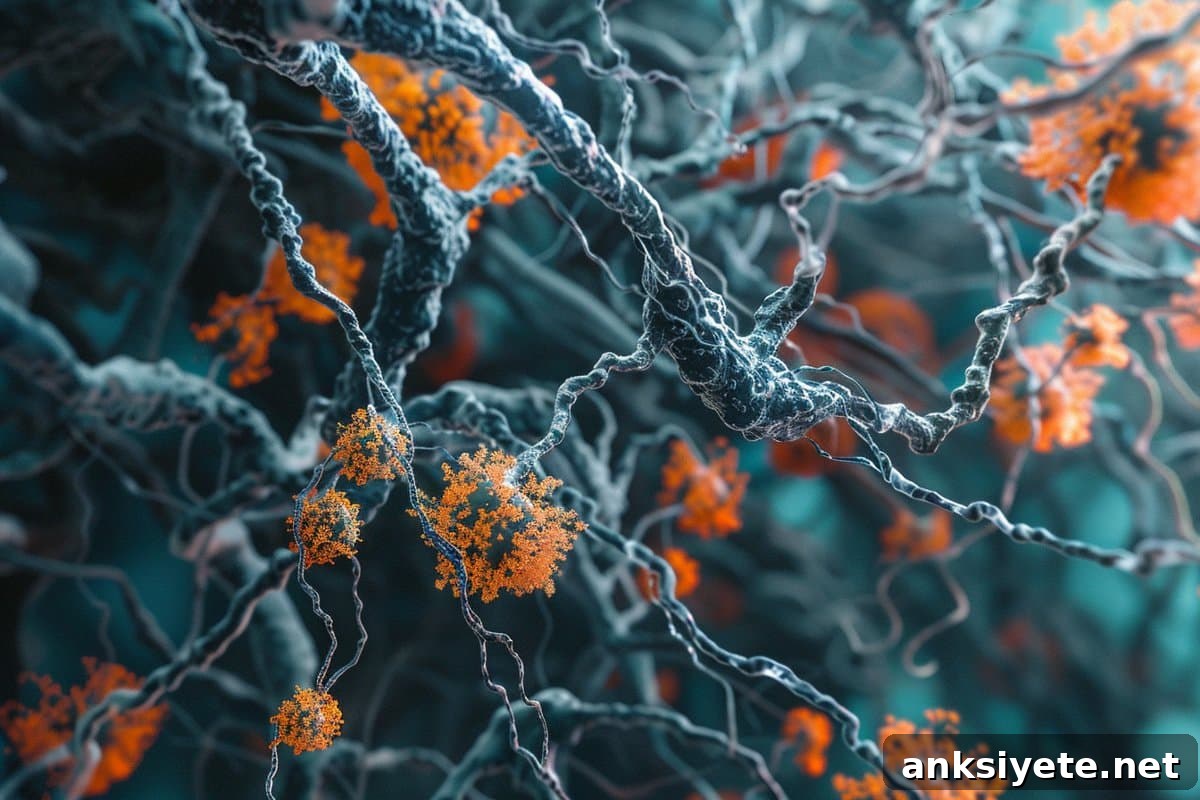
Summary: Researchers at Tokyo Metropolitan University have identified a mechanism that links loss of axonal mitochondria to harmful protein accumulation in neurons — a signature feature of neurodegenerative diseases such as Alzheimer’s and ALS. Using Drosophila (fruit flies), the team traced this effect to dysregulation of the translation initiation factor eIF2β, and showed that restoring normal eIF2β levels rescues cellular protein recycling and improves neuronal function. These results point to new therapeutic directions focused on mitochondrial distribution, proteostasis, and regulation of eIF2β.
The study connects several core processes: mitochondrial transport and distribution in axons, autophagy-mediated protein degradation, and translational control via the eIF2 complex. By showing that depletion of axonal mitochondria causes autophagic failure and abnormal protein buildup through upregulation of eIF2β, the findings identify a mitochondria–eIF2β axis that helps maintain neuronal proteostasis during aging.
Key Facts:
- Depletion of mitochondria in neuronal axons triggers abnormal protein accumulation and autophagy defects—pathological features common to Alzheimer’s disease and other neurodegenerative disorders.
- The protein eIF2β, a subunit of the eIF2 translation-initiation complex, is upregulated when axonal mitochondria are depleted; reducing eIF2β levels restores autophagy and improves neuronal function.
- These conclusions arise from genetic experiments in Drosophila and suggest therapeutic strategies that target mitochondrial trafficking, axonal mitochondrial health, or translational control to preserve proteostasis in aging neurons.
Source: Tokyo Metropolitan University
Researchers from Tokyo Metropolitan University used fruit fly genetics to show how reductions in axonal mitochondria lead directly to harmful protein accumulation in neurons — a hallmark of neurodegenerative diseases.
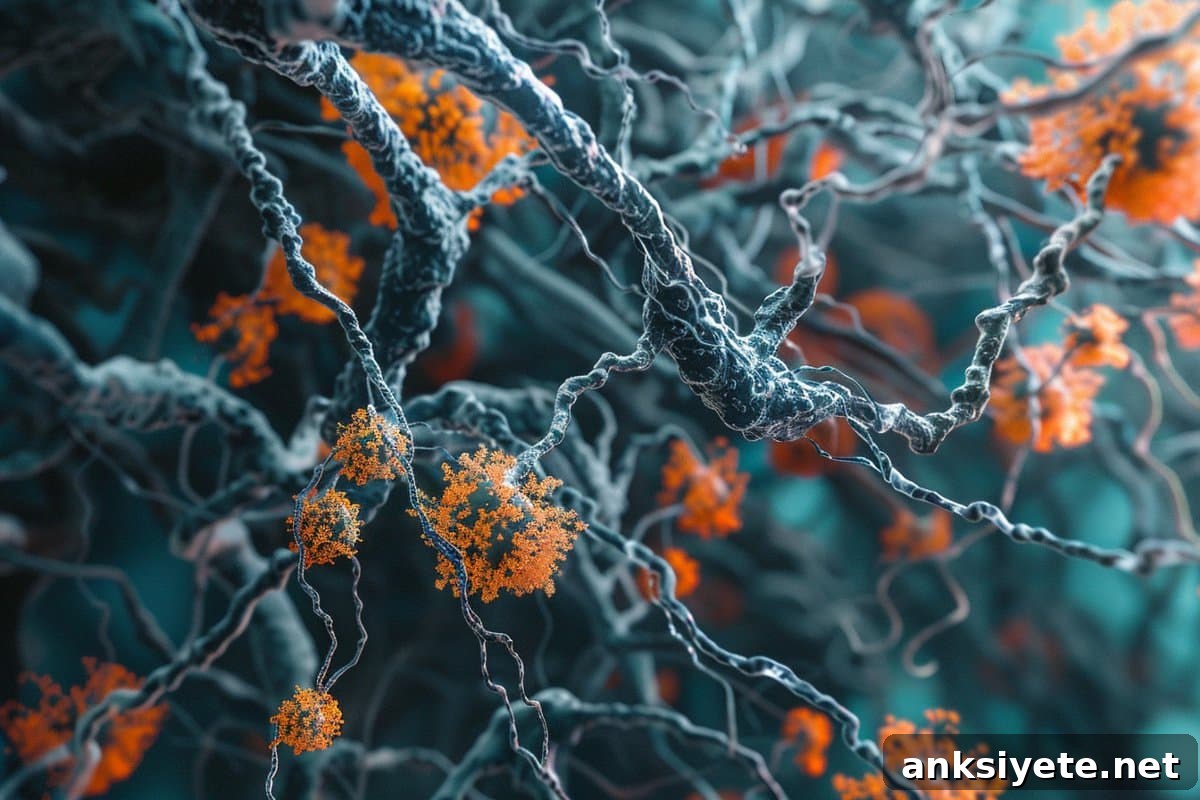
Cells constantly synthesize and degrade proteins to maintain proteostasis. When either production or clearance is disrupted, proteins can accumulate and form toxic deposits that impair cell function. In neurons, which depend on long axons to transmit signals, maintaining localized protein turnover and organelle supply is critical. Age-related decline in axonal mitochondrial content and defects in mitochondrial transport have been observed in many neurodegenerative conditions, but the causal links to proteostasis failure were not fully understood.
To address this, the research team led by Associate Professor Kanae Ando used the genetically tractable Drosophila model. Fruit flies share many conserved cellular pathways with mammals, making them a powerful system to manipulate specific genes and observe the cellular consequences in vivo.
The investigators specifically impaired mitochondrial transport into axons by genetically suppressing milton, a protein essential for moving mitochondria along microtubules. Axons lacking normal mitochondrial coverage developed abnormal accumulations of protein and showed defects in autophagy, the primary intracellular pathway for recycling damaged proteins and organelles. Importantly, simply lowering neuronal ATP by inhibiting glycolysis did not reproduce the autophagy defects, indicating the problem stems from mitochondrial distribution within the axon rather than a general shortage of cellular energy.
Proteomic analysis revealed a pronounced increase in eIF2β, a subunit of the eIF2 complex that governs the initiation of translation. Concurrently, eIF2α — another eIF2 subunit — showed altered phosphorylation status, and global translation was suppressed. These combined changes impair proper translation initiation and are associated with disrupted protein homeostasis.
Crucially, when researchers reduced neuronal eIF2β levels experimentally, autophagy recovered and neuronal functions that had been impaired by axonal mitochondrial loss were partially restored. Conversely, overexpressing eIF2β in neurons reproduced the autophagic defects and dysfunctions observed with mitochondrial depletion. Together, these manipulations demonstrate that upregulation of eIF2β is a key mediator linking axonal mitochondrial loss to proteostasis collapse.
This work highlights the importance of maintaining mitochondrial distribution along axons to preserve local proteostasis, and it identifies eIF2β as a potential molecular target for therapies aiming to slow or reverse protein accumulation in age-related neurodegenerative diseases. While further studies in mammalian systems and human tissues are needed, the Drosophila results provide a clear mechanistic framework for future drug discovery and intervention strategies focused on mitochondrial trafficking and translational control.
Funding: This research was supported by a Sasakawa Scientific Research Grant (2021-4087), the Takeda Science Foundation, a Hoansha Foundation Grant, a research award from the Japan Foundation for Aging and Health, the Novartis Foundation (Japan) for the Promotion of Science, a Grant-in-Aid for Scientific Research on Challenging Research (Exploratory) [JSPS KAKENHI Grant Number 19K21593], NIG-JOINT (National Institute of Genetics, 71A2018, 25A2019), and the TMU Strategic Research Fund for Social Engagement.
About this neurology research news
Author: GO TOTSUKAWA
Source: Tokyo Metropolitan University
Contact: GO TOTSUKAWA – Tokyo Metropolitan University
Image: The image is credited to Neuroscience News
Original Research: Open access.
“Axonal distribution of mitochondria maintains neuronal autophagy during aging via eIF2β” by Kanae Ando et al. eLife
Abstract
Axonal distribution of mitochondria maintains neuronal autophagy during aging via eIF2β
Neuronal aging and neurodegenerative diseases are accompanied by loss of proteostasis, yet the cellular factors that trigger this collapse are not fully identified. Impaired mitochondrial transport in axons is another recurring feature of aging and neurodegeneration. Using Drosophila, the authors found that genetic depletion of axonal mitochondria causes dysregulation of translation and protein degradation.
Axons with reduced mitochondrial content displayed abnormal protein accumulation and defects in autophagy. Lowering neuronal ATP by blocking glycolysis did not reduce autophagy, indicating that autophagic defects relate to mitochondrial distribution itself. Proteome analysis showed that eIF2β is upregulated when axonal mitochondria are depleted; phosphorylation of eIF2α was reduced and global translation was suppressed.
Neuronal overexpression of eIF2β reproduced autophagic defects and neuronal dysfunction, while lowering eIF2β expression rescued perturbations caused by axonal mitochondrial depletion. These results indicate that a mitochondria–eIF2β axis helps maintain proteostasis in axons, and that disruption of this axis may underlie the onset and progression of age-related neurodegenerative diseases.