Summary: New research finds that children who complete brief aerobic activity such as swimming after being taught new words perform better on follow-up vocabulary tests than children who do not exercise. The study suggests movement-based, automatic aerobic exercise may support the brain processes involved in encoding and retaining new words.
Source: University of Delaware
Swimming a few laps might not make your child an Olympic champion, but it could give them an edge when learning new vocabulary.
A recent study from the University of Delaware, published in the Journal of Speech, Language, and Hearing Research, examines how different types of physical activity influence vocabulary learning in school-aged children. This research is among the first to directly compare the effects of aerobic and anaerobic exercise on children’s ability to acquire and recognize new words.
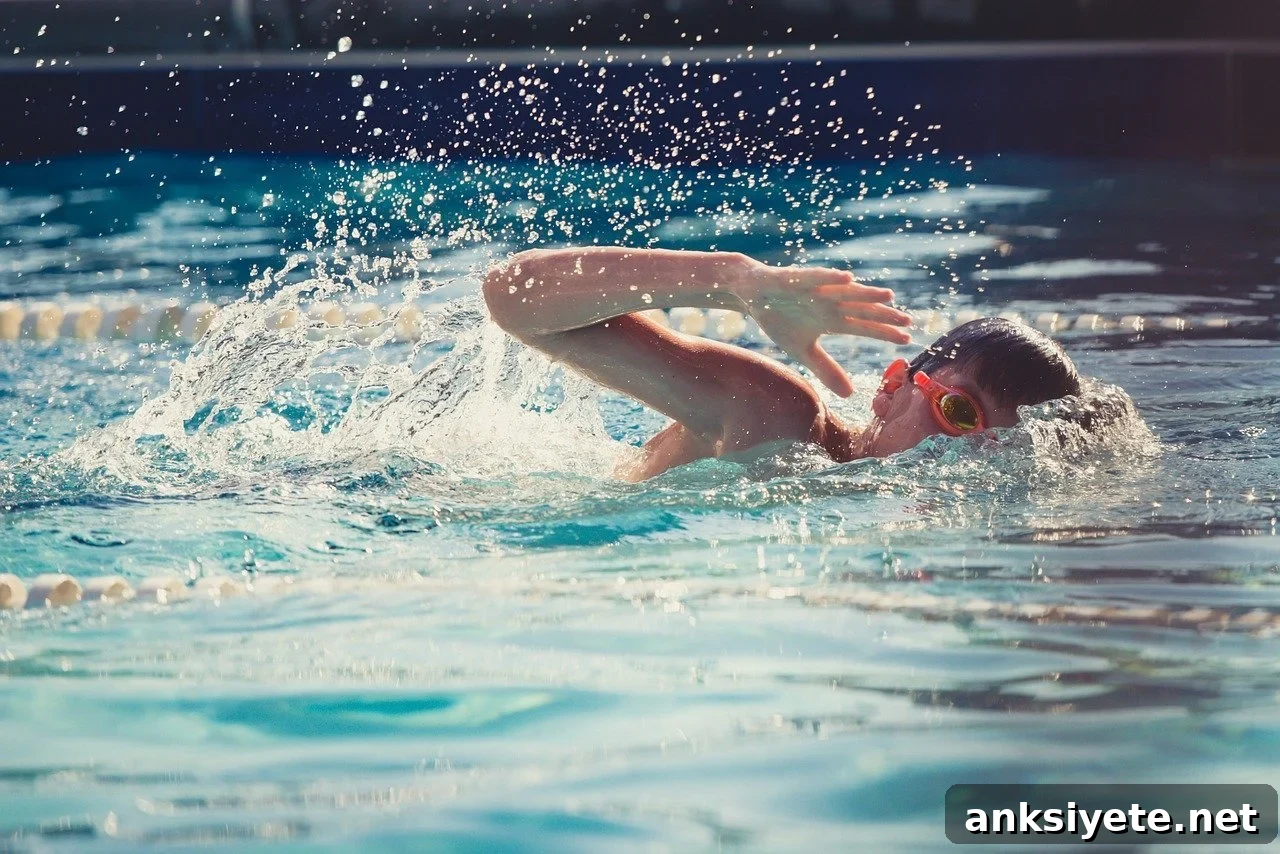
Researchers taught children ages 6 to 12 the names of novel objects, then had them complete one of three short activities before testing their word recognition: swimming laps (aerobic exercise), a CrossFit-style routine (anaerobic exercise), or a quiet coloring task (rest). The results showed that the children who swam after learning the words were about 13% more accurate on later vocabulary tests than when they completed the resting activity. Children who did the CrossFit-like workout did not show the same improvement.
Lead author Madison (Maddy) Pruitt, who conducted this work as her Master’s Capstone Project and graduated in 2020, interprets the results through the role of motor movement and brain readiness. Pruitt, a former collegiate swimmer who also trains with CrossFit, notes that movement can facilitate encoding of new information. Exercise increases levels of brain-derived neurotrophic factor (BDNF), a protein often described as “Miracle-Gro” for the brain because it supports learning and memory. According to Pruitt, the type of movement and how mentally demanding it is appear to matter.
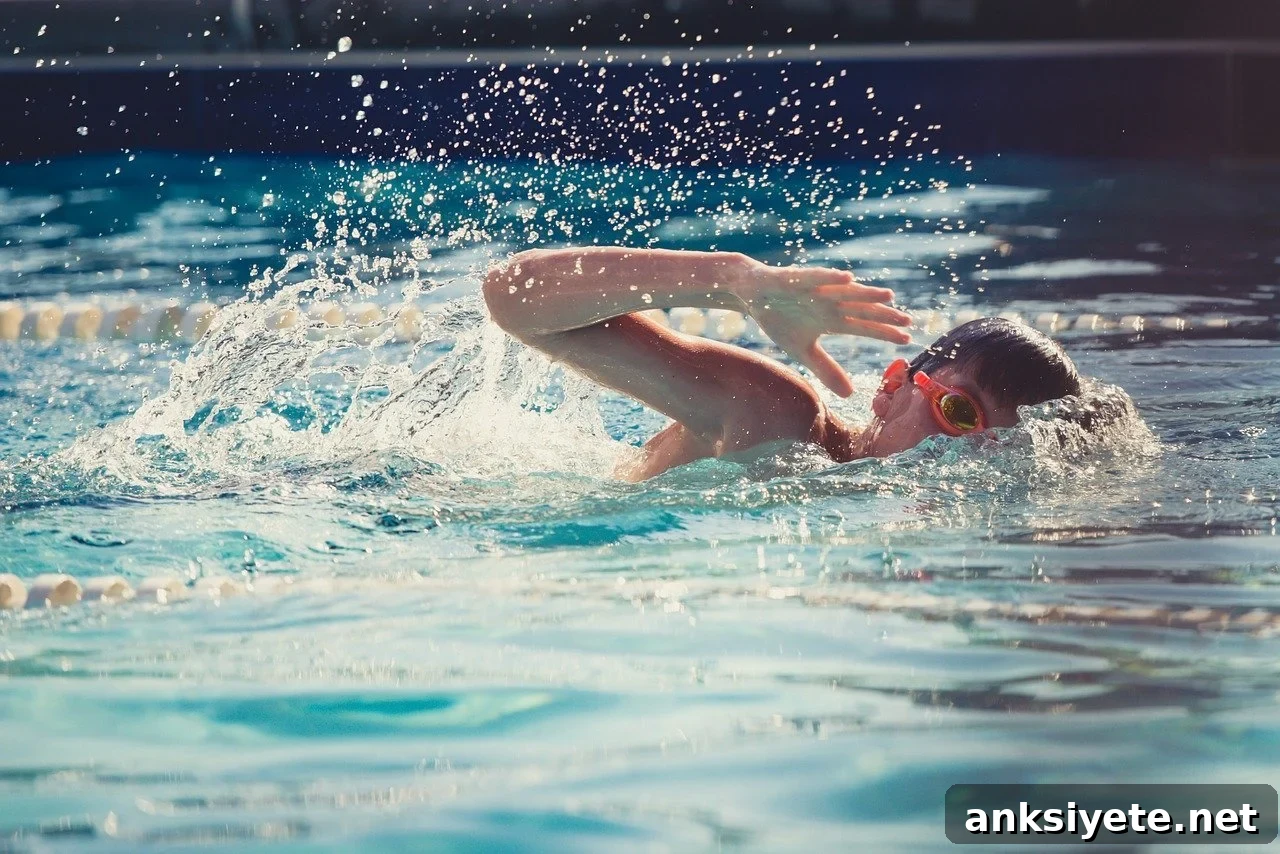
Pruitt and her coauthor Giovanna Morini suggest that the difference between swimming and the CrossFit-like session may come down to cognitive load. Swimming, as used in the study, was a familiar, rhythmic aerobic activity that children could perform with minimal conscious effort, leaving cognitive resources available for consolidation of newly learned words. The CrossFit-style exercises were novel to many participants and required them to focus on learning and executing unfamiliar movements, which may have consumed mental energy and reduced the exercise’s benefit for word learning.
Pruitt now applies these findings in her work as a speech-language pathologist at an elementary school in South Carolina. She describes therapy sessions that emphasize movement and natural contexts rather than sitting at a table: “My sessions are very rarely at a table,” she explains. “I’ll take my kids out to the playground or we’ll take a walk around the school.” These practical adjustments reflect the study’s implication that movement can be used intentionally to support language learning in clinical, educational, and home environments.
Giovanna Morini, assistant professor in the Department of Communication Sciences and Disorders and Pruitt’s adviser and coauthor, is expanding this line of research in her lab. Morini notes that most exercise research focuses on general health and fitness, while far less attention has been given to its direct effects on language acquisition. Her team considers this an important and fertile area for investigation, and ongoing projects include studies that adapt the experimental design for younger children and toddlers.
Both authors emphasize the pragmatic appeal of the findings: the intervention involves simple, everyday activities that clinicians, teachers, and caregivers can incorporate without specialized equipment. Using brief bouts of familiar aerobic movement around times of instruction may be an accessible, low-cost strategy to enhance word learning and vocabulary development in children.
About this exercise and language learning research news
Source: University of Delaware
Contact: Andrea Boyle Tippett – University of Delaware
Image: The image is in the public domain
Original Research: Closed access.
“Examining the Role of Physical Activity on Word Learning in School-Aged Children” by Madison Pruitt and Giovanna Morini. Journal of Speech, Language, and Hearing Research
Abstract
Examining the Role of Physical Activity on Word Learning in School-Aged Children
Purpose
Previous studies with adults have shown that exercise can increase neural activity and improve subsequent word recall. This study set out to determine whether different types of physical activity—specifically aerobic versus anaerobic exercise—have a measurable effect on vocabulary learning in children aged 6 to 12 years.
Method
Forty-eight children participated across two experiments, with 24 participants in each. Using a within-subjects design, researchers trained children on the names of novel objects under two conditions: a resting condition (learning followed by 3 minutes of coloring) and an exercise condition (learning followed by 3 minutes of either aerobic activity—swimming in Experiment 1—or an anaerobic CrossFit-style routine in Experiment 2). After each condition, children were tested on their ability to recognize the newly learned words.
Results
In the aerobic condition (swimming), children showed significantly higher accuracy on word recognition tests compared with the resting/coloring condition. In the anaerobic condition (CrossFit-like exercise), performance did not differ significantly from the resting condition.
Conclusions
The study indicates that brief aerobic exercise can enhance young children’s ability to acquire and recognize new words, extending findings from adult research to school-aged children. However, not all physical activities produce the same benefit; in this study, only familiar, automatic aerobic activity improved word learning, while novel, attention-demanding anaerobic exercise did not show the same effect. These results point to the potential value of integrating simple aerobic movement into learning routines to support vocabulary development.