
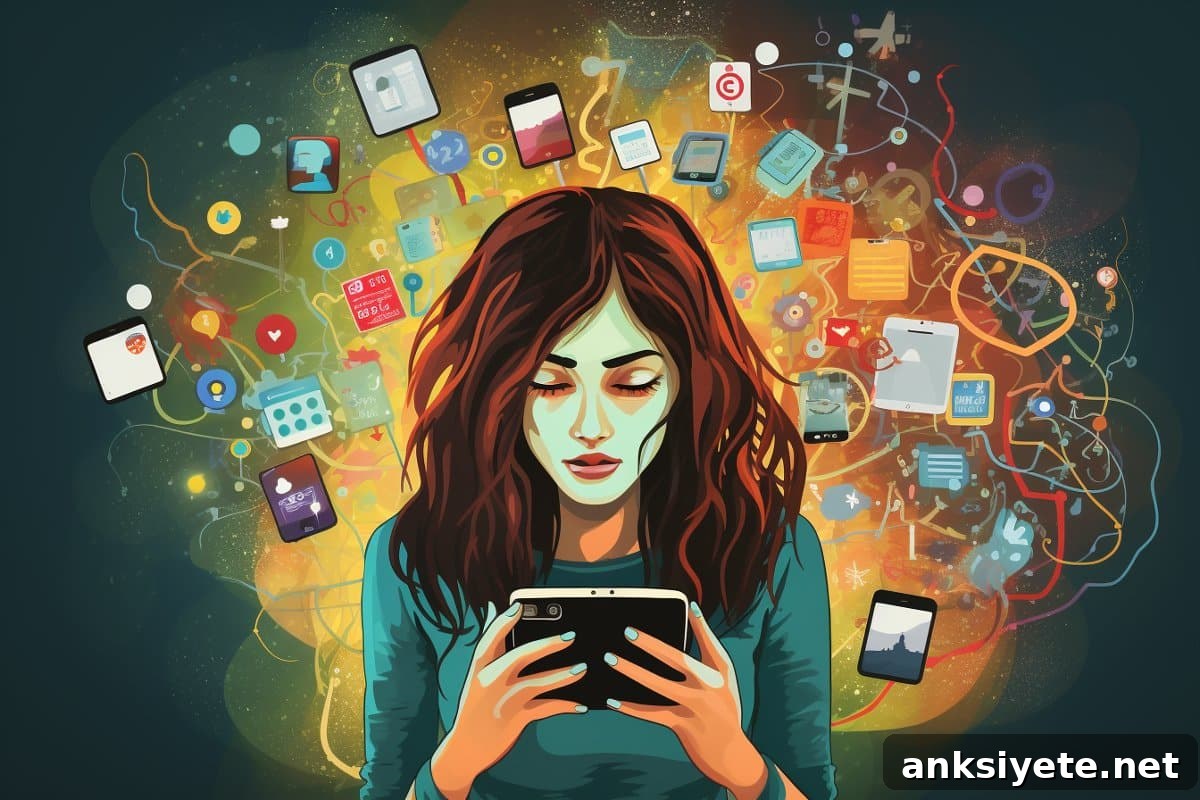
Summary: A West Virginia University study examined how use of specific social media platforms relates to depressive symptoms in adolescents. Drawing on data from 237 participants aged 14–16, researchers found that personality—particularly levels of extraversion—shapes how teens experience different apps. The study highlights that some platforms are more strongly associated with depressive symptoms than others and that individual differences matter.
The research compared several popular platforms and showed varied links to depressive symptoms. TikTok, Instagram, and YouTube showed the strongest associations, but those relationships depended on traits such as extraversion and teens’ tendencies to react negatively to social media. These findings underscore the importance of considering who the user is, not just how much time is spent online.
Key facts
- Instagram use was not associated with increased depressive symptoms for highly extraverted teens, but it was linked to higher depressive symptoms among teens with low or average extraversion.
- TikTok use correlated with greater depressive symptoms primarily for teens who reported negative thoughts or feelings while using social media.
- YouTube use was consistently associated with higher depressive symptoms across teens, regardless of gender, self-esteem, or personality traits.
Source: West Virginia University
Overview of the research
Amy Gentzler, professor of psychology at the WVU Eberly College of Arts and Sciences, together with graduate students Jacob Alderson, Jeff Hughes, and Matty Johnston, led a National Institutes of Health-supported study investigating how adolescents’ use of specific social media platforms relates to signs of depression. The team explored several moderators—gender, personality traits, self-esteem, and negative reactions to social media—to understand when and for whom social media is linked to poorer mental health.
Prior research often treats social media use as a uniform risk, but Gentzler and colleagues prioritized individual differences. “We wanted to focus on the person rather than treating social media as the same experience for everyone,” she said. “Parents and educators should consider who their teen is and how that shapes their interaction with these apps.”
The study found that personality—especially extraversion—plays a meaningful role. Teens higher in extraversion who frequently used Instagram did not show higher levels of depressive symptoms, whereas teens with low or average extraversion did. The researchers interpret this as extraversion potentially offering protection, since more extraverted teens may receive more social reinforcement and interpret online interactions more positively.
Graduate student Jacob Alderson emphasized how personality guides online behavior: “Personality shapes how you navigate and respond to content. Algorithms tailor feeds to what they think you will engage with, and that content can reinforce different emotional outcomes depending on who you are.” He noted that for apps like TikTok—where algorithms quickly personalize content—the emotional impact may vary widely across users.
The team also highlighted the difference between active and passive use. Passive browsing—scrolling through content from strangers—has been linked to worse mental health outcomes in adolescents. Instagram users often engage with known friends, while TikTok tends to expose users to videos from unknown creators. This distinction may help explain why TikTok was associated with more depressive symptoms, but mainly among teens who already reported negative reactions to social media.
“Teens who are prone to negative comparisons may feel worse after viewing curated or idealized content on platforms like TikTok,” Gentzler said. “A simple reflective practice—asking, ‘How do I feel after using this app?’—can be helpful for adolescents to monitor their reactions and adjust their use.”
YouTube stood out in this sample as consistently associated with higher depressive symptoms across demographics and personality profiles. The reason for this robust link is not fully explained by the current data, but the pattern suggests platforms differ in how they affect mood and mental health, independent of user traits.
The study sample included 237 adolescents (mean age 15.10 years; roughly equal proportions of girls and boys), mostly from West Virginia, with data collected between 2018 and 2020. The research team involved many undergraduate and graduate students in survey design, recruitment, and data collection—giving students practical research experience and contributing to a broad recruitment effort across multiple school districts.
Gentzler emphasized the main takeaway: social media’s effects are not one-size-fits-all. While greater overall time on social media was related to higher depressive symptoms, the strength and direction of associations varied by platform and by individual characteristics. “Some teens may experience more negative emotions from certain apps, while others do not,” she said. “Understanding those individual differences matters for parents, educators, and clinicians.”
About this neurodevelopment and depression research news
Author: Jake Stump
Source: West Virginia University
Contact: Jake Stump – West Virginia University
Image: The image is credited to Neuroscience News
Original Research: Open access. “Which social media platforms matter and for whom? Examining moderators of links between adolescents’ social media use and depressive symptoms” by Amy Gentzler et al., Journal of Adolescence (DOI referenced in the original publication).
Abstract
Which social media platforms matter and for whom? Examining moderators of links between adolescents’ social media use and depressive symptoms
Introduction
Although there is extensive research tying social media use to mental health risks, less is known about how those risks differ across individuals. This study aimed to clarify which platforms are most strongly associated with depressive symptoms and which adolescents are most vulnerable.
Methods
Data were collected from 2018 to 2020 from 237 U.S. adolescents (mean age 15.10; SD = 0.49; 51.1% girls, 48.5% boys). Researchers examined associations between total social media time and platform-specific use (Instagram, TikTok, YouTube, Snapchat, Facebook, Twitter) and depressive symptoms. Moderators tested included gender, self-esteem, personality traits, and prior negative reactions to social media. Models controlled for gender, timing of follow-up (pre- vs. during-pandemic), and depressive symptoms measured one year earlier.
Results
Greater total time on social media was associated with higher depressive symptoms. Platform-specific results showed links for Instagram, TikTok, and YouTube, but not Snapchat, Facebook, or Twitter overall. Several moderated effects emerged: Twitter use related to higher depressive symptoms for girls but not boys; Instagram use was connected to higher depressive symptoms for teens with low or average extraversion but not for highly extraverted teens; and TikTok use was associated with higher depressive symptoms primarily for teens who previously reported negative reactions to social media.
Conclusions
The findings indicate that certain adolescents—depending on personality and emotional reactions to social media—may be at increased risk for elevated depressive symptoms when they use specific platforms more frequently. The study highlights the need to examine individual differences and platform characteristics rather than treating social media as a uniform exposure.