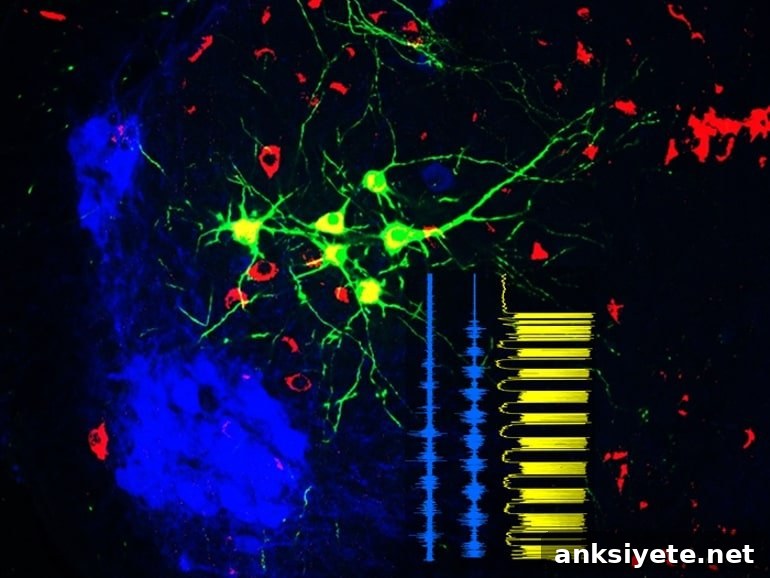
Summary: Ventral spinocerebellar tract neurons (VSCTs) are both necessary and sufficient to regulate locomotion in mice, according to a new study.
Source: Cell Press
For more than a century, researchers have recognized that the brain issues movement commands while the spinal cord contains the neurons that sustain and shape locomotion once movement has begun.
In a study published January 20 in the journal Cell, investigators identified a single class of spinal neurons—the ventral spinocerebellar tract neurons (VSCTs)—that can both generate and halt locomotor activity in mice. The experiments show that these neurons are sufficient to trigger locomotion and that silencing them stops ongoing movement.
“We hope our results will open new avenues for understanding how complex behaviors such as walking and running are produced, and will reveal biological principles that govern this essential function,” says George Mentis, associate professor of pathology and cell biology in the Department of Neurology at Columbia University and the paper’s senior author.
The authors add that these findings may also inform therapeutic strategies for spinal cord injury and neurodegenerative disorders that impair movement and motor control.
VSCTs were first identified in the 1940s and were long thought primarily to relay information from the spinal cord to the cerebellum. This new work shows that VSCTs additionally form local spinal circuits that directly influence the neural networks responsible for locomotion, both during development and in adult animals.
“The most surprising discovery was that, beyond their projections to the cerebellum, VSCTs send axon collaterals within the spinal cord and connect with other neurons that participate in locomotor behavior,” Mentis explains.
The research combined genetic tools, physiological recordings, anatomical mapping, and behavioral assays. Optogenetics was used to control VSCT activity with light by targeting light-sensitive proteins selectively to these neurons. Chemogenetics provided a complementary approach, using designer receptors activated by designer drugs to increase or decrease VSCT excitability with administered compounds.
Using isolated spinal cords from neonatal mice maintained in vitro, the team demonstrated that light-driven activation of VSCTs produced rhythmic locomotor-like activity, while suppression of these neurons—either optogenetically or pharmacologically—halted the activity. In freely moving adult mice, chemogenetic inhibition of VSCTs caused animals to stop walking and, in swimming tests, silenced mice were unable to coordinate paddling and simply floated.
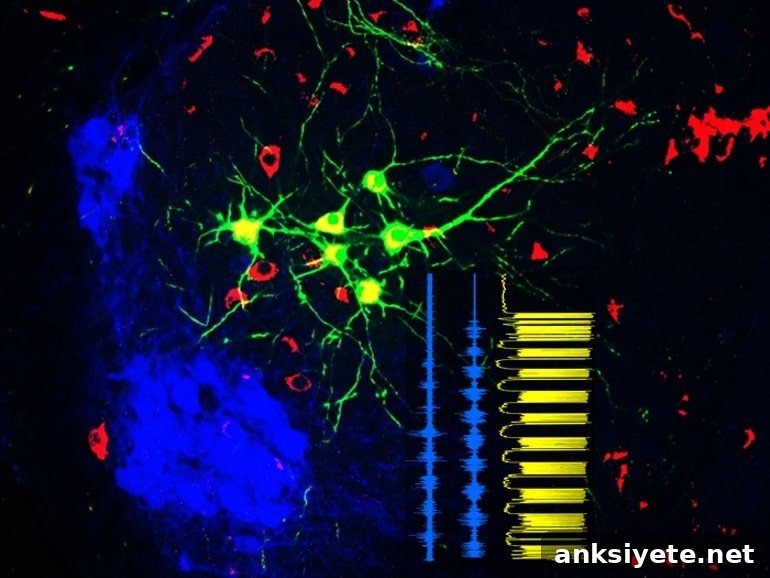
Across these models and manipulations, VSCTs met two stringent criteria for a core locomotor element: activating them was sufficient to generate locomotor patterns, and silencing them was sufficient to abolish ongoing locomotor behavior. The experiments therefore establish VSCTs as critical drivers of mammalian locomotion in mice.
Mentis notes important caveats: mice are quadrupeds and human locomotion is bipedal, so direct extrapolation to humans requires caution. Nevertheless, many discoveries made in mice have informed human clinical research, and the authors believe their findings provide a solid basis for further investigation into VSCT function in health and disease.
Future work by the team will focus on mapping the precise spinal circuits formed by VSCT axon collaterals, identifying genetic markers that define VSCT subpopulations, and determining how different VSCT classes contribute to varied modes of locomotion. The researchers also plan to study how VSCT function is altered in pathological conditions, including neurodegeneration and spinal cord injury, to evaluate potential therapeutic targets.
Funding: This work was supported by NINDS, the NIH, the NIH Blueprint for Neuroscience Research, NIAAA, the SMA Foundation, and Project ALS.
About this neuroscience research news
Author: Carly Britton
Source: Cell Press
Contact: Carly Britton – Cell Press
Image: The image is credited to Chalif et al./Cell
Original Research: Open access. “Ventral spinocerebellar tract neurons drive mammalian locomotion” by Chalif et al., Cell
Abstract
Ventral spinocerebellar tract neurons drive mammalian locomotion
Highlights
- VSCTs display intrinsic rhythm-generating properties and form circuits with motor neurons and Chx10+ interneurons.
- VSCTs receive monosynaptic and electrical input from motor neurons, enabling bidirectional influence within spinal networks.
- Optogenetic activation of VSCTs is sufficient to start locomotor patterns during early development.
- Chemogenetic or optogenetic silencing of VSCTs abolishes locomotion in neonates and disrupts gait and swimming in adult mice.
Summary
Locomotion is a complex, essential behavior that relies on spinal interneurons known collectively as the central pattern generator (CPG). The CPG produces the coordinated alternation of flexor and extensor muscles and left-right limb activity. Until now, it has been unclear whether locomotion depends on a diverse set of neuronal types or whether one class can play a central, commanding role.
This study demonstrates that ventral spinocerebellar tract neurons (VSCTs) drive the generation and maintenance of locomotor behavior in both neonatal and adult mice. Combining genetic targeting, electrophysiology, anatomical tracing, and behavioral testing, the authors show that VSCTs possess rhythmogenic features, make functional connections consistent with a role in the locomotor CPG, and satisfy experimental tests of necessity and sufficiency using optogenetic activation and chemogenetic inhibition.
These results identify VSCTs as critical components of the neuronal machinery that produces mammalian locomotion and represent a significant shift in understanding how spinal circuits control complex motor behaviors.