
Summary: Sensory signals routed from a prosthetic leg into the user’s nervous system help amputees experience the artificial limb as part of their own body. This neurofeedback also makes the prosthesis feel noticeably lighter.
Source: ETH Zurich
Many people with leg amputations remain dissatisfied with their prostheses despite advances in technology. A common complaint is that the prosthetic limb feels heavier than it should, even though modern prosthetic legs typically weigh less than half of a natural limb.
A research team led by Stanisa Raspopovic, professor in the Department of Health Sciences and Technology at ETH Zurich, has demonstrated that reconnecting artificial limbs to the nervous system helps wearers perceive the prosthesis as lighter—an effect that can improve acceptance and everyday use.
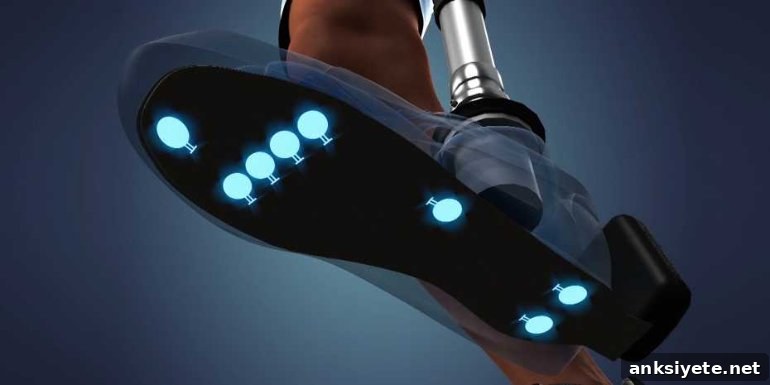
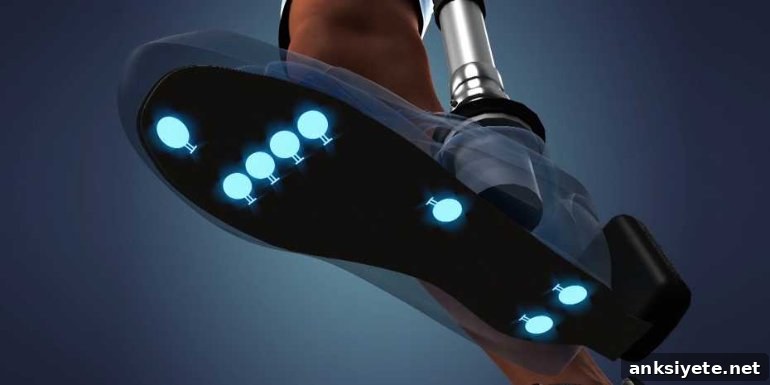
Over recent years, Raspopovic and an international consortium developed prostheses capable of providing sensory feedback directly to the user’s nervous system. Small electrodes implanted in the thigh connect to residual leg nerves. Signals from tactile sensors under the prosthetic foot’s sole and from sensors that track the electronic knee joint’s angle are transformed into brief electrical pulses and delivered to those nerves.
“To convince the brain of an above‑knee amputee that the prosthetic leg behaves more like a natural limb, we restored sensory feedback artificially,” says Professor Raspopovic. Earlier work from the team showed that this so‑called neurofeedback enables prosthesis users to walk more safely and with less effort.
Neurofeedback reduces perceived heaviness
In a follow‑up study reported in the journal Current Biology, the researchers investigated whether sensory feedback affects how heavy a prosthesis feels. They tested a voluntary transfemoral (above‑knee) amputee who performed walking tasks with the neurofeedback system switched on and off. To create a direct comparison, the experimenters added weights to the participant’s intact leg and asked him to judge the relative heaviness of the two legs after walking.
When sensory feedback was active, the participant reported the prosthesis to feel 23% lighter—roughly a reduction of 500 grams in perceived weight—compared with the no‑feedback condition. This change in perception occurred even though the physical mass of the device remained the same.
The team also evaluated cognitive and motor performance under dual‑task conditions. While walking, the participant spelled five‑letter words backwards, a task that increases mental load and typically slows walking and reduces accuracy. With sensory feedback enabled, the participant walked faster and spelled more accurately, indicating that the neurofeedback reduced cognitive strain and supported better integration of the prosthesis into body control.
“Neurofeedback enables faster, safer walking and alters weight perception,” says Raspopovic. “Our results suggest that providing near‑natural sensations from the missing limb can make the experience of using an artificial device closer to that of a natural limb.”
Implications for prosthetic design and user satisfaction
The study highlights an important psychological and functional dimension of prosthetic design: perceived heaviness is not only a matter of physical mass but also of sensory and cognitive integration. Restoring sensory cues to the nervous system supports embodiment—the user’s sense that the prosthesis is part of their body—and reduces the mental effort needed to control the limb. These effects together may improve everyday mobility and satisfaction for amputees, making advanced prosthetic solutions more acceptable and practical for long‑term use.
About this neurotechnology research
Source: ETH Zurich
Contact: Fabio Bergamin – ETH Zurich
Image: The image is credited to ETH Zurich
Original Research: Closed access. “Lightening the Perceived Prosthesis Weight with Neural Embodiment Promoted by Sensory Feedback” by Stanisa Raspopovic et al., Current Biology. DOI: 10.1016/j.cub.2020.11.069
Abstract
Lightening the Perceived Prosthesis Weight with Neural Embodiment Promoted by Sensory Feedback
Many amputees report low satisfaction with prostheses because the devices feel excessively heavy, even though prosthetic legs typically weigh less than half of a natural limb. Perceived weight is a subjective sensation influenced by cognitive and sensory processes. Prior work showed that restoring sensory feedback can improve embodiment and reduce cognitive load, but the impact on perceived prosthesis heaviness had not been studied. This investigation used intraneural sensory feedback in a transfemoral amputee to test whether neural feedback alters the integration of the prosthesis into the body schema and thus changes perceived weight. After an overground walking task, active sensory feedback reduced perceived prosthesis weight by 23% relative to no feedback. The feedback condition also produced a 60.5% increase in measures of embodiment and a 36% rise in confidence during walking. In a dual task combining walking with backward spelling, sensory feedback prevented the declines in walking speed and spelling accuracy seen without feedback, indicating improved cognitive integration. These findings emphasize the value of delivering close‑to‑natural sensations from a missing limb to promote prosthesis embodiment and increase user satisfaction.