
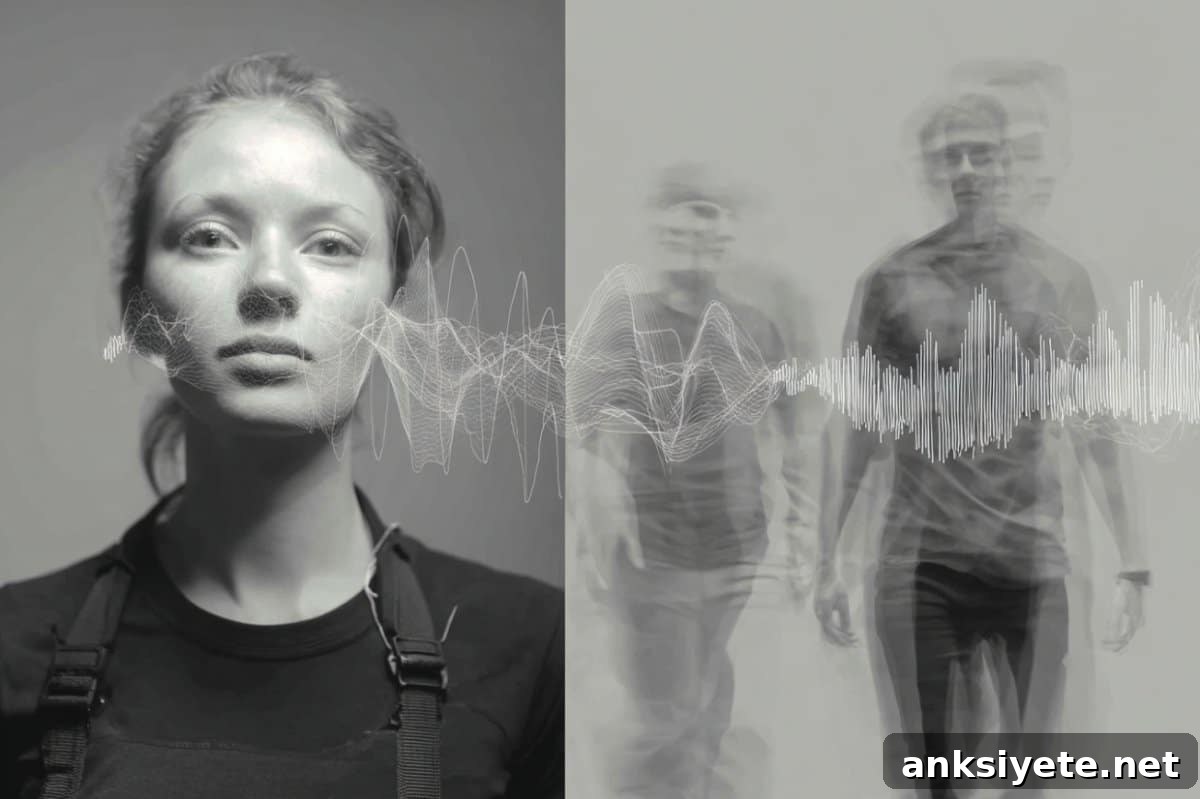
Summary: Recent research emphasizes the importance of dynamic motion in recognizing familiar people, showing that movement patterns—across faces, voices, and bodies—carry distinctive, learnable signals that support identification even when static features are unclear.
Motion cues are acquired through experience and can be combined across senses in the brain, but questions remain about how consistent, distinctive, and broadly applicable these “dynamic fingerprints” are.
Key Facts
- Dynamic fingerprints: Faces, voices, and body movements display unique motion signatures that aid identity recognition.
- Neural integration: Brain regions such as the posterior superior temporal sulcus (pSTS) appear to integrate motion information from multiple sources to support person recognition.
- Individual differences: Sensitivity to dynamic motion varies across individuals, suggesting skills for motion-based recognition can differ from static face recognition abilities.
Source: Neuroscience News
When you notice a familiar person in a busy scene, you often rely on more than fixed facial features. The tilt of a head, the cadence of a voice, or a characteristic stride can reveal identity information that a still image cannot.
A recent mini-review brings together studies showing that subtle facial gestures, vocal rhythms, and full-body movements form what researchers call a dynamic fingerprint: a set of idiosyncratic motion cues that help observers recognize familiar people.
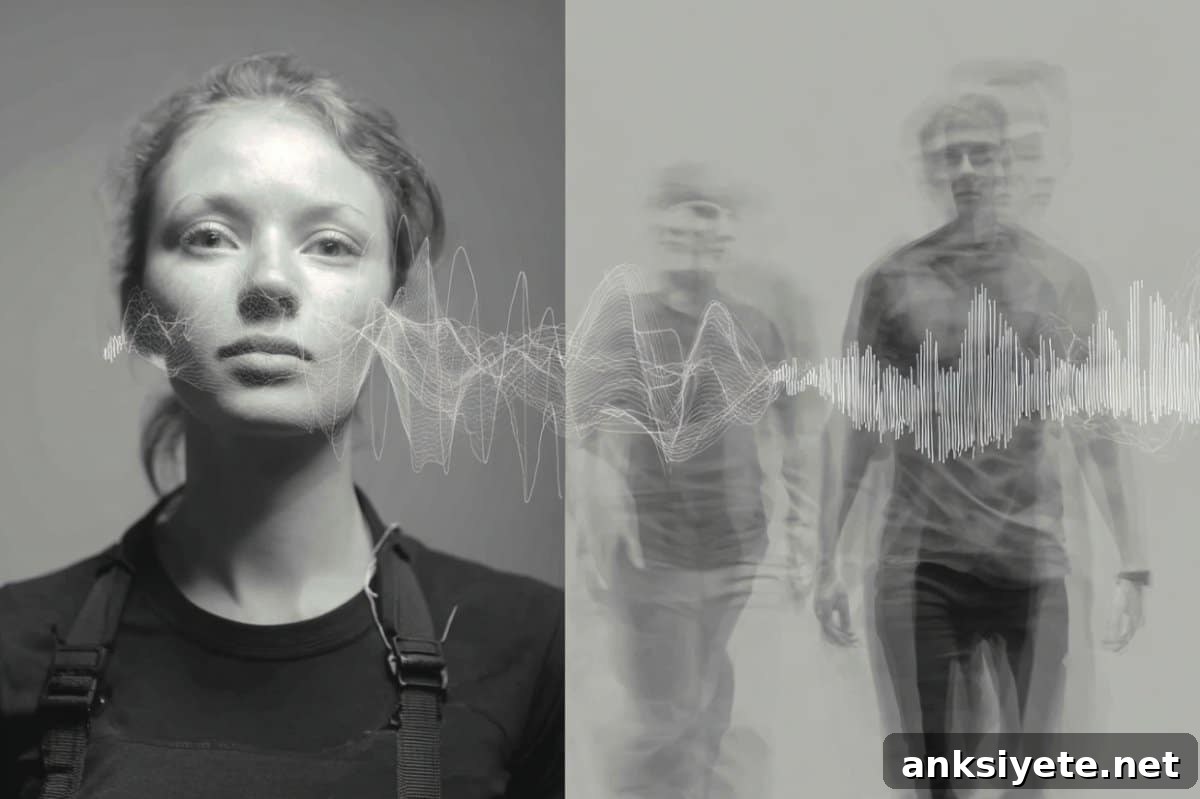
This review examines how motion contributes to person recognition, how motion signals from face, voice, and body might be linked, and what makes a motion signature stable or distinctive enough to function as an identity cue.
From habitual smiles and eyebrow movements to a distinctive gait, dynamic characteristics provide strong, person-specific signals. The review asks how consistent these motion patterns are across time and context, how the brain represents them, and why some observers are better at using motion to identify people.
More Than a Still Image: Why Motion Matters
Historically, research on face recognition emphasized static cues—shape of the eyes, nose, mouth—as the core of identity. More recent work shows that motion adds essential information: movement reveals three-dimensional structure, highlights characteristic ways people express themselves, and supports learning of identity across varied views and conditions.
People develop distinctive movement habits—smiles, eyebrow raises, head tilts—that become associated with their identity. Those idiosyncratic patterns help recognition when static features are obscured or when lighting is poor.
Gait, the way someone walks, is another robust, individual signature. Experiments using minimal point-light displays have demonstrated that observers can identify individuals from walking patterns alone. Similarly, hand gestures, posture, and characteristic head movements add layers of dynamic identity information.
Dynamic cues are also useful for people with impaired static recognition. For instance, individuals with prosopagnosia (face blindness) often gain recognition advantages from motion, showing that dynamic information can compensate when static face processing is degraded.
A Symphony of Signals: Faces, Voices, and Bodies
Motion patterns in the face, voice, and body can be mutually informative. Speech rhythm, lip movement, and vocal cadence often correlate, allowing observers to match voices to faces at rates above chance in some studies. This cross-modal correspondence suggests the possibility of an integrated dynamic identity signature spanning modalities.
Beyond walking, more expressive actions like dancing or sport-specific movements enhance recognizability, while unique gestures and postural habits further enrich a person’s motion profile. Together, these sources of motion form a distributed set of cues that the perceptual system can combine to identify individuals.
The combined evidence points toward identity being encoded across multiple dynamic channels rather than in a single static snapshot, opening the prospect of holistic dynamic fingerprints that include facial motion, vocal patterns, and body kinematics.
Are Motion Patterns Always Distinctive?
Not all motion patterns are equally distinctive. Some people move in highly idiosyncratic ways that are easy to recognize, while others have more typical or average movements. Research suggests distinctiveness aids recognition; exaggerating a movement can boost learnability in some cases, especially for body gestures.
Open questions include how stable these motion-based signatures are across mood, fatigue, or deliberate alteration, and which aspects of motion remain consistent enough to serve as reliable identity cues. Determining which motion features are invariant and which fluctuate is essential to defining a dependable dynamic fingerprint.
How the Brain Reads Motion
Neural evidence indicates complementary processing of static and dynamic identity cues. Regions such as the fusiform face area (FFA) and the extrastriate body area (EBA) are linked to invariant structural features, whereas the posterior superior temporal sulcus (pSTS) responds strongly to biological motion, voices, and changing facial expressions. This makes pSTS a prime candidate for integrating motion-based identity information.
Other regions, including ventral premotor and frontal areas, may contribute to representing and combining dynamic signals. However, how these areas work together to form a coherent, motion-based sense of identity remains an open research topic.
Why Some People Are Better at Using Motion
Individuals differ in their sensitivity to motion cues. Some people with exceptional face memory—so-called super-recognizers—benefit from motion, while others compensate for poor static recognition by relying more on movement. The ability to read motion-based identity is not always predicted by static face recognition skill, implying distinct perceptual abilities or strategies.
These individual differences have practical implications. In fields that require identifying people from low-quality video or partial views, selecting observers who excel at interpreting dynamic fingerprints could improve performance.
Open Questions and Future Directions
The concept of dynamic fingerprints raises many questions for future work. Do faces, voices, and body movements combine differently across modalities? How does the brain keep dynamic identity representations stable despite natural variability? To what extent do cultural, emotional, or situational factors change the way we move and how others perceive those movements?
Researchers are also exploring whether exaggerating or caricaturing motion features enhances recognition and how motion-capture technologies and machine learning can quantify and compare motion signatures across people and contexts.
Conclusion
Motion is a fundamental component of identity. Characteristic facial expressions, vocal rhythms, and gait patterns provide rich, idiosyncratic signals that help us recognize people when static cues are ambiguous. These dynamic fingerprints appear to be learned and may span face, voice, and body to form an integrated, motion-based identity signature.
Although the field is still developing, accumulating evidence highlights that identity is not only about how someone looks at a single moment, but also about how they move over time.
About this motor neuroscience research news
Author: Neuroscience News Communications
Source: Neuroscience News
Contact: Neuroscience News Communications – Neuroscience News
Image: The image is credited to Neuroscience News
Source: Open access. “Something in the way they move: characteristics of identity present in faces, voices, body movements, and actions” by Karen Lander et al., Frontiers in Psychology. DOI: 10.3389/fpsyg.2025.1645218
Abstract
Something in the way they move: characteristics of identity present in faces, voices, body movements, and actions
Recognizing familiar people depends not only on static facial or bodily features but also on unique dynamic characteristics of how individuals move.
This mini-review synthesizes current findings on how motion from the face, voice, and body contributes to identity recognition, and discusses possible dynamic correspondences across modalities—for example, links between facial motion and vocal patterns.
It evaluates whether coherent dynamic fingerprints exist, and how variability, distinctiveness, and perceiver-related factors such as individual differences and neural mechanisms influence motion-based recognition.
Finally, the review outlines open questions and proposes directions for future research on integrating dynamic information in person perception.