
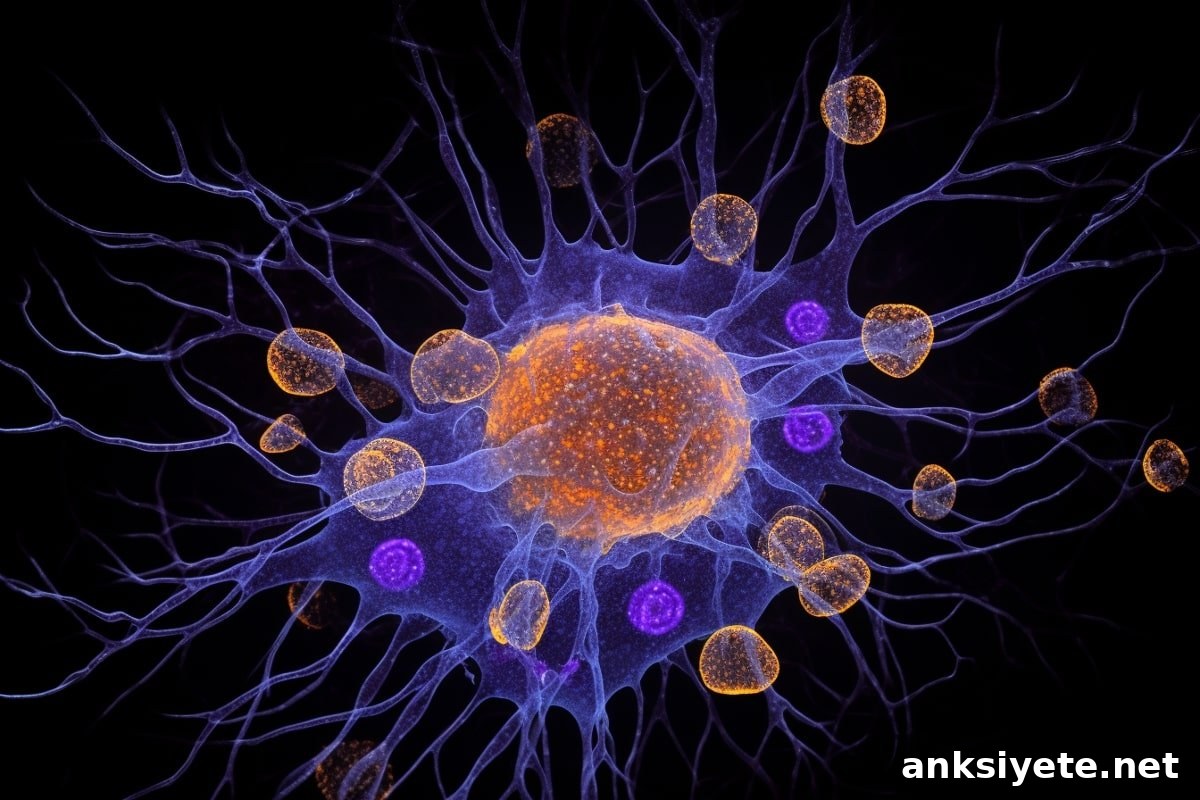
Summary: Researchers have created human brain organoids that include microglia—the brain’s resident immune cells—providing a more realistic model for studying how these cells develop and function. This advance enables closer examination of the interactions between microglia and the surrounding brain environment, improving our understanding of their roles in normal development and in neurological disorders.
Using this organoid model, the team found that microglial identity and behavior are strongly shaped by the local brain environment. In patient-derived organoids, microglia from children with macrocephalic autism spectrum disorder (ASD) showed heightened responsiveness to damage and invading material, a change linked to neuron-driven differences in the organoid environment. These insights may inform future therapeutic strategies for conditions such as ASD and Alzheimer’s disease.
Key Facts:
- Microglia clear cellular debris and pathogens and play protective and regulatory roles in the brain.
- In this study, microglia from individuals with autism spectrum disorder were more reactive to injury and foreign stimuli.
- The organoid platform offers a path toward studying microglia in the context of human brain tissue to discover potential treatments for neurodevelopmental and neurodegenerative disorders.
Source: Salk Institute
Microglia sit at the crossroads of the immune system and the brain, acting as specialized macrophages that shape development, maintain homeostasis, and influence disease progression. Despite their importance, modeling human microglia has been challenging because they rapidly lose their native properties outside of a brain-like environment.
To address this challenge, researchers at the Salk Institute developed a three-dimensional organoid approach that more closely recreates the human brain environment. These organoids, which are vascularized and immunocompetent, allow human microglia to mature and behave more like they do in vivo, offering a window into their transcriptomic signatures, surveillance activity, and responses to injury or inflammation.
Traditional brain organoids have enabled many advances but are limited by the absence of blood vessels, short viability in culture, and an inability to support diverse cell types such as microglia. The team used a xenotransplantation method to create an improved organoid model that supports mature human microglia and a brain-like milieu necessary for their function.
“Outside of the brain environment, microglia lose almost all function and meaning,” said Professor Rusty Gage, senior author. By reconstructing a human-brain-like environment inside organoids, the researchers established a platform where microglia can be studied in ways that reflect human biology more faithfully.
The organoid model revealed the early emergence of microglial markers: the transcription factor SALL1 appeared by about eleven weeks and helped confirm microglial identity and maturation. Brain-environment-specific proteins such as TMEM119 and P2RY12 were also found to be essential for normal microglial behavior, underscoring how the surrounding tissue shapes microglial function.
Using patient-derived cells, the researchers examined microglia originating from three children with macrocephalic ASD and compared them to microglia from three neurotypical individuals with macrocephaly. The organoids recapitulated previously observed neuronal differences in the ASD samples—faster neuronal growth and more elaborate branching—and showed that these neuron-driven environmental differences altered microglial development, producing a more reactive immune phenotype.
This neuron-dependent increase in microglial reactivity may help explain reports of brain inflammation in some people with autism. The study’s findings are preliminary because of the small sample size, and the authors plan to expand the number of patient samples and to examine other developmental and neurodegenerative conditions to better understand how microglia contribute to disease onset and progression.
“Rather than deconstruct the brain, we decided to construct it ourselves,” said co-first author Simon Schafer. By building a human brain model from the ground up, the team can probe cellular interactions and mechanisms that are difficult to resolve in other systems, and iteratively refine the model to answer new questions about brain–immune crosstalk.
The study’s authors include members of the Salk Institute and collaborators from UC San Diego, the Technical University of Munich, and the Hebrew University of Jerusalem.
Funding: This work was supported by multiple grants and foundations, including the National Institutes of Health (R01 AG056306, R01 AG057706, R01 AG056511, R01 AG061060, R01 NS108034, U19 NS123719, NCI CCSG: P30 014195), the American Heart Association, the Paul G. Allen Frontiers Group, the Brain and Behavior Research Foundation, the German Research Foundation, the Milky Way Research Foundation, and several philanthropic trusts and international research programs.
About this neuroscience research news
Author: Salk Communications
Source: Salk Institute
Contact: Salk Communications – Salk Institute
Image: The image is credited to Neuroscience News
Original Research: Open access. “An in vivo neuroimmune organoid model to study human microglia phenotypes” by Rusty Gage et al., published in Cell.
Abstract
An in vivo neuroimmune organoid model to study human microglia phenotypes
Highlights
- Xenotransplanted brain organoids provide an in vivo-like platform to study human microglia (hMGs).
- Organoid-resident hMGs acquire human-specific transcriptomic profiles and assume identities comparable to in vivo microglia.
- hMGs actively surveil the human brain environment and respond to local injuries and systemic inflammatory signals.
- A patient-derived organoid model demonstrates a brain-environment-induced immune response in autism with macrocephaly.
Summary
Microglia are specialized, brain-resident macrophages that play essential roles in development, tissue maintenance, and disease. Modeling the interaction between human microglia and their brain environment has been limited until now. The described xenotransplantation approach produces vascularized, immunocompetent human brain organoids where functionally mature hMGs can develop and be studied within a physiologically relevant context. These organoids enable two-photon imaging of microglial surveillance and response behavior and provide a platform to investigate human microglial phenotypes in health and disease, including patient-specific immune responses linked to neurodevelopmental disorders.