
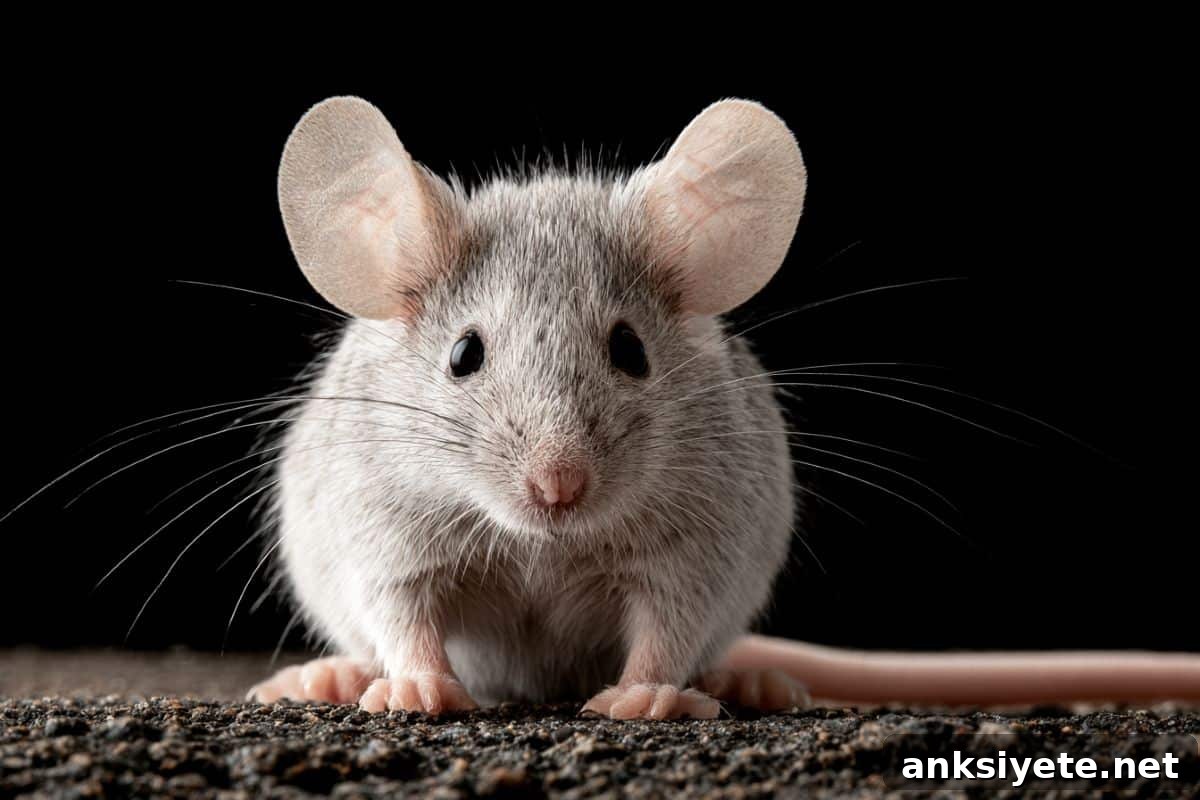
Summary: Animals actively move to improve the quality of the sensory information they receive. Cognitive scientists call this behavior “active sensing.” A precise form of active sensing—infotaxis—occurs when an animal plans its movements to maximize information gain. Although rodents are central to neuroscience research, their poor vision has left open the question of whether they can perform complex visual infotaxis. A new study from EPFL shows that mice do just that: they change their trajectories, approach angles, and speeds to obtain clearer views of partially hidden objects, and they adjust these strategies continuously depending on how much visual information is available.
Key Facts
- Visual baseline: Mice have low visual acuity—approximately seven to eight times worse than humans—and they lack a fovea, the retinal region that supports sharp central vision and high-resolution color perception.
- Controlled virtual environment: To isolate vision from other senses, EPFL researchers built a fully immersive 3D virtual reality (VR) arena that rendered a scene in real time from each mouse’s point of view based on its head and body position.
- The teardrop task: In the experiment, mice learned to distinguish a white teardrop target from a black teardrop distractor. Virtual walls were then introduced to occlude up to 90% of each object, leaving only a narrow central gap visible from the starting area.
- Infotaxic behavior: When objects were heavily occluded, mice did not guess randomly. Instead they moved closer to the screen to widen their viewing angle, slowed down, adopted more winding paths, and sometimes reversed direction mid-trial as new visual evidence appeared.
- Continuous scaling and immediacy: Infotaxic adjustments scaled across five levels of occlusion. Mice displayed these strategies immediately when first exposed to occlusion, indicating an internalized model of how movement affects visual information rather than a simple learned habit.
- Open-source tools: EPFL has released the VR arena and marker-less tracking platform as open-source tools, enabling other labs to combine active visual behavior with real-time neural recordings.
Animals don’t perceive the world passively. A hawk tilts its head to follow prey. A person leans in to read small text. These are everyday examples of active sensing—moving the body to improve sensory input. Infotaxis is a targeted form of active sensing in which movement is chosen to maximize the information an animal can gather.
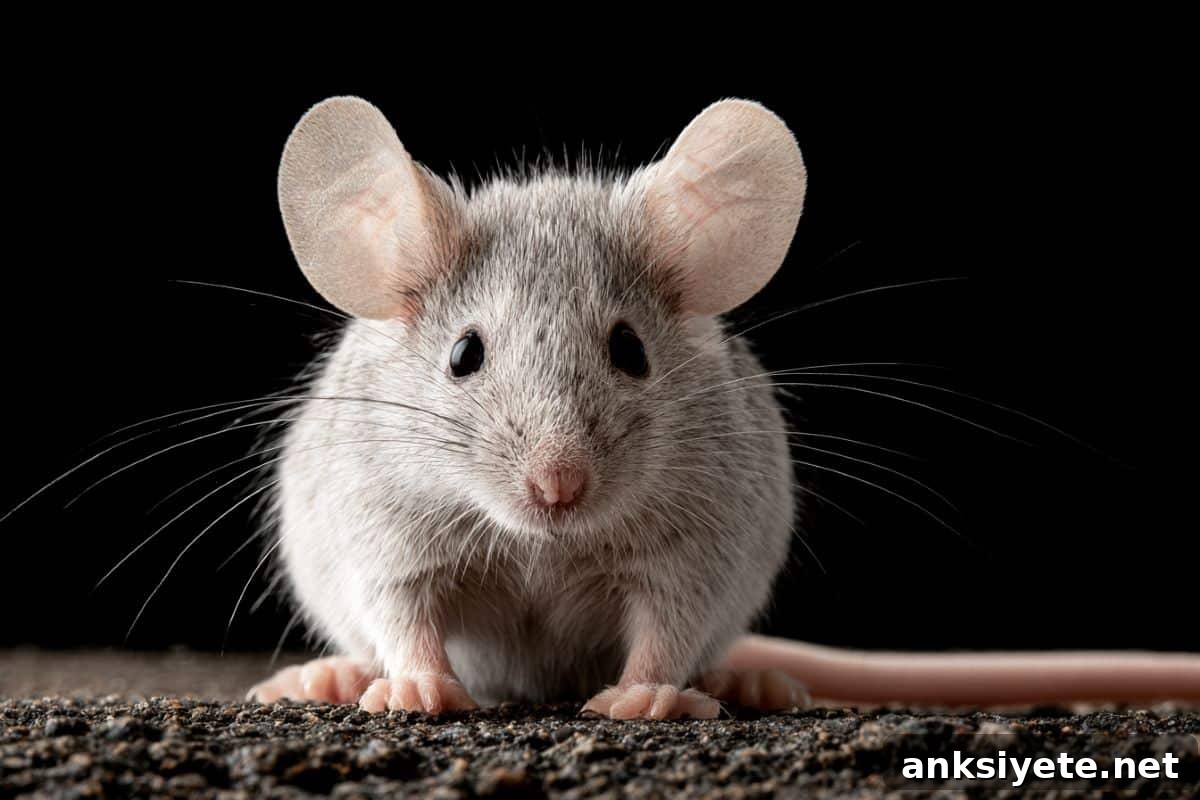
Despite their reputation for poor eyesight, mice still use vision for many tasks—detecting predators, navigating environments, and guiding movement. Given their retinal limitations, researchers often assumed mice relied primarily on smell, whisker touch, or hearing. To test whether vision alone could drive information-seeking movement, the team led by Mackenzie Weygandt Mathis at EPFL combined a freely moving VR arena with marker-less AI tracking.
The freely moving VR arena displayed a 3D scene rendered in real time from the mouse’s perspective. Animals were tracked with a 100 Hz overhead camera and DeepLabCut-Live, the marker-less tracking platform developed by Mathis’s lab. In the behavioral task, mice indicated their choice by walking to the left or right side of the arena to report whether they saw the white target or the black distractor.
Crucially, the experiment introduced virtual occluders that blocked most of each teardrop. In the most constrained condition, only about 10% of an object was visible from the starting area; as the mouse approached, the viewing angle opened and more of the object became visible. Rather than rushing to a guess, mice adjusted their behavior: they approached more slowly, moved closer to the screen, followed more winding trajectories, and sometimes reversed course when the occluded portions were revealed.
A fully open-source platform
The researchers tested five levels of occlusion and found a continuous relationship between how much of the object was hidden and how far the mice moved before choosing. Mice that approached more closely tended to perform better under difficult conditions, suggesting infotaxis improved task accuracy. Importantly, mice displayed these adjustments immediately on first exposure to occlusion after learning the basic discrimination, implying they relied on an internal model of spatial relationships to guide exploratory movement.
This work demonstrates that mice actively move to harvest useful visual information, even with limited vision. By releasing the VR arena and DeepLabCut-Live tracking tools as open-source resources, the investigators provide a practical, standardized platform for future studies that combine freely moving behavior with neural recordings. Such studies can illuminate how the brain integrates vision and motion to support real-world perception and decision-making.
The experiment was carried out under Swiss animal welfare regulations and approved by the appropriate veterinary authorities. The study appears in Current Biology.
Key Questions Answered:
A: Because their vision is low-resolution, mice must move their bodies to collect sharper visual information. Without a fovea and with inherently blurry vision, a mouse cannot rely on eye movements alone to reveal hidden details; it must change position and viewing angle. Infotaxis is a behavioral adaptation that compensates for those sensory limits.
A: The VR environment allowed precise control over how much of each object was visible. The mice’s movement patterns changed in direct proportion to occlusion level: when objects were fully visible they moved straight in, while heavy occlusion produced more cautious, exploratory approaches and rapid mid-course corrections the moment new visual evidence appeared.
A: Traditional experiments often constrain animals’ bodies and use static images, missing how perception and action interact in natural behavior. An open-source VR arena and marker-less tracking let laboratories worldwide record neural activity while animals move freely and employ active information-seeking strategies, accelerating understanding of how sensing and movement are coordinated in the brain.
Editorial Notes:
- This article was edited by a Neuroscience News editor.
- Journal paper reviewed in full.
- Additional context added by our staff.
About this visual neuroscience research news
Author: Nik Papageorgiou
Source: EPFL
Contact: Nik Papageorgiou – EPFL
Image: The image is credited to Neuroscience News
Original Research: The findings will appear in Current Biology