
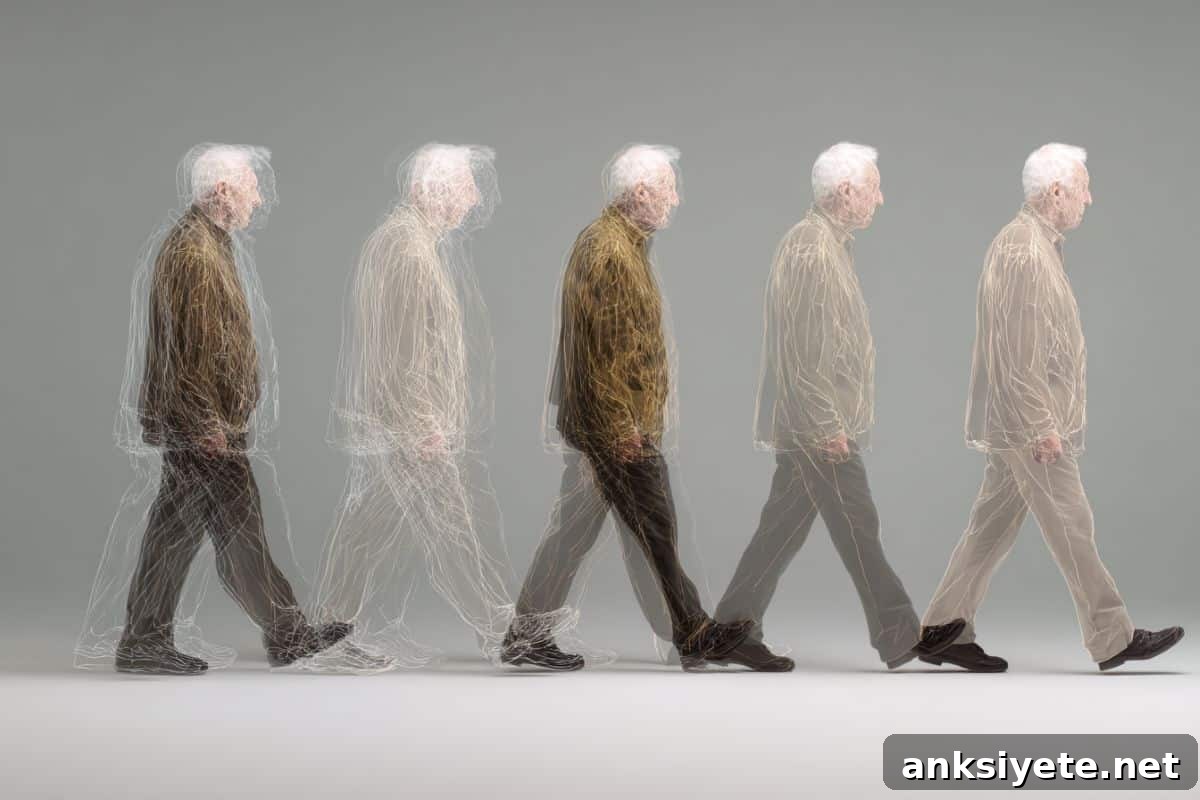
Summary: New research challenges the idea that aging is a slow, continuous decline. By observing African turquoise killifish continuously throughout their adult lives, scientists found that aging proceeds as a sequence of rapid, discrete shifts. In particular, behavioral patterns in early midlife can predict an individual fish’s overall lifespan.
Despite controlled genetics and environment, some fish began resting more during the day and swam more slowly while still young adults—early signs that they were on a shorter-lived trajectory. The study suggests that an animal’s physiology remains stable for weeks and then rapidly transitions to a new stage over just a few days, rather than deteriorating gradually.
Key Facts
- Continuous tracking: Researchers monitored 81 fish non-stop, generating billions of video frames and identifying about 100 distinct “behavioral syllables” that describe basic movement and rest patterns.
- Early predictors: Between day 70 and 100—early adulthood for killifish—differences in sleep timing and swimming vigor were strong enough for machine-learning models to forecast which fish would live longest.
- Stepwise aging: Aging unfolded as 2–6 rapid transitions for most animals. Behavior remained stable for extended periods, then shifted quickly into a new, less resilient stage—similar to removing a critical block from a Jenga tower.
- Sleep as a signal: Fish on shorter aging paths increased daytime sleep, while long-lived fish stayed active during the day and primarily slept at night.
- Molecular correlates: At the point when behavior became predictive, coordinated changes in gene activity appeared in the liver, especially in processes linked to protein production and cellular maintenance.
Source: Stanford
By midlife, ordinary behavior can reveal likely lifespan.
That is the headline finding from a study supported by the Knight Initiative for Brain Resilience at Stanford’s Wu Tsai Neurosciences Institute. Researchers kept scores of short-lived killifish under continuous, lifelong surveillance to study how behavior and aging are connected.
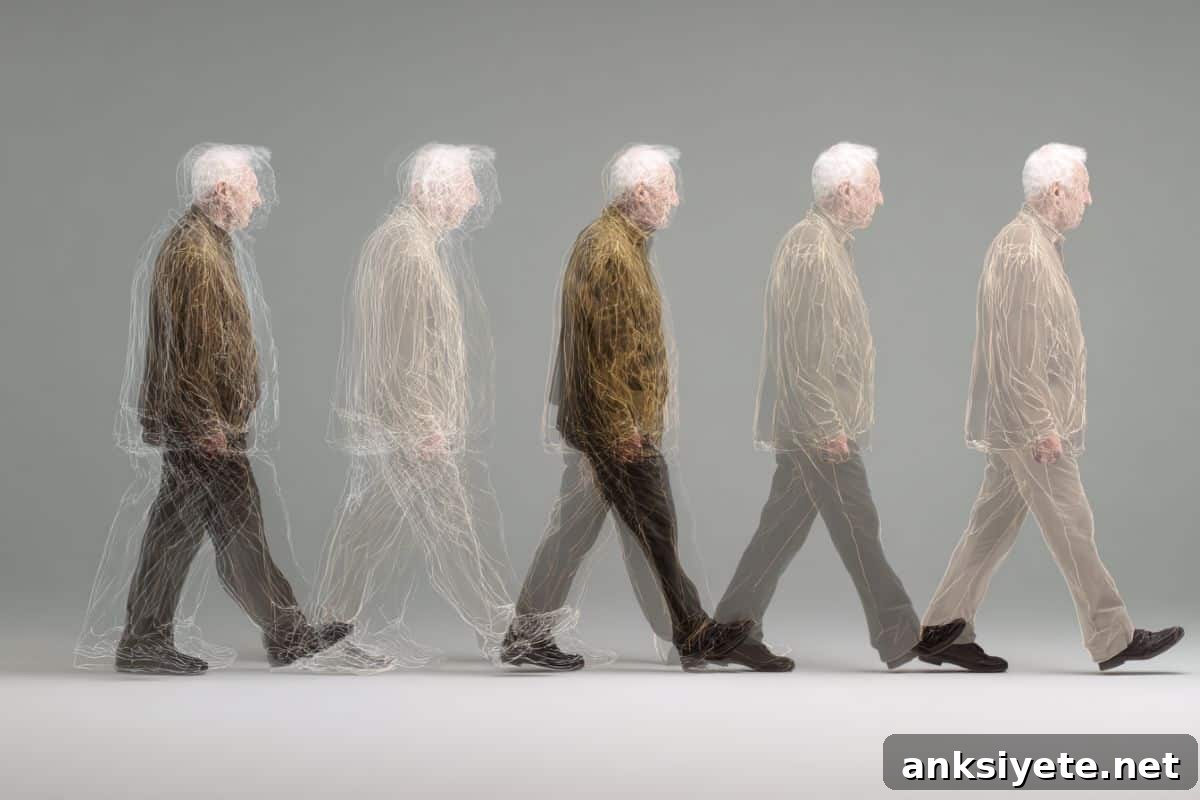
Even with similar genetics and tightly controlled conditions, individual fish aged in strikingly different ways. By early adulthood, those differences showed up in how the animals swam and rested, and those patterns were predictive of whether a fish would live longer or shorter lives.
Although the experiments were done in fish, the results suggest that routinely collected daily activity data—such as movement and sleep from wearable devices—might provide early, noninvasive clues about how aging unfolds in humans.
The study appeared in Science on March 12, 2016, led by postdoctoral scholars Claire Bedbrook and Ravi Nath at the Wu Tsai Neurosciences Institute. It grew from a collaboration between the labs of geneticist Anne Brunet and bioengineer Karl Deisseroth, who are the senior authors.
Watching aging unfold in real time
Most aging research compares groups of young and old animals, producing useful snapshots but missing how aging unfolds within each individual. Bedbrook and Nath asked what continuous, lifelong observation could reveal about when and how individual aging paths diverge.
The African turquoise killifish is well suited for this approach. Its typical lifespan of four to eight months compresses a vertebrate lifetime into a period that is experimentally tractable, while the species retains complex, vertebrate biology relevant to aging.
The team built an automated system in which individual fish lived in separate, camera-monitored tanks—a scientific version of The Truman Show—capturing every moment of their adult lives. Over the experiment they tracked 81 fish and collected billions of video frames.
From those recordings they extracted detailed measures of posture, speed, rest, and movement, and identified roughly 100 short, recurring “behavioral syllables” that represent the basic components of how a fish moves and rests.
“Behavior provides an integrated readout of the brain and body,” said Anne Brunet. “Molecular measures are essential, but they are snapshots. Continuous behavioral tracking lets you observe the whole organism noninvasively over time.”
Early behavioral predictors of lifespan
One of the most surprising findings was how early aging paths began to diverge. The researchers grouped fish by eventual lifespan and then looked back to see when behavioral differences first appeared. By 70–100 days of age—early midlife—short- and long-lived fish already behaved differently.
Daytime sleep stood out: fish destined for shorter lives increasingly napped during the day, while long-lived fish remained mostly active in daylight and slept primarily at night. Longer-lived fish also swam more vigorously and showed higher peak speeds during spontaneous movement, and they were more active during the day.
Those behavioral differences were predictive, not just descriptive. Machine-learning models trained on a few days of midlife behavior could forecast each fish’s eventual lifespan, indicating that early-life behavior contains meaningful information about future health.
Aging in distinct stages
Contrary to expectations of a smooth decline, aging in these fish unfolded as discrete stages separated by rapid transitions. Most animals experienced two to six abrupt behavioral shifts lasting only days, followed by longer stable intervals of weeks, and they tended to progress through stages sequentially rather than oscillating between them.
This staged pattern mirrors emerging work in humans showing waves of molecular change, especially in midlife and later years. The killifish data provide a behavioral perspective on a similar architecture of aging.
To seek biological correlates, the researchers examined gene activity across eight organs at the time when behavior became predictive. The most striking coordinated changes occurred in the liver: genes linked to protein synthesis and cellular maintenance were more active in animals on shorter aging trajectories, suggesting internal biology shifts alongside behavior.
Behavior as a sensitive window into aging
“Behavior is remarkably sensitive to differences in biological age,” said Ravi Nath. “Two animals of the same chronological age can look very different in terms of how they are aging simply from their behavior.”
Sleep emerged as a particularly informative measure. In humans, disrupted sleep and altered sleep-wake cycles are associated with cognitive decline and neurodegenerative diseases, paralleling the killifish finding that daytime sleep can mark a shorter trajectory.
Future work will test whether manipulating sleep, diet, or specific genes can change an individual’s aging path, and whether staged transitions can be delayed or reversed. The team also plans to introduce more naturalistic conditions—social interactions and richer environments—to see how those factors influence aging trajectories.
Deisseroth’s lab aims to link continuous neural recordings with behavioral aging to determine whether brain activity mirrors or helps drive the pace of aging. Bedbrook and Nath will continue this work as they establish their own labs at Princeton University, extending the tools and ideas developed at Stanford.
Ultimately, mapping aging at high resolution may clarify why individuals age so differently and point toward strategies for promoting healthier lifespans.
Funding: The research was supported by the National Institutes of Health (R01AG063418 and K99AG07687901), the Knight Initiative for Brain Resilience, the Keck Foundation, the ARIA Foundation, the Glenn Foundation for Medical Research, the Simons Foundation, the Chan Zuckerberg Biohub – San Francisco, a NOMIS Distinguished Scientist and Scholar Award, the Helen Hay Whitney Foundation, the Wu Tsai Neurosciences Institute Interdisciplinary Scholar Award, and the Iqbal Farrukh & Asad Jamal Center for Cognitive Health in Aging.
Competing Interests
Karl Deisseroth is a cofounder and a scientific advisory board member of Stellaromics and Maplight Therapeutics, and advises RedTree and Modulight.bio. Anne Brunet serves on the scientific advisory board of Calico. All other authors declare no competing interests.
Key Questions Answered:
A: In killifish, increased daytime sleep strongly indicated a shorter lifespan, suggesting internal clocks or energy regulation were faltering. While humans differ from fish, disrupted sleep-wake cycles in people are also associated with early signs of cognitive decline.
A: The African turquoise killifish offers an accelerated model: it completes a vertebrate lifespan in months while sharing many aging-related features with humans, allowing lifetime experiments that would be impractical in longer-lived species.
A: That remains a central question. The study’s ability to identify stages of aging raises hope that interventions—dietary changes, sleep or light therapy, or genetic manipulations—could delay or reverse transitions if applied early enough.
Editorial Notes:
- This article was edited by a Neuroscience News editor.
- The journal paper was reviewed in full.
- Additional context was added by staff.
About this research
Author: Nicholas Weiler
Source: Stanford
Contact: Nicholas Weiler – Stanford
Image: The image is credited to Neuroscience News
Original Research: Closed access. “Lifelong behavioral screen reveals an architecture of vertebrate aging” by Claire N. Bedbrook, Ravi D. Nath, Libby Zhang, Scott W. Linderman, Anne Brunet, and Karl Deisseroth. Science
DOI: 10.1126/science.aea9795
Abstract
Lifelong behavioral screen reveals an architecture of vertebrate aging
Continuous, high-resolution tracking of individual vertebrates across their lifespan provides an unprecedented window into aging. Using a platform to monitor African killifish from adolescence to death, researchers found distinct individual aging trajectories. Long- and short-lived animals showed markedly different behaviors relatively early in life, linked to organ-specific transcriptomic shifts. Machine-learning models inferred chronological age and forecasted future lifespan from behavior recorded at a young age. Animals progressed through adulthood in a sequence of stable behavioral stages punctuated by abrupt transitions, revealing a clear architecture of aging.