
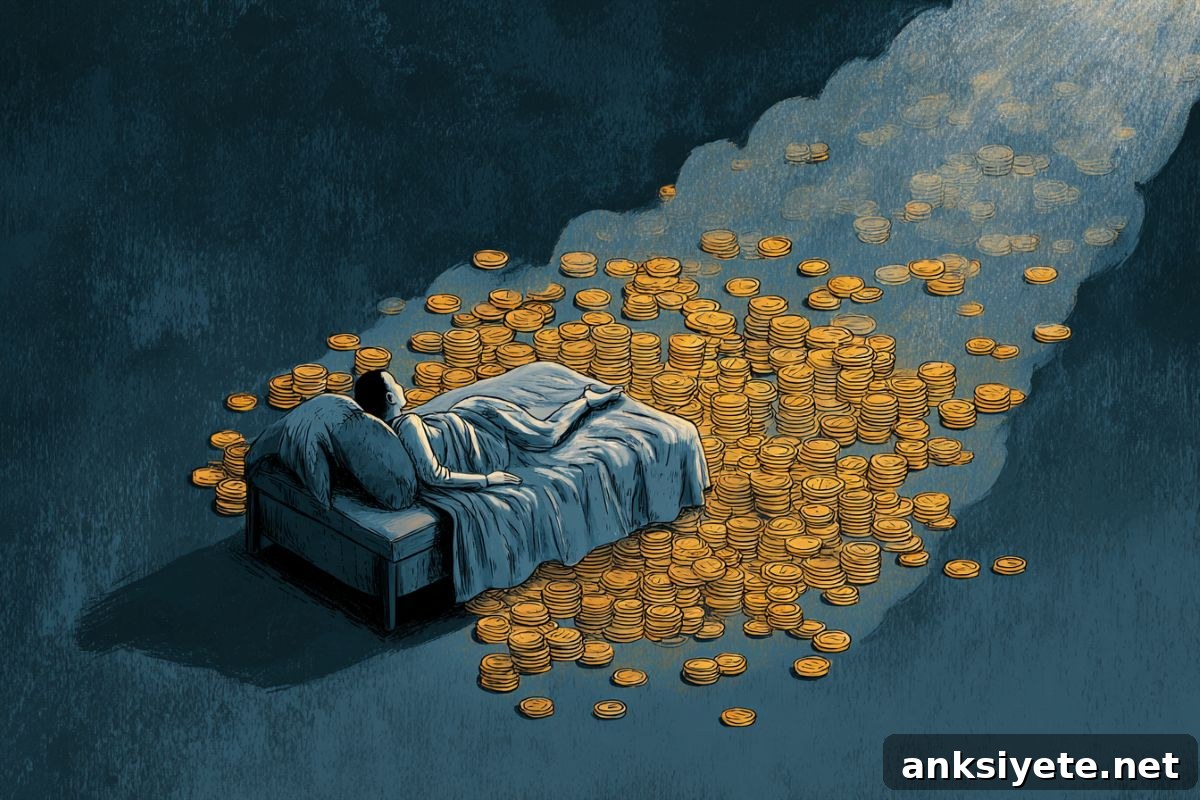
Summary: A new behavioral economics and sleep medicine study quantified the financial value people place on their nightly sleep. Researchers validated a two-factor structure for the Monetary Sleep Value Questionnaire and examined how demographics and psychological sleep attitudes influence economic choices related to rest.
Using a national sample of 455 adults, the study identified two primary monetary dimensions: how much an individual is willing to pay to improve sleep quality, and how much money they would require to forgo an hour of sleep each night. Results show that age, baseline income, and psychological sleep profiles meaningfully shape these monetary values, offering a practical economic framework to forecast sleep-related behavior and to design personalized interventions.
Key Facts
- From societal loss to individual valuation: While public health research often emphasizes the large-scale economic costs of insufficient sleep, this study reframes the issue at the individual level by measuring how workers and adults personally price their nightly rest.
- Two-factor monetary model: Validation of the Monetary Sleep Value Questionnaire showed that sleep valuation consists of two distinct behavioral dimensions:
- Willingness to Pay (WTP): The amount people would spend to secure better sleep quality.
- Compensation Required: The cash payment individuals would demand to permanently give up one hour of sleep per night.
- Income and compensation: Analysis revealed a positive association between baseline income and compensation demands—participants with higher incomes required larger payments to sacrifice an hour of sleep nightly.
- Age and sleep trade-offs: In contrast, older participants generally accepted lower compensation to give up sleep than younger adults, suggesting shifting priorities and sleep needs across the lifespan.
- Psychological profiles matter: Using the Sleep Value Item Bank 2.0, researchers grouped respondents into behavioral profiles. Those in the “Sleep Appreciate” group reported higher willingness to pay for improvements in sleep quality, while participants labeled “Sleep Devalue” were more willing to trade away sleep for smaller monetary gains.
- Practical application for health interventions: Lead author Abigail Woolley highlights that expressing sleep health in monetary terms gives clinicians and public health practitioners a concrete tool for tailoring messages and designing interventions that align with a patient’s financial motivations and lifestyle.
Source: AASM
Study overview — Presented at the SLEEP 2026 annual meeting, the study supports a two-factor structure for the Monetary Sleep Value Questionnaire, separating willingness to pay from compensation required to sacrifice sleep. All reported associations between the questionnaire dimensions and demographic or psychological variables were statistically significant.
Researchers collected data from 455 adults across the continental United States (mean age 45 years; 53% female; 82% white; 50% married). Participants completed the Sleep Value Item Bank 2.0, which classifies individuals into five sleep-value profiles (Unconcerned, Appreciative, Ambivalent, Devaluing, and Concerned), along with the Monetary Sleep Value Questionnaire. The monetary questionnaire includes eight items that assess willingness to pay for sleep quality gains and eight items that gauge compensation required for various sleep losses, spanning scenarios from temporary to permanent loss of one hour nightly for life.
The American Academy of Sleep Medicine recommends seven or more hours of sleep per night for adults and recognizes sleep as essential to health. While society-level economic costs of sleep deprivation are well documented, this study fills a gap by clarifying how individuals assign personal economic value to sleep and how those valuations vary by age, income, and attitudes toward rest.
Lead author Abigail Woolley, an undergraduate researcher at Brigham Young University in Provo, Utah, notes: “How individuals financially value sleep likely reflects broader attitudes and life circumstances. The Monetary Sleep Value Questionnaire can help reveal the economic factors shaping sleep decisions and guide tailored intervention strategies.”
By integrating economic perspectives into sleep research, clinicians and policymakers may better design persuasive, high-compliance sleep interventions that resonate with people’s real-world motivations and financial priorities.
Funding: Supported by a grant from the Sleep Research Society Foundation.
Key Questions Answered:
A: They measure trade-offs. The questionnaire asks participants to state what they would pay for better sleep or how much money they would accept to give up an hour of sleep nightly, converting subjective sleep preferences into monetary estimates.
A: The study found a statistical link that likely reflects changing sleep architecture and lifestyle priorities with age. Older adults often experience different sleep patterns and may place lower monetary value on trade-offs that disrupt sleep compared with younger adults balancing career and family demands.
A: It enables clinicians to tailor recommendations to individual motivations. For people who devalue sleep, framing rest in terms of performance, productivity, or long-term financial and health benefits can be more effective than generic advice that “sleep is healthy.”
Editorial Notes:
- This article was edited by a Neuroscience News editor.
- Journal paper reviewed in full.
- Additional context added by staff.
About this neuropharmacology and cancer research news
Author: Hannah Miller
Source: AASM
Contact: Hannah Miller – AASM
Image: The image is credited to Neuroscience News
Original Research: Findings to be presented at SLEEP 2026.