
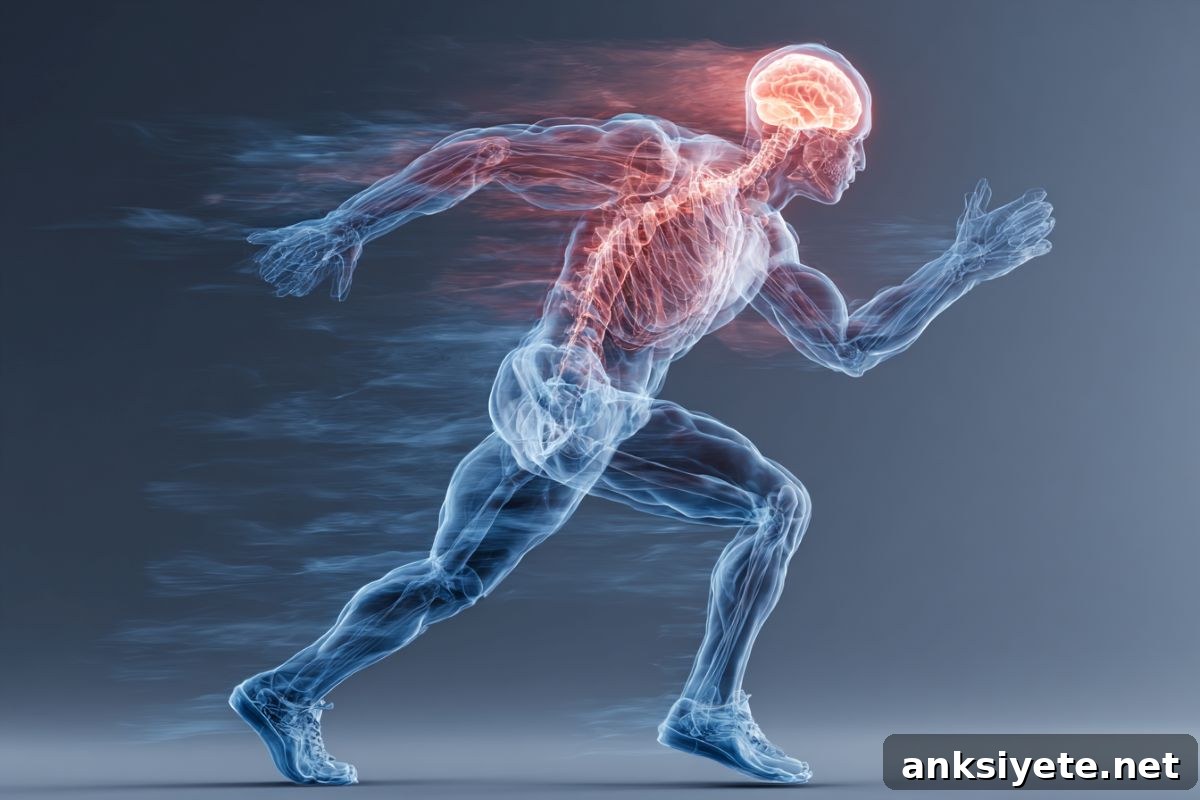
Summary: After a tough run your muscles may feel like they did all the work, but new research shows the brain plays a central role in turning workouts into lasting fitness. Scientists identified a brief post-exercise window driven by a cluster of hypothalamic neurons—called SF1 neurons—that is critical for coordinating muscle remodeling and endurance gains.
Researchers from The Jackson Laboratory and the University of Pennsylvania report in Neuron that a specific group of neurons in the ventromedial hypothalamus becomes active for roughly one hour after exercise. When these “post-run” SF1 neurons are inactive, mice do not show the muscle gene changes or endurance improvements typically produced by training. Conversely, boosting this neural activity after exercise amplifies the benefits.
Key Facts
- Post-exercise “Golden Hour”: SF1 neurons become most active during the hour following physical activity, initiating recovery and adaptation signals to the rest of the body.
- Essential brain-to-muscle signaling: Silencing SF1 neurons after training prevents endurance gains and blocks the gene expression changes that normally remodel muscle for better performance.
- Enhancing endurance: Artificial stimulation of SF1 neurons after moderate exercise increased running distance and top speed in mice compared with controls.
- Exercise-driven neuroplasticity: Repeated training strengthens excitatory synapses and increases the excitability of SF1 neurons; active mice developed roughly twice as many connections in this circuit as sedentary mice.
- Therapeutic potential: Targeting this circuit could help replicate or boost exercise benefits for older adults or people with limited mobility who cannot perform high-intensity workouts.
Source: Jackson Laboratory
Most people assume that muscles alone adapt when you train, but this study shows that the brain must send a precise signal after exercise to trigger those adaptations. The authors tracked neuronal activity in mice and isolated a population of steroidogenic factor-1 (SF1)–expressing neurons in the ventromedial hypothalamus that reliably activate after running.
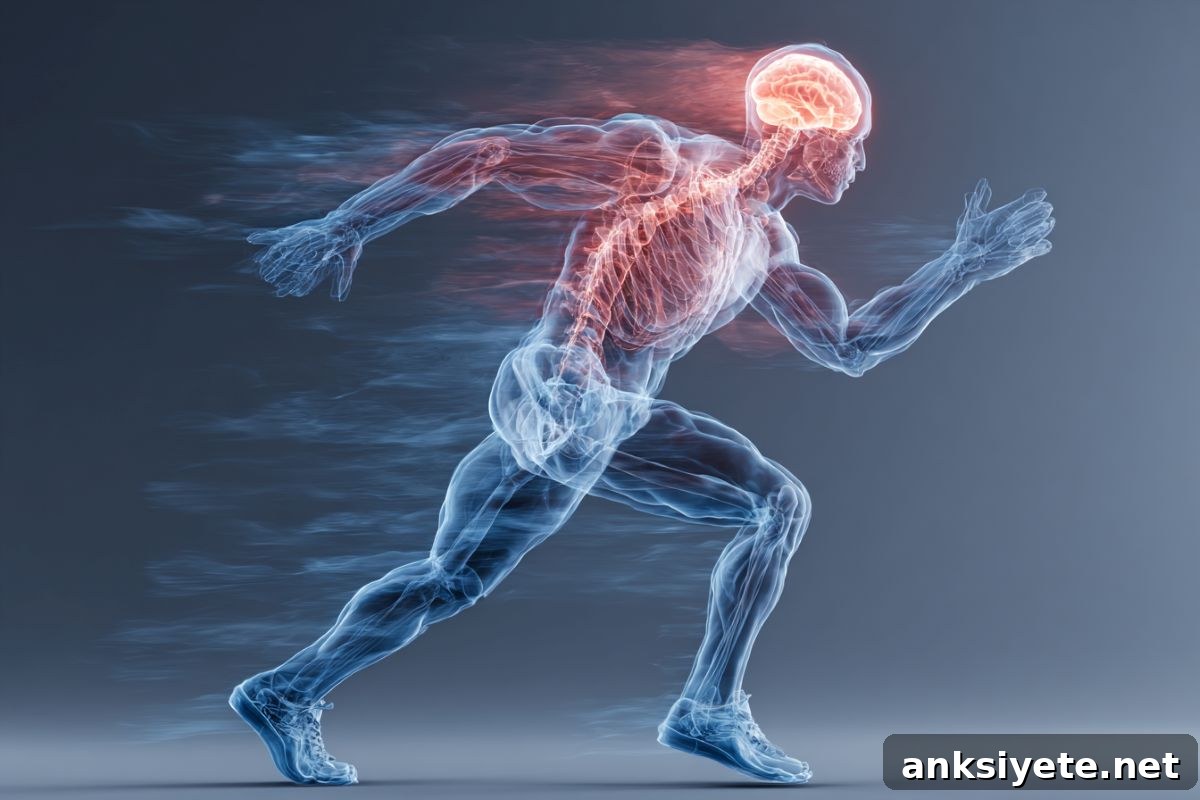
The investigators recorded SF1 neuron responses during and after treadmill runs, and they observed a clear pattern: activity spiked in the post-exercise period rather than during the effort itself. That timing suggested these neurons act as a recovery switch, telling peripheral tissues to begin the metabolic and structural changes required for improved endurance.
Over weeks of training, the post-exercise activation of SF1 neurons became stronger and more widespread. Structural and functional plasticity accompanied that change: the intrinsic excitability of these neurons increased and excitatory synapse density doubled in trained animals compared with sedentary controls. Those neural adaptations appear to encode exercise history within the hypothalamus.
To test causality, the teams used optogenetics and other targeted silencing methods to inhibit SF1 neuron output for brief periods (about 15 minutes) after each training session. Despite identical running schedules, mice with silenced SF1 neurons failed to gain endurance over three weeks. Their skeletal muscles also lacked the typical exercise-induced gene expression changes linked to remodeling and improved metabolic function. In voluntary running tests these mice lost sustained running capacity, briefly engaging the wheel but unable to persist.
In the complementary experiment, researchers stimulated SF1 neurons for an hour after treadmill sessions. These mice showed enhanced endurance adaptations: they covered longer distances and reached higher maximum speeds than control animals by the end of training. Together these findings show that post-exercise hypothalamic activity is not merely a byproduct of running but a necessary driver of the physiological changes that underlie improved fitness.
The work reframes how we think about exercise benefits. Instead of being purely a local process in muscle tissue, endurance adaptation depends on a coordinated central signal that organizes systemic metabolic and structural responses. That coordination explains why identical training loads can produce different outcomes depending on the brain’s post-exercise state.
Corresponding author Erik Bloss of The Jackson Laboratory emphasizes the translational promise: if researchers can safely mimic or enhance the brain’s post-exercise signaling patterns, it might be possible to extend many benefits of exercise to people who cannot carry out demanding physical activity, improving cardiovascular and metabolic health through targeted neural interventions.
Other contributors to the study include Lauren Lepeak and a multidisciplinary team of neuroscientists and physiologists.
Key Questions Answered:
A: Not by thought alone. The study indicates the brain determines whether physical effort produces lasting gains: SF1 neurons must activate after exercise to trigger the muscle and metabolic changes that lead to improved endurance.
A: The hypothalamus coordinates core survival processes and whole-body metabolism. Detecting and responding to recent high energy expenditure allows it to orchestrate adaptations that make the body more resilient for future challenges.
A: The authors are optimistic that understanding these neural pathways could enable treatments that mimic exercise-induced signals, potentially benefiting people with physical limitations by activating the same protective and metabolic programs.
Editorial Notes:
- This article was edited by a Neuroscience News editor.
- The journal paper was reviewed in full by the editorial team.
- Additional context was added by staff to clarify methods and implications.
About this neuroscience and exercise research news
Author: Roberto Molar
Source: Jackson Laboratory
Contact: Roberto Molar – Jackson Laboratory
Image credit: Neuroscience News
Original Research: Open access. Title: Exercise-induced activation of ventromedial hypothalamic steroidogenic factor-1 neurons mediates improvements in endurance. DOI: 10.1016/j.neuron.2025.12.033. The paper’s author list includes Morgan Kindel, Ryan J. Post, Kyle Grose, Louise Lantier, Eunsang Hwang, Jamie R.E. Carty, Lenka Dohnalová, Lauren Lepeak, and others, with Erik B. Bloss and J. Nicholas Betley as senior contributors.
Abstract
Exercise-induced activation of ventromedial hypothalamic steroidogenic factor-1 neurons mediates improvements in endurance
Regular exercise drives wide-ranging benefits by remodeling skeletal muscle, cardiovascular function, metabolism, and endocrine signaling. This study demonstrates that central nervous system activation following exercise is essential for the endurance and metabolic improvements that result from training in mice. Ventromedial hypothalamic SF1 neurons activate after exercise, and repeated training increases that post-exercise activation.
Training enhances the intrinsic excitability and excitatory synapse density of SF1 neurons, indicating that exercise history is encoded through hypothalamic plasticity. Blocking SF1 neuron output prevents endurance gains and associated metabolic improvements, while stimulating these neurons after exercise enhances endurance outcomes. These results establish that SF1 neuron activity following exercise is a necessary coordinator of physiological adaptations to training.