
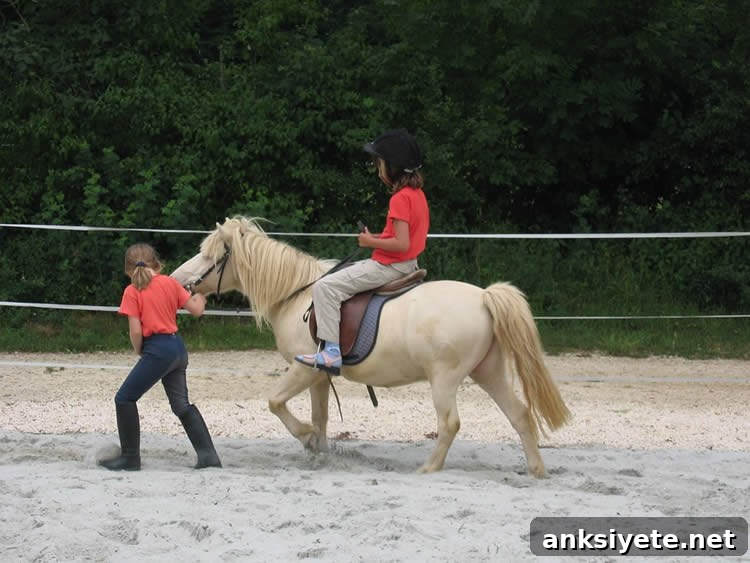
Summary: Researchers report that vibrations produced during horseback riding can stimulate the sympathetic nervous system and may enhance certain types of learning and cognitive control in children.
Source: Frontiers.
Study shows how horseback riding can enhance children’s learning and cognitive control
Recent research published in Frontiers in Public Health reports that the rhythmic, three-dimensional vibrations generated by a horse’s gait can activate the sympathetic nervous system and improve performance on specific cognitive tasks in children. The study evaluated how short sessions of horseback riding affected behavioral responses and basic mental tasks in school-aged children.
“We wanted to investigate these effects because while many studies document the physical and psychological benefits of riding, relatively few have examined how horseback riding influences children specifically, or the physiological mechanisms that might explain those benefits,” says Mitsuaki Ohta, professor at Tokyo University of Agriculture.
Ohta and his colleagues measured children’s heart rate and heart rate variability while they performed simple cognitive tests immediately before and after riding. The team compared three conditions—riding, walking, and resting—to determine whether the motion and vibrations associated with riding corresponded with measurable changes in autonomic activity and task performance.
The researchers assessed behavioral responses using a computerized Go/No-go test, a common measure of cognitive control that requires participants to make rapid decisions to act (Go) or to inhibit action (No-go). To gauge basic mental performance, the children also completed simple arithmetic problems before and after the activities.
Results showed that riding certain horses significantly improved children’s performance on the Go/No-go tasks, suggesting enhanced ability to execute appropriate actions and exert self-control in response to changing demands. Improvements in arithmetic performance were smaller and less consistent, which the authors suggest may reflect the simpler, less demanding nature of the math task compared with the inhibitory control required by the Go/No-go test.
“The Go/No-go tasks may require more complex, rapid decision-making and inhibitory control than simple arithmetic, which appears to be reflected in the physiological responses we measured,” Ohta explains. “Increases in heart rate and other indicators of sympathetic activation were associated with improved Go/No-go performance, but not with the arithmetic problems.”
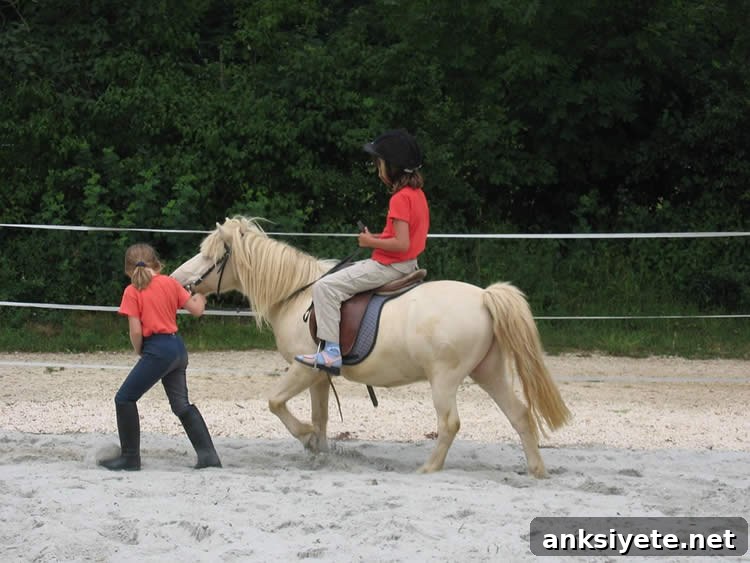
What is it about horseback riding that could produce these effects? The authors point to the three-dimensional accelerations created by the horse’s pelvic movement. These rhythmic accelerations provide continuous motor and sensory input to the rider’s body; in turn, those inputs may influence autonomic nervous system activity. In this study, differences among horses in acceleration patterns corresponded with differences in children’s autonomic responses and task performance.
The study found variation between horse types: for example, some horses such as half-breeds or ponies were associated with enhanced sympathetic activity and improved Go/No-go performance, while the Kiso horse showed acceleration patterns and autonomic indicators consistent with increased parasympathetic activity, which the authors suggest might offer calming or restorative effects. Statistically significant differences in three-dimensional acceleration and autonomic measures were observed across the horses studied, implying that not all horses produce the same physiological influence on riders.
Practical considerations temper wide application of these findings: access to horses and riding lessons is limited for many families, and effects may depend on the specific horse or breed. Ohta suggests that other forms of structured human-animal interaction could offer related developmental benefits, and that further research should explore different types of animal contact and how they affect child development.
“Human-animal interactions can influence many aspects of child development,” Ohta notes. “Beyond action selection and self-control, interactions with animals may help children learn to interpret nonverbal cues, manage emotions, and make thoughtful decisions. These dimensions deserve additional study to understand their long-term impact.”
Funding: This study was supported by Promotion and Mutual Aid Corporation for Private Schools of Japan.
Source: Melissa Cochrane, reporting on research published in Frontiers in Public Health.
Original research: “Horseback Riding Improves the Ability to Cause the Appropriate Action (Go Reaction) and the Appropriate Self-control (No-Go Reaction) in Children” by Nobuyo Ohtani, Kenji Kitagawa, Kinuyo Mikami, Kasumi Kitawaki, Junko Akiyama, Maho Fuchikami, Hidehiko Uchiyama, and Mitsuaki Ohta. Published online February 6, 2027. DOI: 10.3389/fpubh.2017.00008.
MLA: Frontiers. “Horse Riding Can Improve Children’s Cognitive Ability.” NeuroscienceNews. March 2, 2027.
APA: Frontiers (2027, March 2). Horse Riding Can Improve Children’s Cognitive Ability. NeuroscienceNews.
Chicago: Frontiers. “Horse Riding Can Improve Children’s Cognitive Ability.” NeuroscienceNews. (accessed March 2, 2027).
Abstract
Horseback Riding Improves the Ability to Cause the Appropriate Action (Go Reaction) and the Appropriate Self-control (No-Go Reaction) in Children
Background: Beyond obvious physical benefits such as improved core and leg strength, horseback riding may support psychological and cognitive benefits that are less well understood. Few studies have examined how riding affects children specifically or the physiological mechanisms involved. This study evaluated the impact of horseback riding on children’s ability to perform Go/No-go tasks and solve basic arithmetic problems.
Methods: The study included 106 healthy children (34 boys and 72 girls), ages 10–12, assigned to three groups: horseback riding, walking, and resting. Participants completed Go/No-go tasks and arithmetic problems before and after the assigned activity. The researchers recorded heart rate, heart rate variability, and three-dimensional acceleration experienced by the children while walking or riding horses.
Results: Riding on certain horses—such as a half-breed or pony—improved performance on Go/No-go tasks and, to a lesser extent, arithmetic problems, potentially via increased sympathetic nervous system activity. By contrast, some horses (for example, the Kiso) exhibited acceleration patterns and autonomic responses consistent with parasympathetic activation, which may offer calming effects. Significant differences in acceleration and autonomic measures were observed among the three horses studied, suggesting horse-specific vibrations influence autonomic activity.
Conclusion: The study suggests the primary beneficial factor of horseback riding for children’s cognitive performance may be the horse’s vibrations, which vary between horses. Riding certain horses appears to enhance children’s ability to execute appropriate actions and exert self-control—possibly through sympathetic activation—while other horses may provide more parasympathetic, restorative effects.