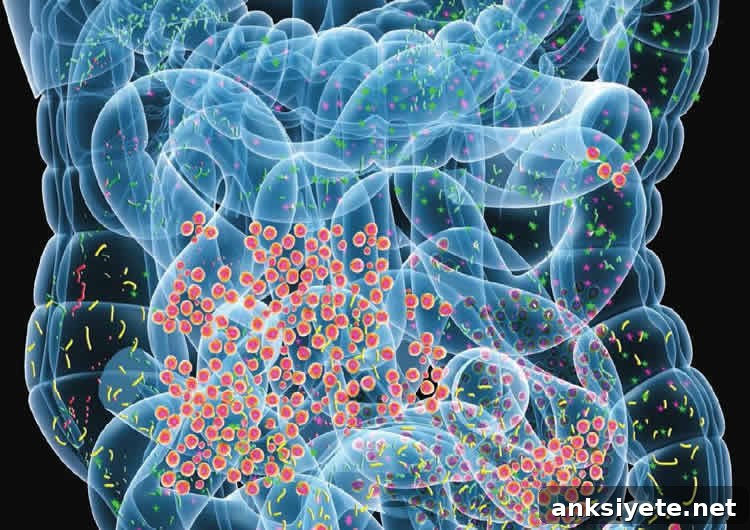
Summary: New research indicates that gut bacteria can influence the neural circuits that control movement in fruit flies. The findings raise the possibility that microbes in the gut may play a similar role in mammalian locomotion and contribute to movement disorders such as Parkinson’s disease.
Source: NIH/NINDS
Researchers report in Nature that gut bacteria can modulate locomotion in fruit flies and identify the neurons involved in this effect. The study was supported by the National Institute of Neurological Disorders and Stroke (NINDS), part of the National Institutes of Health.
“This work strengthens evidence for communication between the gut and the brain and outlines a mechanism by which gut bacteria can influence behavior, including movement,” said Margaret Sutherland, Ph.D., program director at NINDS.
Investigators led by Sarkis K. Mazmanian, Ph.D., at the California Institute of Technology, with graduate student Catherine E. Schretter, examined how the absence of gut microbes affects behavior in Drosophila melanogaster. They found that germ-free flies—those reared without microbes—were consistently hyperactive. Compared with conventionally raised flies, germ-free animals walked faster, covered longer distances, and took shorter rest periods.
Because locomotion is essential for core behaviors such as searching for food and mating, the team explored which bacterial species and molecules might restore normal movement. Fruit flies naturally host between five and twenty bacterial species. When germ-free flies were colonized individually with specific strains, only a small subset normalized locomotion. One of those effective strains was Lactobacillus brevis; flies mono-associated with L. brevis displayed walking speeds and activity patterns similar to conventionally colonized animals.
The researchers traced this behavioral effect to a bacterial enzyme, xylose isomerase (Xi), which converts certain sugars. Treating germ-free flies with purified Xi alone was sufficient to reduce their hyperactive walking to normal levels. Additional metabolic assays showed that Xi altered levels of trehalose, the principal circulating sugar in flies that plays a role comparable to glucose in mammals. Flies given Xi had reduced trehalose compared with untreated germ-free controls, and supplying trehalose to Xi-treated flies reversed the calming effect, restoring faster movement. These results indicate that Xi acts through modulation of carbohydrate metabolism.
To identify how gut-derived signals reach the nervous system, the team examined neuronal populations that regulate locomotion. Activating octopaminergic neurons—cells that produce the invertebrate neuromodulator octopamine—overrode the behavioral effects of L. brevis or Xi. In other words, when octopamine-producing neurons were turned on, Xi-treated or L. brevis–colonized flies resumed hyperactive walking. Similarly, activating those neurons in normally colonized flies increased their movement. Activation of neurons that release other neuromodulators did not produce comparable changes, implicating octopaminergic cells as a specific mediator of this microbe-to-brain communication.
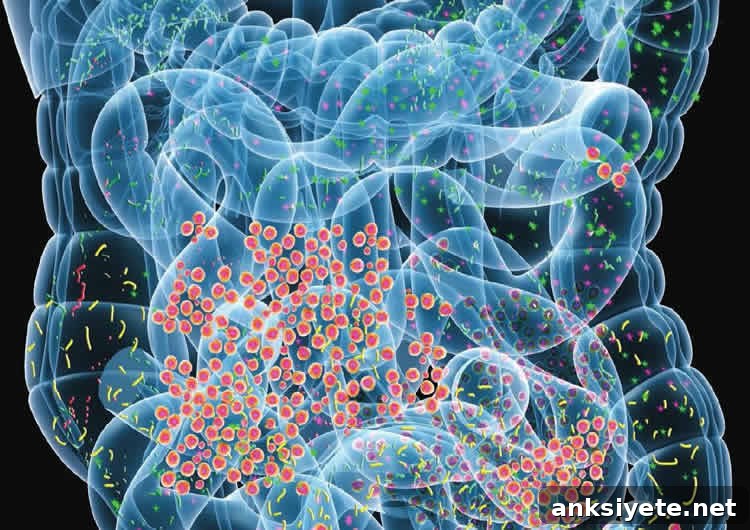
The authors propose that bacterial Xi monitors or alters the host’s metabolic state—specifically sugar levels—and that changes in carbohydrate availability are communicated to the nervous system via octopaminergic neurons. In this model, fluctuations in metabolites like trehalose influence the activity of these neurons, thereby tuning locomotor behavior to the host’s nutritional and microbial environment.
Because octopamine is functionally analogous to mammalian noradrenaline, the findings raise the possibility that gut microbes could also affect locomotion in vertebrates and might be relevant to disorders of movement. “Gut bacteria may play a similar role in mammalian locomotion, and even in movement disorders such as Parkinson’s disease,” said Dr. Mazmanian. The authors emphasize that further work is required to determine whether comparable microbial factors and pathways exist in mammals and how they might contribute to human health and disease.
Funding: This research was supported by the National Institute of Neurological Disorders and Stroke (grant NS085910).
Source: Barbara McMakin, NIH/NINDS
Publisher: Organized by Neuroscience News
Image Source: NeuroscienceNews.com image in the public domain.
Original research: Schretter CE, Vielmetter J, Bartos I, Marka Z, Marka S, Argade S, & Mazmanian SK. “A gut microbial factor modulates locomotor behaviour in Drosophila.” Nature. Published October 24, 2018. doi: 10.1038/s41586-018-0634-9
MLA: NIH/NINDS. “Gut Bacteria May Control Movement.” Neuroscience News, 1 November 2018.
APA: NIH/NINDS (2018, November 1). Gut Bacteria May Control Movement. Neuroscience News.
Chicago: NIH/NINDS. “Gut Bacteria May Control Movement.” Neuroscience News. (accessed November 1, 2018).
Abstract
A gut microbial factor modulates locomotor behaviour in Drosophila
Most studies of animal behavior focus on the central nervous system, but peripheral tissues and environmental cues also shape brain function. Emerging evidence suggests bidirectional gut–brain communication influences anxiety, cognition, pain sensitivity and social behavior. Coordinated locomotion is vital for survival and reproduction and depends on internal and external sensory inputs. Little is known, however, about how the gut microbiome affects host locomotion and the underlying molecular and cellular mechanisms. This study reports that germ-free status or antibiotic treatment produces hyperactive locomotor behavior in Drosophila melanogaster. Increased walking speed and daily activity in the absence of a microbiome are rescued by colonization with specific bacteria, including Lactobacillus brevis. The bacterial enzyme xylose isomerase from L. brevis reproduces the locomotor effect by altering sugar metabolism. Activation of octopaminergic neurons, or administration of octopamine, blocks the effects of xylose isomerase on locomotion, identifying octopaminergic neurons as mediators of microbial signals that regulate motor behavior.