
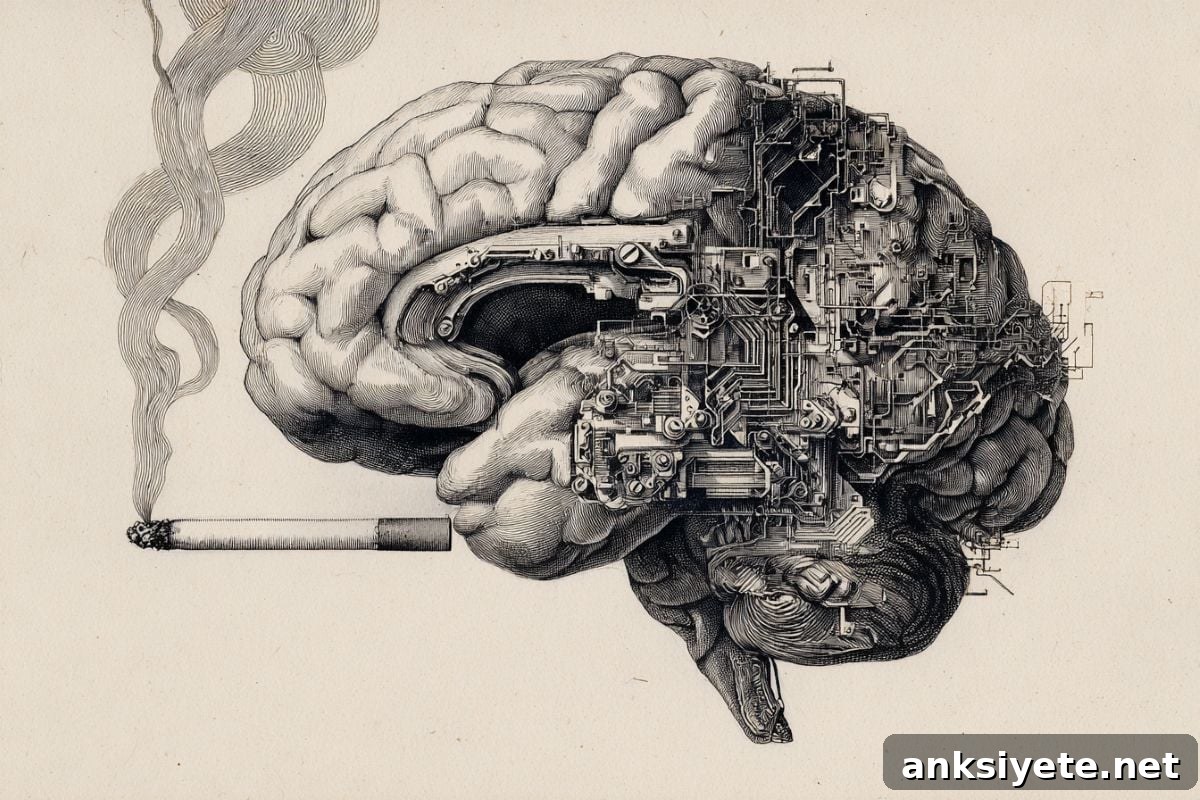
Summary: New research reveals that astrocytes — a type of glial cell — actively contribute to nicotine-driven changes in the brain, challenging the long-standing neuron-centered view of addiction. Nicotine activates specific receptors on astrocytes, triggering intracellular calcium signaling that leads to pJNK activation, enhanced glutamine synthetase (GS) activity, and amplification of glutamate-related pathways.
These molecular changes strengthen locomotor sensitization, a measurable form of addiction-like neural adaptation. When researchers blocked a key astrocytic signaling interaction, they significantly reduced the behavioral effects of repeated nicotine exposure in animal models, identifying a potential new direction for therapeutic research into nicotine dependence.
Key Facts
- Astrocyte activation: Nicotine stimulates α7 nicotinic acetylcholine receptors on astrocytes, producing calcium-dependent signaling that activates phosphorylated c-Jun N-terminal kinase (pJNK) and boosts glutamine synthetase activity.
- Glutamate pathway: Increased GS activity enhances the glutamate–glutamine cycle, reinforcing glutamatergic transmission linked to addiction-related plasticity.
- Therapeutic potential: Blocking the pJNK–mGluR1a interaction reduced nicotine-induced locomotor sensitization in rats, suggesting astrocytic signaling components as potential long-term targets for smoking-cessation therapies.
Source: Pusan National University
Nicotine addiction remains one of the most persistent global public health problems, driven by brain adaptations that promote repeated use and make quitting difficult.
Historically, addiction research has focused on neurons as the primary drivers of these changes. However, accumulating evidence indicates that non-neuronal cells — especially astrocytes — play an active and influential role in shaping the neural adaptations that underlie dependence.
A research team led by Professor Eun Sang Choe in the Department of Biological Sciences at Pusan National University (Republic of Korea) examined how astrocytes contribute to nicotine-induced neural changes. Their work highlights a mechanism centered on astrocytic glutamine synthetase (GS), a key enzyme that regulates levels of glutamate, the brain’s main excitatory neurotransmitter.
The study was published online in the journal Acta Pharmaceutica Sinica B on 25 September 2025.
“Most prior studies of nicotine addiction focus on neurons and often overlook glial cells,” says Prof. Choe. “Our study demonstrates that astrocytes interact with neurons inside the brain’s reward circuits to regulate nicotine-dependent behavior, advancing our understanding of addiction biology.”
In the experiments, rats received repeated nicotine injections. The researchers observed that nicotine stimulated α7 nicotinic acetylcholine receptors on astrocytes in the caudate and putamen regions, causing a rise in intracellular calcium. That calcium surge triggered activation of pJNK, a stress- and drug-responsive kinase.
Activated JNK then interacted with the metabotropic glutamate receptor 1a (mGluR1a) at the receptor’s carboxyl terminus, which in turn increased GS activity. Heightened GS activity amplified the glutamate–glutamine cycle and was associated with increased locomotor sensitization — a behavioral hallmark of repeated drug exposure and neural sensitization.
To test causality, the team used a custom inhibitory peptide designed to disrupt the pJNK–mGluR1a interaction. Delivering this peptide directly into the caudate and putamen of nicotine-exposed rats significantly reduced the nicotine-induced rise in GS activity. Behaviorally, animals treated with the peptide showed markedly less locomotor sensitization compared with controls, indicating that astrocytic signaling is a critical driver of nicotine-induced neural and behavioral changes.
The authors also demonstrated these molecular steps in cultured glioma C6 cells and primary astrocytes, confirming that nicotine-induced pJNK activation and subsequent phosphorylation of mGluR1a are Ca2+-dependent and lead to enhanced GS activity. Pharmacological inhibition of GS in the caudate and putamen similarly reduced repetitive nicotine-induced hyperactivity, reinforcing the link between astrocytic GS and sensitization.
These findings shift the focus from neurons alone to dynamic neuron–glia communication in addiction research. While nicotine dependence has long been associated with disrupted glutamate signaling, this study shows that astrocytes actively participate in the molecular cascade that strengthens repeated nicotine use. The work is preclinical, but the implications are important for designing future interventions that target glial mechanisms as part of smoking-cessation strategies.
“Clinical translation will take time and further study,” Prof. Choe cautions, “but this research deepens our understanding of nicotine addiction and points toward new therapeutic strategies that may one day complement existing cessation treatments.”
Key Questions Answered:
A: Nicotine activates α7 nicotinic acetylcholine receptors on astrocytes, triggering Ca2+-dependent signaling that activates pJNK and increases glutamine synthetase activity, thereby reinforcing glutamate-driven reinforcement processes.
A: It broadens the focus beyond neurons to include neuron–glia interactions, demonstrating that astrocytes are active participants in brain adaptations that sustain nicotine dependence.
A: Although findings are preclinical, disrupting astrocytic signaling reduced nicotine-induced sensitization in animal models, indicating astrocytic pathways could be explored as future therapeutic targets.
Editorial Notes:
- This article was edited by a neuroscience news editor.
- The journal paper was reviewed in full for accuracy.
- Additional context was added by the editorial team to clarify methods and implications.
About this nicotine addiction and neuroscience research news
Author: Goon-Soo Kim
Source: Pusan National University
Contact: Goon-Soo Kim – Pusan National University
Image credit: Neuroscience News
Original Research: Open access.
“Glutamine synthetase in astrocytes of the caudate and putamen is responsible for locomotor sensitization after nicotine exposure” by Eun Sang Choe et al., Acta Pharmaceutica Sinica B (published online 25 September 2025).
Abstract
Glutamine synthetase in astrocytes of the caudate and putamen is responsible for locomotor sensitization after nicotine exposure
Glutamine synthetase (GS) in astrocytes maintains glutamate homeostasis and supports glutamatergic neurotransmission by facilitating glutamate clearance and conversion to glutamine.
This study shows that GS in astrocytes of the caudate and putamen (CPu) regulates locomotor sensitization following repeated nicotine exposure.
Nicotine increased phosphorylated c-Jun N-terminal kinase (pJNK) through stimulation of α7 nicotinic acetylcholine receptors in cultured glioma C6 cells and primary astrocytes in a calcium-dependent manner.
Active JNK phosphorylated mGluR1a at its carboxyl terminus in vitro. Disrupting the pJNK–mGluR1a interaction with an inhibitory peptide (Tat-mGluR1a-i, 10 μmol/L) decreased nicotine-induced increases in GS activity in both glioma C6 cells and primary astrocytes.
Corresponding in vivo experiments showed similar effects after bilateral intra-CPu infusion of the inhibitory peptide (2 nmol/side). Pharmacological inhibition of GS by bilateral intra-CPu infusion of methionine sulfoximine (50 nmol/side) also reduced repeated nicotine-induced increases in locomotor activity.
Together, these results indicate that astrocytes in the CPu enhance locomotor sensitization by upregulating GS via the pJNK–mGluR1a interaction, a pathway linked to α7 nicotinic acetylcholine receptor activation in response to nicotine.