
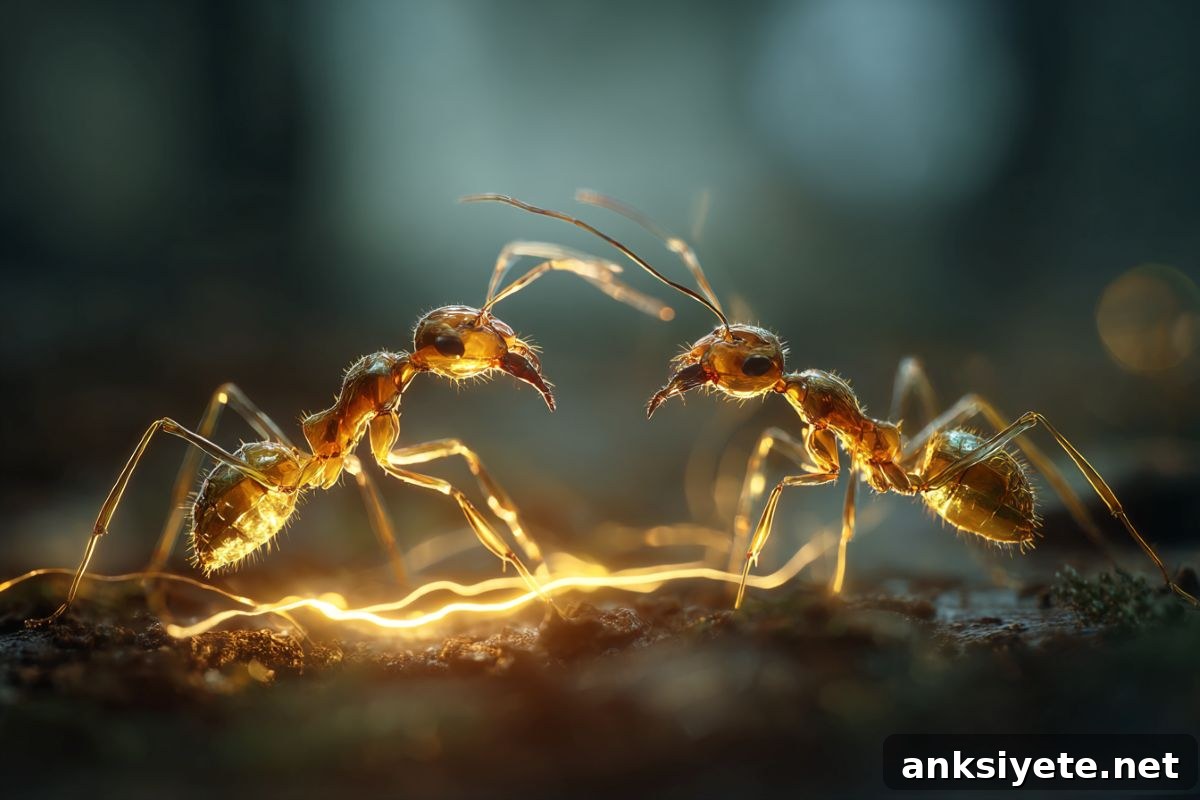
Summary: New research shows that ants’ ability to tell nestmates from outsiders is not a fixed genetic program but a flexible, learned behavior. Working with clonal raider ants, researchers found that ants have an intrinsic “sense of self” linked to their genotype, yet they can update their social template through repeated exposure to foreign colony odors. This learned tolerance can allow outsiders to be integrated into a colony, provided there is ongoing contact to maintain the change. The findings portray the colony as a superorganism that relies on a sophisticated social immune system to manage cooperation and defense.
The study reveals how clonal raider ants update nestmate recognition during adulthood through chronic exposure while still preserving an innate recognition of genetic kin. It offers a behavioral foundation for future work probing how ant brains process social odors.
Key Facts
- Chemical signatures: Ants discriminate “self” and “other” using specific ratios of waxy hydrocarbons on their cuticle, producing a colony-specific odor profile.
- Malleable identity: Young ants introduced into foreign colonies can adopt the foster colony’s scent and be accepted as nestmates, demonstrating that social identity can be updated in adulthood.
- “Use it or lose it” rule: Learned tolerance is fragile; removing a newcomer from the foster colony for about a week restores aggressive responses.
- Intrinsic persistence: Even after learning to accept foster families, ants retain recognition of their own genetic kin and do not entirely lose their biological template.
Source: Rockefeller University
Distinguishing nestmates from outsiders is vital for ant colonies. New findings reveal that the recognition system is far more flexible than previously thought.
Published in Current Biology, the study shows that clonal raider ants update their nestmate template through repeated exposure to foreign odors while still maintaining an intrinsic kin recognition. The experiments illuminate how insiders learn to tolerate outsiders and how outsiders come to identify with a new group, setting the stage for neurobiological investigations of social odor processing.
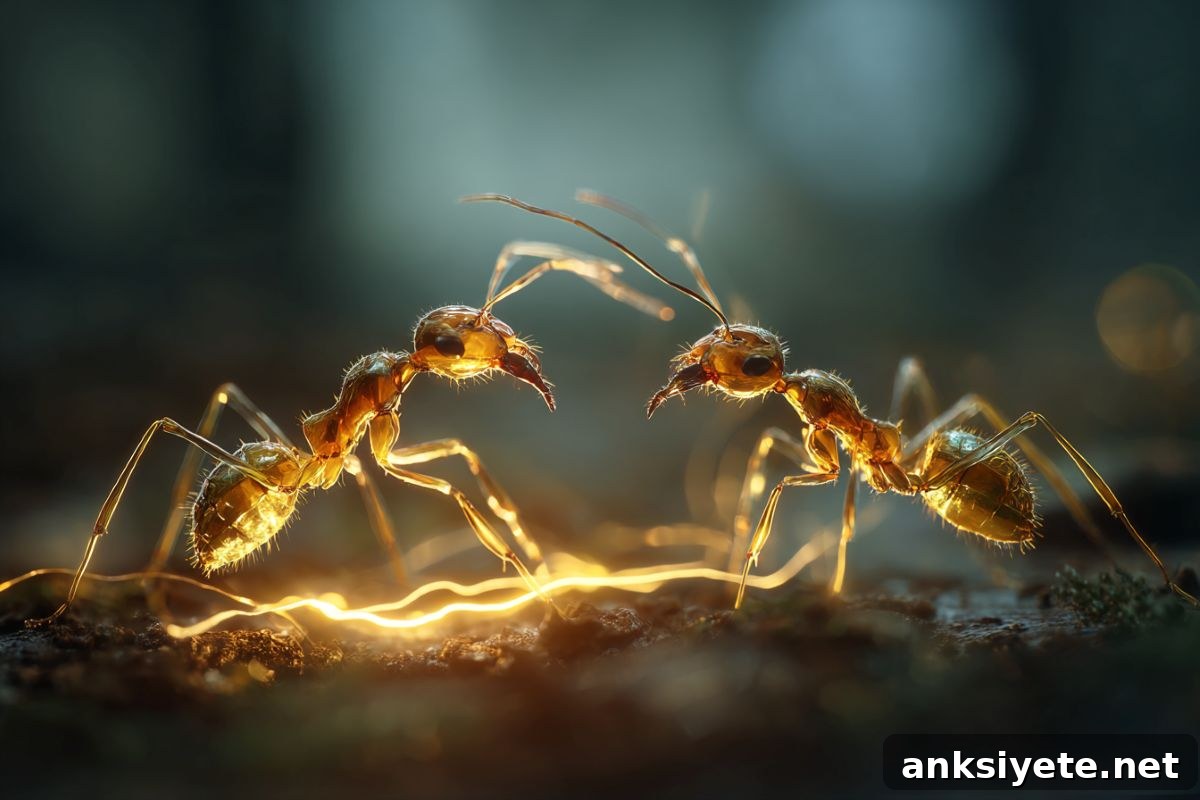
“We’ve long known ants distinguish colony members from outsiders, but less was known about how flexible that behavior can be,” says Daniel Kronauer, head of the Laboratory of Social Evolution and Behavior. “This work is a first step toward understanding, at the behavioral level, how ants make that distinction and will inform future experiments into the neurobiological basis of ant society.”
Life as a superorganism
Ant colonies represent a major evolutionary transition from solitary living to highly cooperative societies—so-called superorganisms—where thousands of individuals coordinate activities. That coordination depends on reliably distinguishing self from outsider, much like immune systems must attack pathogens without harming the host. Ants accomplish this discrimination with waxy hydrocarbons coating their bodies: colonies share the same classes of compounds but differ in the precise ratios, creating subtle but recognizable colony-specific odor signatures.
Because colony odor can change—through genetic composition shifts, environmental influences, or changes in neighbors—ants need mechanisms to update recognition templates. Tiphaine Bailly and colleagues hypothesized that learning plays a larger role than previously appreciated and designed experiments to test the flexibility of nestmate recognition.
An ant’s sense of self
The researchers used the clonal raider ant (Ooceraea biroi), a species that reproduces asexually and allows production of genetically identical individuals across lineages. This enabled precise control of individual genotypes and colony composition. Chemical analysis confirmed that colonies share the same set of cuticular compounds but mix them in colony-specific ratios. Introducing single ants from other genotypes into standardized colonies produced consistent aggressive responses at baseline, confirming recognition of foreign genotypes.
The team then tested whether recognition rules can be changed. Young ants with faint chemical profiles were placed into foreign colonies. After about one month of continuous exposure, these ants’ cuticular chemistry shifted to resemble their foster colony and their behavior toward foster nestmates became non-aggressive—much like ants born into that colony. However, even ants raised apart from genetic kin still accepted individuals with their own genotype, indicating that experience can broaden recognition without erasing an ant’s genetic template.
Learned tolerance proved fragile: when newcomers were separated from the foster colony, aggression reappeared within roughly a week. Their chemical profiles gradually drifted back toward the original genotype, eventually provoking attacks by their foster nestmates. Conversely, occasional re-exposure—brief or sporadic encounters—was sufficient to maintain tolerance for extended periods, suggesting a form of long-term olfactory memory rather than transient sensory desensitization.
This dynamic resembles exposure-based tolerance seen in immune systems, where repeated low-level exposure to an antigen can reduce defensive reactions. Conceptually similar, ants repeatedly exposed to foreign colony odors cease to treat them as threats, and intermittent contact is enough to preserve that tolerance.
Kronauer notes the analogy is conceptual rather than molecular: the underlying mechanisms differ, but the parallel between the evolution of ant colonies and the emergence of multicellularity highlights common challenges in maintaining cooperative systems.
Overall, the results show nestmate recognition is flexible but bounded. Ants can update their internal template of colony membership during adulthood while retaining an innate recognition of their genotype. These behavioral insights enable future experiments combining neurobiological tools with this robust behavioral system to image neural activity when ants encounter nestmates versus non-nestmates and to locate where learning and adaptation occur in the ant brain.
Key Questions Answered
Q: Can an ant “forget” who its family is?
A: Not completely. Ants can learn to accept strangers through continual contact, but they retain an internal biological template for recognizing genetic kin.
Q: How is an ant colony like the human immune system?
A: Both systems can use repeated exposure to reduce defensive responses. Constant or repeated low-level exposure to a foreign cue can train a colony—conceptually similar to exposure therapy in immunology—to tolerate that cue instead of attacking.
Q: What happens if an ant leaves the colony for a week?
A: Social tolerance requires ongoing chemical reinforcement. An ant away too long loses the colony-associated scent and may be treated as an intruder on return.
Editorial Notes
- This piece was edited by a Neuroscience News editor.
- The journal paper was reviewed in full.
- Additional context was added by editorial staff.
About this social neuroscience research news
Author: Katherine Fenz
Source: Rockefeller University
Contact: Katherine Fenz – Rockefeller University
Image: The image is credited to Neuroscience News
Original Research: Open access. “Tolerance toward foreigners in ants requires chronic exposure for establishment but only sporadic exposure for maintenance” by Tiphaine P.M. Bailly, Matteo Rossi, Stephany Valdés-Rodríguez, Thomas Schmitt, Erik T. Frank, Daniel J.C. Kronauer. Current Biology. DOI: 10.1016/j.cub.2026.02.041
Abstract
Tolerance toward foreigners in ants requires chronic exposure for establishment but only sporadic exposure for maintenance
Social insects use complex olfactory cues to discriminate between colony members and outsiders. While genetically distinct individuals can sometimes be accepted as nestmates, the conditions that govern acquisition, maintenance, and loss of tolerance—and the timescales involved—have remained unclear.
This study addresses that gap by investigating non-nestmate discrimination in the clonal raider ant, Ooceraea biroi, allowing precise control over individual genotypes and colony composition. Using cross-fostering with mixed-genotype colonies, the authors demonstrate that ants become non-aggressive toward their foster genotype. That tolerance is transient: aggression resumes after roughly two weeks of isolation from the foster colony. However, sporadic re-exposure is enough to maintain tolerance for over a month, whereas the same intermittent exposure cannot establish tolerance in the first place.
These results show that non-nestmate discrimination is highly plastic and that once tolerance is established it can be preserved by intermittent contact—dynamics that reflect broader principles of social learning and contact-dependent tolerance found across social species, including humans.