
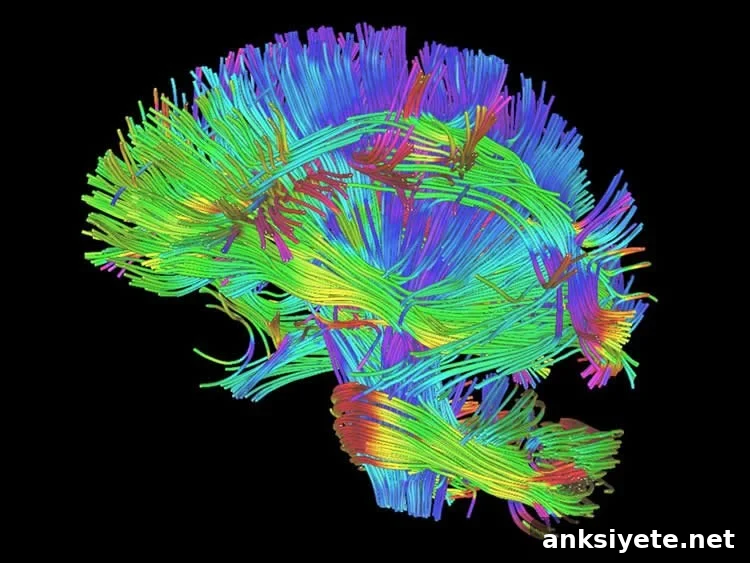
Summary: After a single season of high school football, advanced brain imaging shows measurable changes in both gray and white matter that correlate with head impact exposure, according to a new study.
Source: RSNA
New brain imaging exams on high school football players reveal structural and functional changes after just one season that correlate with measured head impacts.
Understanding how youth contact sports affect the developing brain is essential, said Elizabeth Moody Davenport, Ph.D., a postdoctoral researcher at UT Southwestern Medical Center in Dallas, Texas, who led the study. “While chronic traumatic encephalopathy (CTE) is documented in some professional players, we need to know when and how injury-related processes begin in adolescents so sports remain safe for children and teens,” she said.
The prospective study followed 24 players from a single North Carolina high school football team. Each athlete wore a helmet equipped with the Head Impact Telemetry System (HITS) during practices and games. HITS helmets contain six accelerometers that record the magnitude, location and direction of every impact. The recorded impact data were uploaded and analyzed alongside brain imaging results.
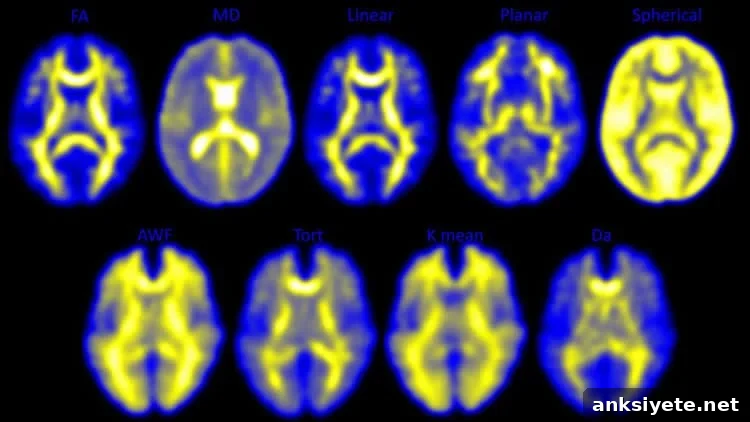
Each player received brain imaging before and after the season. Imaging included specialized MRI sequences—diffusion tensor imaging (DTI) and diffusion kurtosis imaging (DKI)—to evaluate white matter microstructure, and magnetoencephalography (MEG) to assess brain electrical activity by measuring magnetic fields produced by neuronal currents. Diffusion imaging detects subtle structural changes in white matter, while MEG reveals functional abnormalities such as slow wave activity.
“MEG detects delta waves, which are slow brain waves that often increase after brain injury and can act like a distress signal,” Dr. Davenport explained. “These delta waves originate near the cortical surface, whereas diffusion imaging probes deeper white matter pathways.”
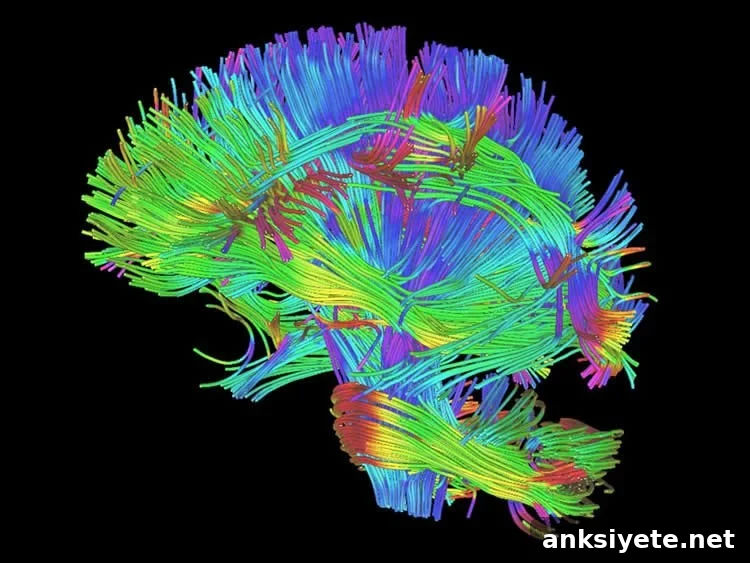
The research team compared each player’s post-season imaging to their pre-season baseline, calculating changes in diffusion metrics and abnormal increases in MEG delta activity. Those imaging changes were then correlated with individual HITS impact data. Notably, none of the 24 players in the study were clinically diagnosed with a concussion during the season.
Players with higher cumulative exposure to head impacts showed the greatest changes on both diffusion imaging and MEG. The study found distinct biomechanical relationships: diffusion MRI changes correlated more strongly with linear acceleration—the type of force similar to what occurs in motor vehicle collisions—while MEG delta wave increases correlated more with rotational impact, the twisting forces common in blows that cause the brain to rotate within the skull.
“These findings suggest that assessing head impact effects requires both structural diffusion imaging and functional MEG, since each modality reflects different mechanical aspects of injury,” Dr. Davenport said. “Together they provide a more complete picture of how repetitive head impacts may affect the adolescent brain, even in the absence of diagnosed concussion.”
The investigators emphasized the need for larger, longitudinal studies to determine whether these early imaging changes persist, resolve during the off-season, or alter developmental trajectories. A consortium has been formed to expand brain imaging research in youth contact sports across multiple sites to answer these longer-term questions.
Co-authors on the study include Jillian Urban, Ph.D., Ben Wagner, B.S., Mark A. Espeland, Ph.D., Christopher T. Whitlow, M.D., Ph.D., Joel Stitzel, Ph.D., and Joseph A. Maldjian, M.D.
Source: Linda Brooks – RSNA
Image credit: RSNA
Original research presentation: Results were presented at RSNA 2016, the 102nd Scientific Assembly and Annual Meeting in Chicago, November 27–December 2, 2016.