
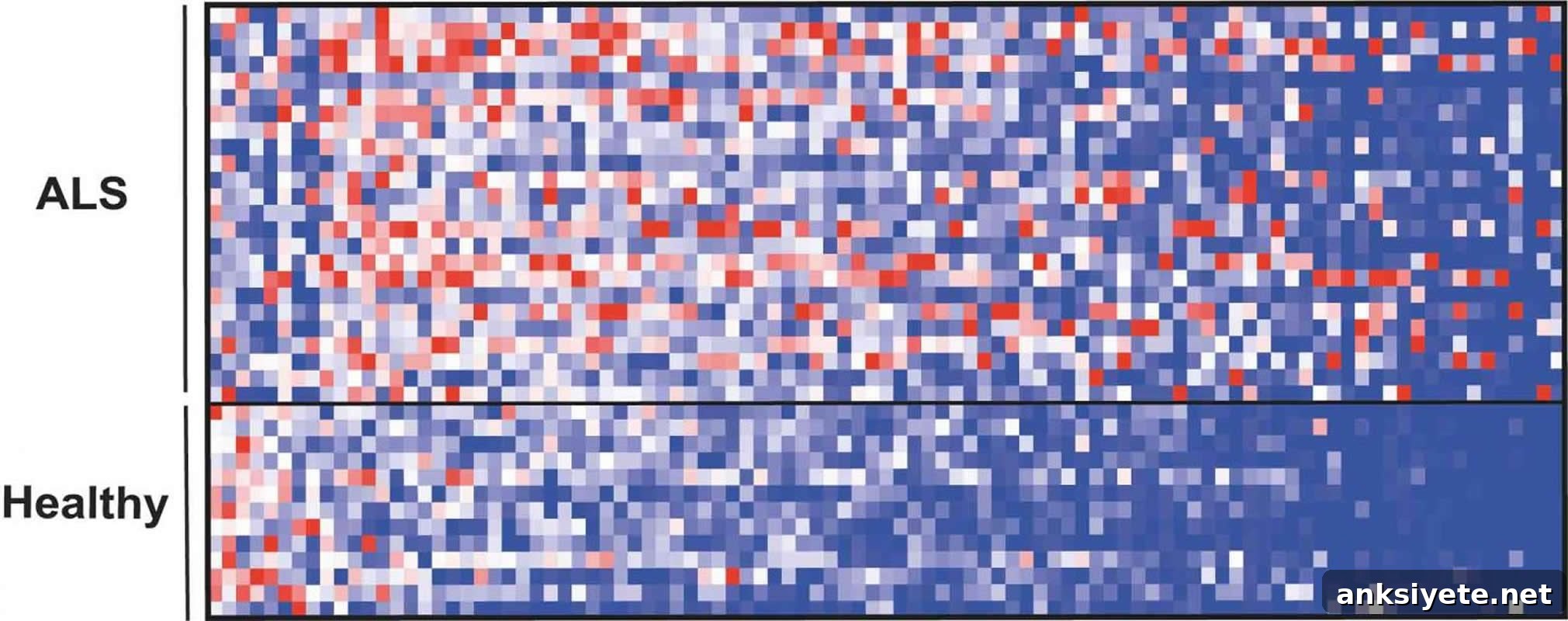
Summary: Researchers reporting from the Weizmann Institute of Science have identified a microbiome-derived molecule that appears to be reduced in the gut and bodily fluids of models of amyotrophic lateral sclerosis (ALS). In mouse models, the team tracked changes in gut bacteria as disease developed, pinpointed specific strains whose presence correlated with disease progression, and demonstrated that one bacterial strain and its secreted metabolite slowed ALS-like progression and improved motor neuron function.
Source: Weizmann Institute of Science
Researchers at the Weizmann Institute of Science have uncovered evidence in mice that the gut microbiome can influence the course of amyotrophic lateral sclerosis (ALS), also known as Lou Gehrig’s disease. Published in Nature, their study shows that specific bacterial strains and the small molecules they produce can either aggravate or mitigate ALS-like symptoms in genetically susceptible mice. Early human data from a small cohort suggest similar metabolite alterations may occur in people with ALS, prompting further clinical investigation.
“Our goal is to define how the microbiome affects human health, with the brain as an especially compelling target,” says Prof. Eran Elinav of the Immunology Department. In collaboration with Prof. Eran Segal (Computer Science and Applied Mathematics), Elinav’s team examined whether gut microbes influence neurodegeneration in ALS. The study was led by postdoctoral fellows Drs. Eran Blacher and Stavros Bashiardes and by staff scientist Dr. Hagit Shapiro, with contributions from Daphna Rothschild, Dr. Marc Gotkine and many colleagues across Weizmann and partner institutions.
The investigators began by manipulating the gut microbiome in ALS-prone transgenic mice. When large portions of the microbiome were eliminated using broad-spectrum antibiotics, the ALS-like symptoms worsened and disease progressed more rapidly. Attempts to rear these ALS-prone mice in germ-free conditions (without any microbiome) also revealed poor survival, supporting a link between altered gut communities and accelerated disease in genetically vulnerable animals.
Using advanced computational profiling of microbial composition and function, the team compared the microbiomes of ALS-prone mice with those of control animals. They identified 11 bacterial strains whose abundance changed either before or during disease onset. The researchers then tested the effects of individual strains by supplementing antibiotic-treated ALS-prone mice with single bacterial isolates, delivered like probiotics. Several strains worsened disease measures, while one strain—Akkermansia muciniphila—produced a clear protective effect: treated mice showed slower progression and extended survival compared with controls.
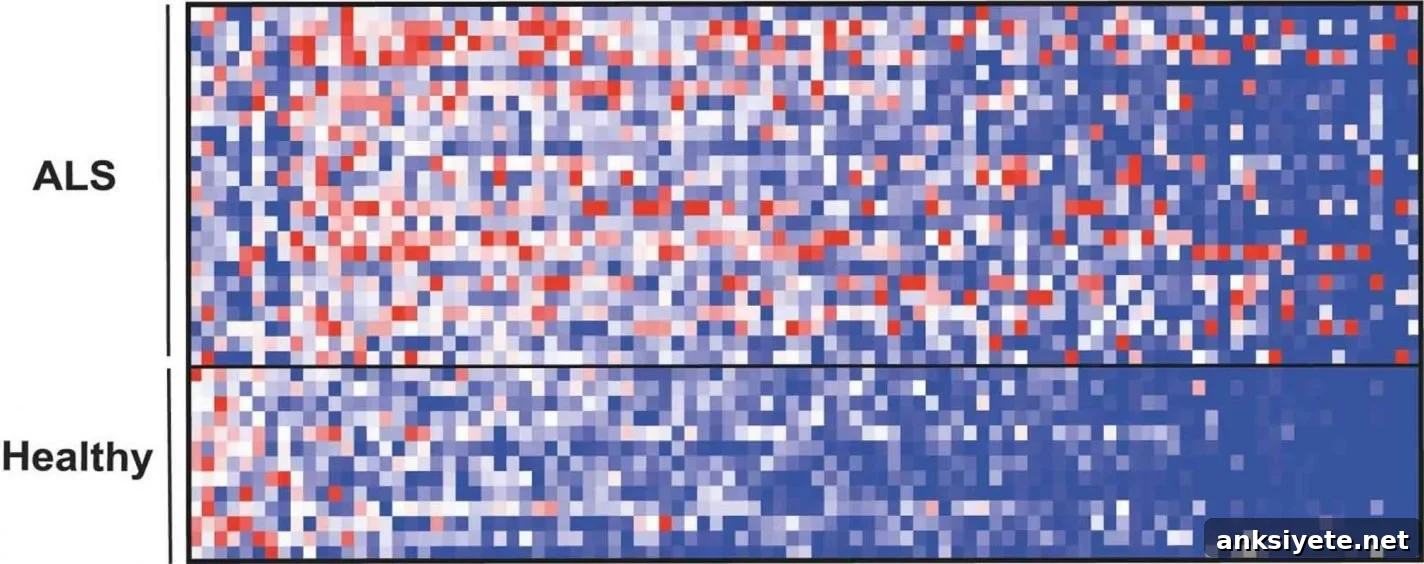
To understand how Akkermansia muciniphila exerted its beneficial effect, the scientists screened thousands of microbially derived small molecules. They focused on nicotinamide (NAM), a metabolite whose levels fell in the bloodstream and cerebrospinal fluid of ALS-prone mice after antibiotic treatment and rose again when mice received Akkermansia supplementation. Continuous systemic administration of nicotinamide to ALS-prone mice improved clinical symptoms and altered spinal-cord gene expression in ways consistent with better motor neuron function, supporting the idea that NAM is a microbiome-derived mediator that can influence ALS-like disease.
Alongside the mouse experiments, the team ran a preliminary, small-scale comparison of metabolites and microbiome composition in people with ALS versus household controls. Although limited, this human data showed changes in microbiome and metabolite patterns, including reduced systemic and cerebrospinal levels of nicotinamide in ALS patients, consistent with the animal findings and motivating further human studies.
The multidisciplinary author list includes Uria Mor, Dr. Mally Dori-Bachash, Dr. Christian Kleimeyer, Claudia Moresi, Yotam Harnik, Maya Zur, Rotem Ben‑Zeev Brik, Dr. Denise Kviatcovsky, Dr. Niv Zmora, Yotam Cohen, Dr. Nira Amar, Noam Bar, Izhak Levi, Prof. Michal Schwartz, Tevie Mehlman, Dr. Alexander Brandis, Dr. Inbal Biton, Dr. Yael Kuperman, Dr. Michael Tsoory, Prof. Alon Harmelin, Michal Zabari, Leenor Alfahel, Prof. Adrian Israelson, Dr. Liisa Arike, Dr. Malin E. V. Johansson and Prof. Gunnar C. Hansson, among others who contributed to experiments, analysis and interpretation.
Funding: The research was supported by multiple foundations and grants, including the Leona M. and Harry B. Helmsley Charitable Trust, the Adelis Foundation, the Else Kroener Fresenius Foundation, the European Research Council and several philanthropic donors. Prof. Eran Elinav holds the Sir Marc and Lady Tania Feldmann Professorial Chair.
Source:
Weizmann Institute of Science
Media Contacts:
Yael Edelman – Weizmann Institute of Science
Image Source:
Image credited to Weizmann Institute of Science.
Original Research: Closed access. Citation: “Potential roles of gut microbiome and metabolites in modulating ALS in mice.” Authors: Eran Blacher, Stavros Bashiardes, Hagit Shapiro, Daphna Rothschild, Uria Mor, Mally Dori‑Bachash, Christian Kleimeyer, Claudia Moresi, Yotam Harnik, Maya Zur, Michal Zabari, Rotem Ben‑Zeev Brik, Denise Kviatcovsky, Niv Zmora, Yotam Cohen, Noam Bar, Izhak Levi, Nira Amar, Tevie Mehlman, Alexander Brandis, Inbal Biton, Yael Kuperman, Michael Tsoory, Leenor Alfahel, Alon Harmelin, Michal Schwartz, Adrian Israelson, Liisa Arike, Malin E. V. Johansson, Gunnar C. Hansson, Marc Gotkine, Eran Segal & Eran Elinav. Published in Nature. doi: 10.1038/s41586-019-1443-5
Abstract
Potential roles of gut microbiome and metabolites in modulating ALS in mice
Amyotrophic lateral sclerosis (ALS) is a genetically driven neurodegenerative disorder whose clinical course may be influenced by environmental factors. This study shows that ALS-prone SOD1-transgenic mice develop a distinct, vivarium-associated dysbiosis and altered circulating metabolite profiles before symptoms emerge, and that depletion of the microbiome by antibiotics or germ-free rearing exacerbates disease. Eleven commensal strains correlated with disease severity; supplementation experiments revealed that Akkermansia muciniphila mitigates, whereas Ruminococcus torques and Parabacteroides distasonis exacerbate, ALS-like symptoms in mice. Akkermansia administration increased nicotinamide levels in the central nervous system, and systemic nicotinamide supplementation improved motor symptoms and spinal-cord gene expression patterns in SOD1-transgenic mice. Preliminary human data showed altered microbiome and metabolite configurations, including reduced systemic and cerebrospinal nicotinamide in a small ALS cohort versus household controls. Together, these results support the concept that environmentally driven microbiome–brain interactions can modulate murine ALS and encourage similar investigations in humans.