
Summary: Researchers at the Indian Institute of Science (IISc) have created a GPU-accelerated machine learning algorithm that dramatically speeds up and improves the estimation of brain connectivity from diffusion MRI data.
Source: Indian Institute of Science (IISc)
A new GPU-based machine learning method, Regularized, Accelerated, Linear Fascicle Evaluation (ReAl-LiFE), enables fast, reliable prediction of structural brain connectivity from diffusion MRI (dMRI) data.
Researchers at the Centre for Neuroscience, Indian Institute of Science (IISc), designed ReAl-LiFE to handle the very large datasets produced by diffusion MRI and tractography. The algorithm implements an optimized, GPU-friendly version of an existing streamline pruning approach (LiFE) and introduces regularization and other improvements to generate sparser, more accurate connectomes.
ReAl-LiFE uses Graphics Processing Units (GPUs) — the high-performance processors commonly used in gaming and scientific computing — to accelerate optimization routines. The team reports speedups of more than 100× compared with previous CPU-based implementations, shrinking tasks that once took hours or days to operations that complete in seconds to minutes.
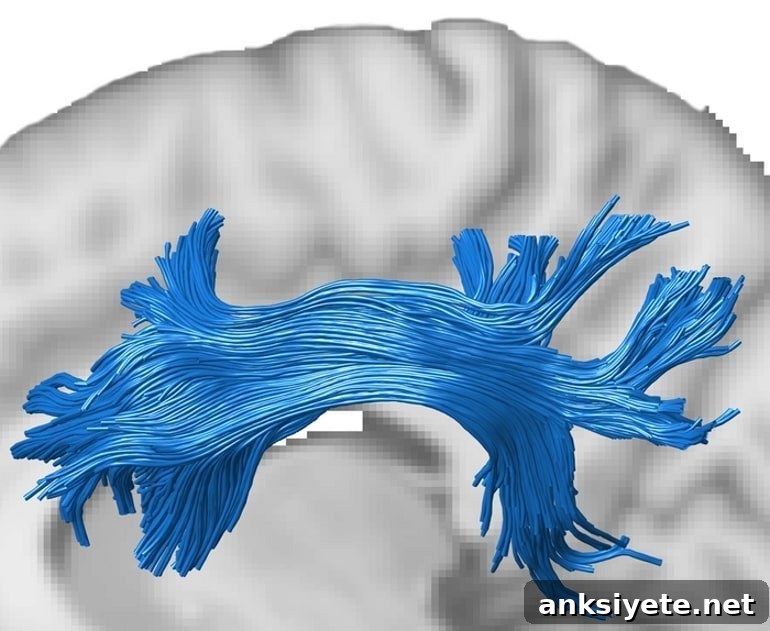
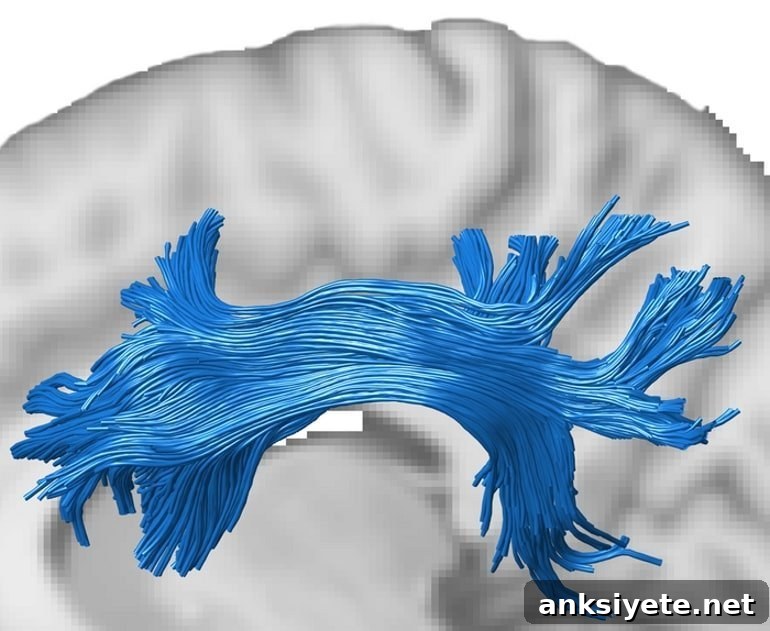
Understanding how regions of the brain are wired together is essential for linking neural circuitry to behaviour and cognition. Diffusion MRI measures the directional movement of water molecules in tissue; because axon bundles steer water along their length, tractography algorithms can infer anatomical fiber pathways and construct a connectome — a map of white-matter connections across the brain. However, raw dMRI signals report only local water diffusion, not the underlying pathways, so careful model-based inference is required to reconstruct accurate networks.
“dMRI gives us traffic patterns — directions and speeds — but not the roads. Our goal is to infer the road network from those patterns,” explains Devarajan Sridharan, Associate Professor at IISc and corresponding author of the study. By reducing redundant connections and improving the optimization strategy, ReAl-LiFE produces cleaner, more interpretable connectomes than prior approaches.
The improved algorithm not only runs orders of magnitude faster, it also yields connection-weight estimates that relate meaningfully to behaviour. Using ReAl-LiFE to analyze data from 200 participants, the researchers showed that individual differences in estimated connection strengths could explain variation in cognitive and behavioural test scores across people.
Large-scale, reliable processing of dMRI datasets is increasingly important for both basic neuroscience and clinical applications. Faster, more accurate connectome estimation can enable population-level studies of brain structure, improve reproducibility, and support early detection of pathological changes. For example, the authors note that earlier versions of their method improved discrimination between Alzheimer’s disease patients and healthy controls in other work, suggesting that scalable, GPU-accelerated connectome discovery may aid in identifying early signs of neurodegeneration.
ReAl-LiFE’s implementation is based on a GPU-accelerated non-negative least-squares optimization routine that is broadly applicable beyond tractography. According to the authors, this generality makes the approach useful for other large-scale optimization problems across scientific and engineering domains.
About this AI and neuroscience research news
Author: Office of Communications
Source: Indian Institute of Science (IISc)
Contact: Office of Communications – IISc
Image: The image is credited to Varsha Sreenivasan and Devarajan Sridharan
Original Research: Open access. “GPU-accelerated connectome discovery at scale” by Devarajan Sridharan et al., published in Nature Computational Science.
Abstract
GPU-accelerated connectome discovery at scale
Diffusion magnetic resonance imaging and tractography enable in vivo estimation of anatomical connectivity in the human brain, but different tractography methods can yield widely divergent connectomes in the absence of ground-truth validation. Streamline pruning techniques reduce false positives, yet long compute times have limited their use in large-scale studies.
ReAl-LiFE — Regularized, Accelerated, Linear Fascicle Evaluation — is a GPU-based implementation of the LiFE pruning algorithm that attains over 100× speedups relative to prior CPU implementations. These performance gains allow the method to incorporate regularization and other refinements that produce sparser, more accurate connectomes with excellent test–retest reliability and improved performance compared with competing approaches.
Applying ReAl-LiFE to population data, the authors demonstrate that connectome features extracted by the algorithm predict inter-individual differences in multiple cognitive scores. The GPU-accelerated non-negative least-squares optimizer underlying ReAl-LiFE is widely applicable, offering a timely tool for accurate, scalable discovery of individualized brain connectomes.