
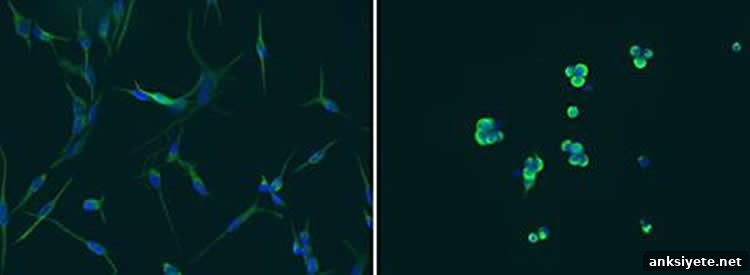
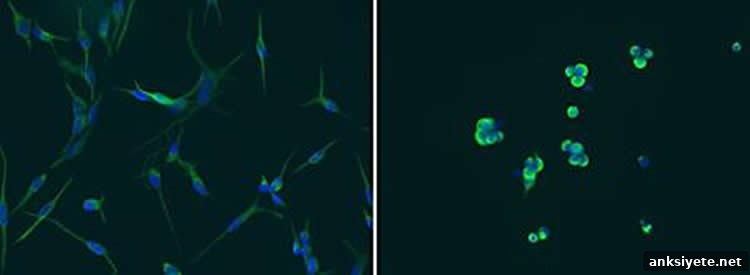
Enzyme silences genes that sustain cancer stem cell traits in glioblastoma
Cancer stem cells are a small subpopulation within tumors capable of continuous growth and self-renewal, and they are widely implicated in cancer progression and treatment resistance. Researchers at the University of California, San Diego School of Medicine and Moores Cancer Center have found that these stem-like properties in glioblastoma — an aggressive form of brain cancer — are governed by epigenetic mechanisms rather than changes in DNA sequence. Their work shows that the enzyme Lysine-Specific Demethylase 1 (LSD1) can switch off key genes required for maintaining cancer stem cell behavior, a discovery that clarifies how glioblastoma cells can survive and recover after therapy.
The findings, published in the Proceedings of the National Academy of Sciences and appearing the week of July 6, 2015, are based on experiments using patient-derived glioblastoma cells and mouse transplantation models. The researchers observed that genetically identical tumor cells often differed in their ability to form tumors when transplanted into mice, indicating that epigenetic state — chemical modifications that control gene activity — determines whether a cell behaves as a tumor-initiating cancer stem cell.
“One of the most striking findings in our study is that there are dynamic and reversible transitions between tumorigenic and non-tumorigenic states in glioblastoma that are determined by epigenetic regulation,” said senior author Clark Chen, MD, PhD, associate professor of neurosurgery and vice-chair of research and academic development at UC San Diego School of Medicine. These transitions mean that individual glioblastoma cells can switch into and out of a stem-like, tumor-forming state without changes to their underlying DNA sequence.
At the center of this epigenetic control is LSD1, an enzyme that removes methyl groups from histones and other chromatin components, effectively turning off specific genes. The team found that higher levels of LSD1 are associated with repression of a set of genes essential for cancer stem cell identity, including MYC, SOX2, OLIG2 and POU3F2. By removing methyl marks, LSD1 silences these regulators and thereby alters a cell’s capacity for unlimited proliferation.
These epigenetic dynamics provide a plausible mechanism for treatment resistance. “This plasticity represents a mechanism by which glioblastoma develops resistance to therapy,” Chen explained. For example, a therapy that targets a specific driver such as MYC might initially kill cells that rely on its activity. But because glioblastoma cells can epigenetically shut MYC off, some cells can evade the therapy and later re-activate MYC when drug pressure subsides, allowing the tumor to recur. The study suggests that effective glioblastoma treatment will require strategies that account for this reversible epigenetic switching.
Co-first author Jie Li, PhD, an assistant project scientist in Chen’s laboratory, emphasized the parallels between cancer epigenetics and normal development. “Although most cells have identical DNA, epigenetic programming is what makes a liver cell different from a brain cell,” Li said. “Our results indicate that similar epigenetic programming determines whether a cancer cell can sustain indefinite growth or remain non-tumorigenic.”
The investigation combined molecular profiling, functional assays, and in vivo transplantation to connect LSD1-driven chromatin changes with loss of cancer stem cell gene expression and diminished tumor-initiating potential. This link between an identifiable epigenetic enzyme and a defined transcriptional program opens potential therapeutic opportunities: manipulating LSD1 activity or the chromatin marks it controls could shift glioblastoma cells out of the stem-like, treatment-resistant state.
Co-authors on the study include David Gonda, Valya Ramakrishnan, Miroko Matsui, Olivier Harismendy, Donald Pizzo, Scott Vandenberg (UC San Diego); David Kozono, Masayuki Nitta, Deepa Kushwaha, Dmitry Merzon, Shan Zhu, Kaya Zhu (Dana-Farber Cancer Institute); Wei Hua, Ying Mao (Shanghai Huashan Hospital); Ichiro Nakano, Chang-Hyuk Kwon (Ohio State University); Hideyuki Saya and Oltea Sampetrean (Keio University, Japan).
Funding: This research received support from the Sontag Foundation, Burroughs Wellcome Foundation, Kimmel Foundation, Doris Duke Foundation and Forbeck Foundation.
Source: Heather Buschman, UCSD
Image credit: UC San Diego School of Medicine
Original research: Proceedings of the National Academy of Sciences (PNAS), week of July 6, 2015.