
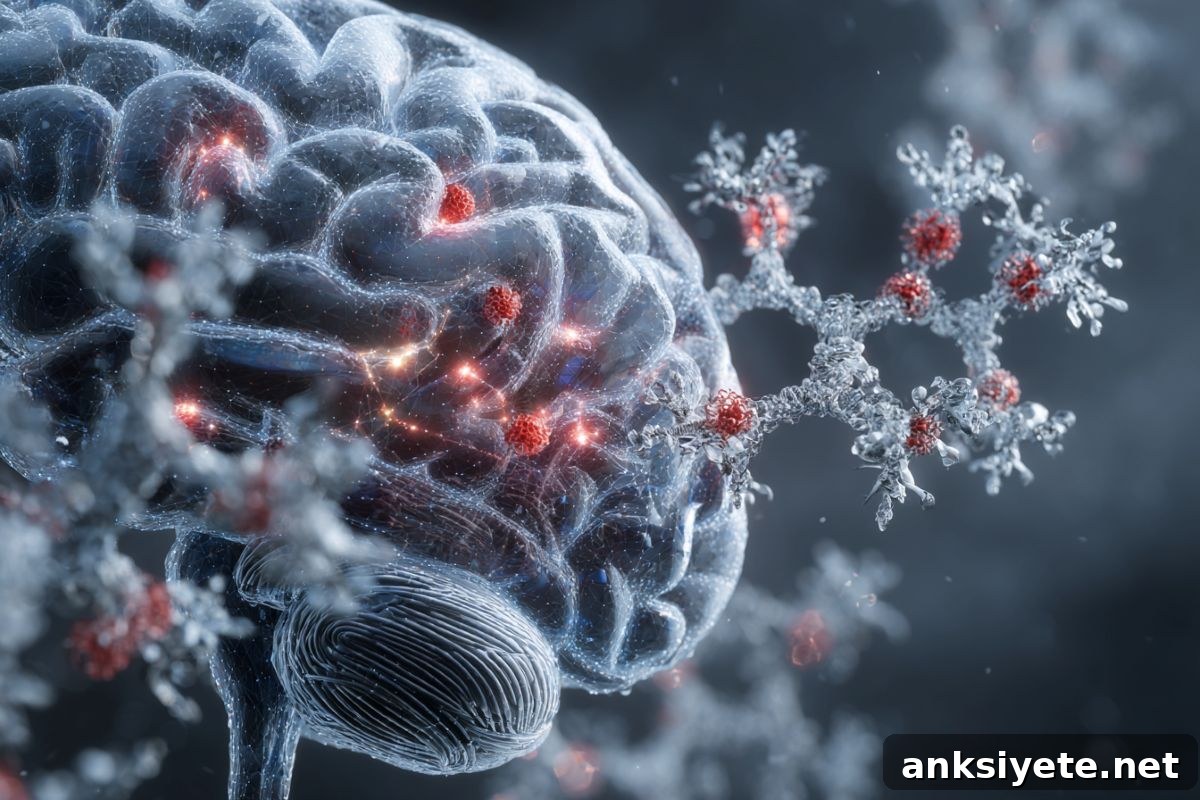
Summary: Researchers have discovered a novel way to prevent glioblastoma — the most aggressive form of brain cancer — from spreading by changing the tumor’s environment instead of attacking the cancer cells directly. The team demonstrated that cancer cells depend on flexible hyaluronic acid (HA) molecules in the brain’s extracellular matrix to engage receptors and invade surrounding tissue; when those HA molecules were chemically locked or “frozen” so they could no longer adopt the necessary shapes, the cancer cells became immobile and entered a dormant state.
This matrix-focused strategy differs from conventional therapies that aim to kill tumour cells. By reprogramming the tumor’s surroundings, it may reduce the risk of regrowth following surgery. Although the work is at an early stage and requires further validation in animal models and eventual clinical testing, it points to a promising new avenue for treating glioblastoma and potentially other solid tumours that are driven by their extracellular matrix.
Key Facts
- Matrix reprogramming: Chemically cross-linking hyaluronic acid reduces its molecular flexibility and locks cancer cells into a non-invasive, dormant state.
- Non‑cytotoxic approach: The method suppresses invasion by altering the tumour microenvironment rather than by killing cancer cells outright.
- Broad potential: Because many solid tumours rely on extracellular matrix interactions to invade, this approach could be adaptable beyond glioblastoma.
Source: University of Cambridge
Researchers show glioblastoma invasion can be halted by stabilizing a key brain matrix molecule.
Glioblastoma is the most common and aggressive primary brain tumour, with a five‑year survival rate of roughly 15%. A major challenge in treatment is that even after surgical removal of the main tumour mass, stray invasive cells that have migrated into surrounding brain tissue frequently cause recurrence within months. Traditional drug therapies often fail to reach every infiltrating cell, and radiotherapy typically delays but does not prevent relapse.
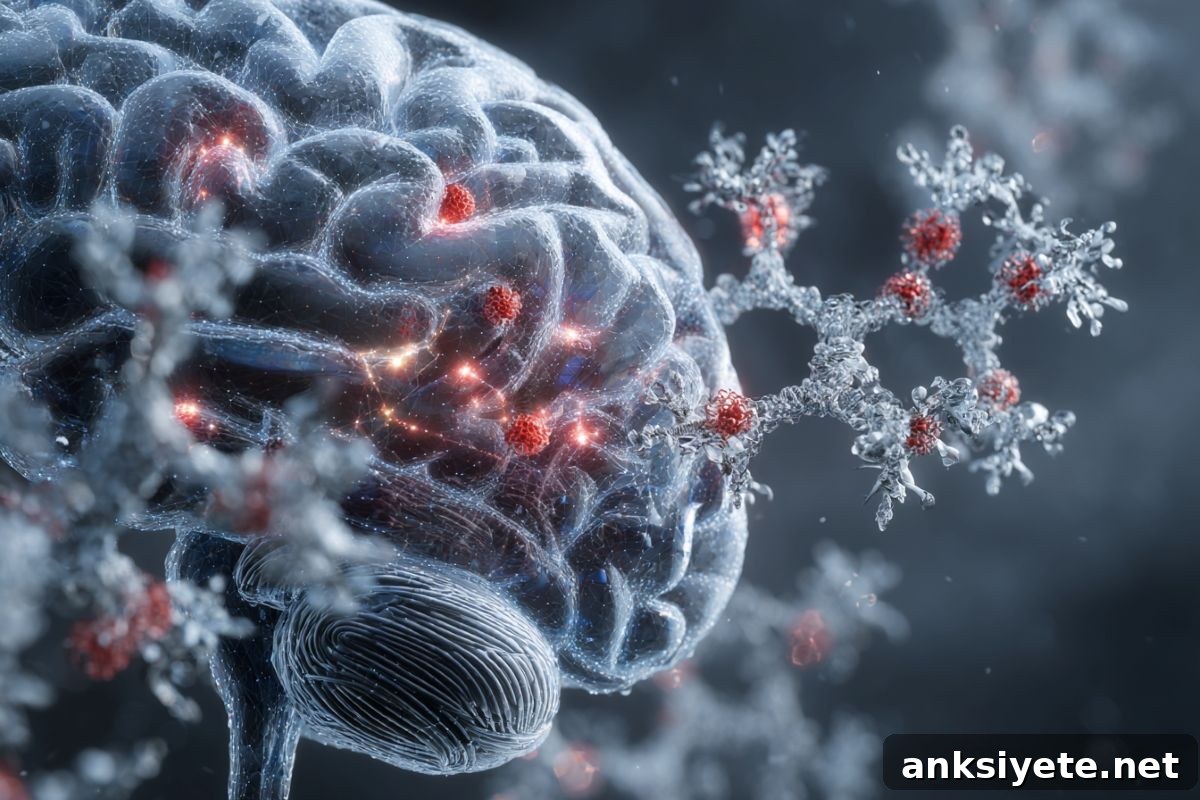
The team at the University of Cambridge focused on hyaluronic acid (HA), a sugar-like polymer that forms a major part of the brain’s extracellular matrix. HA molecules interact with receptors on the surface of glioblastoma cells, notably the CD44 receptor, to trigger signalling pathways that promote cell migration and invasion. Using nuclear magnetic resonance (NMR) spectroscopy, the researchers observed that flexible HA molecules can twist and adopt conformations that bind strongly to CD44 on the timescale relevant for activating invasion-related signalling.
When HA molecules were cross-linked so that their conformational flexibility was restricted, those binding signals were suppressed. Importantly, the immobilizing effect on cancer cell behaviour was observed even at relatively low HA concentrations, which indicates the change is not simply a mechanical trapping of cells but a reprogramming of cell signalling: cells stopped moving and adopted a dormant phenotype instead of attempting to invade neighbouring tissue.
The findings help illuminate a potential mechanism behind a common clinical observation: glioblastoma often recurs at or near the site of surgery. Surgical sites frequently develop oedema (local fluid accumulation), which dilutes HA in the extracellular matrix and may increase HA flexibility, thereby enhancing its ability to engage CD44 and stimulate invasion. Stabilizing HA at the surgical margin could therefore be a strategy to reduce post‑surgical recurrence.
“Fundamentally, hyaluronic acid molecules need to be flexible to bind to cancer cell receptors,” said Professor Melinda Duer of Cambridge’s Yusuf Hamied Department of Chemistry, who led the study. “If you can stop hyaluronic acid being flexible, you can stop cancer cells from spreading. The remarkable thing is that we didn’t have to kill the cells — we simply changed their environment, and they gave up trying to escape and invade neighbouring tissue.”
Because this approach operates by altering the extracellular matrix rather than relying on drugs to enter every cancer cell, it could in principle be applicable to a range of solid tumours in which matrix interactions drive invasion. The researchers plan further testing in animal models to evaluate the safety and efficacy of matrix‑stabilizing interventions and to explore paths toward clinical trials.
Funding: The work was supported in part by the European Research Council and by the Engineering and Physical Sciences Research Council (EPSRC), part of UK Research and Innovation (UKRI). Melinda Duer is a Fellow of Robinson College, Cambridge.
About this glioblastoma brain cancer research news
Author: Sarah Collins
Source: University of Cambridge
Contact: Sarah Collins – University of Cambridge
Image: The image is credited to Neuroscience News
Original Research: Open access. “Molecular flexibility of hyaluronic acid has a profound effect on invasion of cancer cells” by Melinda Duer et al., published in Royal Society Open Science.
Abstract
Molecular flexibility of hyaluronic acid has a profound effect on invasion of cancer cells
Extracellular hyaluronic acid (HA) is known to play an important role in cancer biology: low‑molecular‑weight HA typically correlates with cancer progression, while high‑molecular‑weight HA is associated with tissue homeostasis. In this study, the authors show that even high‑molecular‑weight HA can promote cancer cell migration when it is highly diluted.
HA‑induced cell signalling is primarily mediated through binding of HA to the cell surface receptor CD44. NMR spectroscopy data demonstrate that at high dilution, high‑molecular‑weight HA molecules can access the conformations needed for strong CD44 binding on the tens of nanoseconds timescale, which is relevant for initiating CD44 signalling. By contrast, at higher HA concentrations the molecules lack sufficient flexibility to form strong CD44 interactions.
The high‑dilution HA condition correlates with notable changes in brain cancer cell morphology and proteome that support invasion. The authors propose that HA molecular flexibility is central to HA‑mediated signalling and that this concept helps reconcile previous observations linking HA molecular weight to different biological outcomes. HA dilution and the resulting increase in signalling may be an important factor in understanding how oedema contributes to cancer recurrence after primary surgery.