
Brain’s ability to process consonants in noisy environments may predict a child’s future literacy
A simple, short biological test could identify preschool children at risk for reading and language difficulties long before they begin formal reading instruction, according to new research from Northwestern University.
Published July 14 in PLOS Biology, the study focuses on how well a young child’s brain extracts consonant sounds from noisy backgrounds. The researchers found that preschoolers whose brains struggle to separate consonants from competing noise are more likely to experience reading and language challenges when they reach school age.
“This gives us a biological window into a child’s future literacy,” said Nina Kraus, director of Northwestern’s Auditory Neuroscience Laboratory and senior author of the study. “We already have effective interventions for young children who struggle with reading, and identifying candidates early makes those interventions far more powerful.”
Noisy everyday environments — crowded classrooms, busy homes, urban streets, or rooms with loud televisions — can interfere with the brain processes that support language and literacy. The Northwestern team measured brain responses with electroencephalography (EEG) in preliterate children and found that cortical and subcortical processing of speech in noise is tightly linked to later reading skills.
Consonants are particularly vulnerable to masking by background noise because they unfold quickly and have complex acoustics, while vowels are acoustically more robust. “If the brain’s response to sound isn’t precise and timely, it cannot keep up with the rapid computations required to identify consonants in noisy settings,” Kraus explained.
Every listening experience helps shape language development by signaling which sounds are meaningful. When a child’s brain cannot reliably extract those signals from noise, the child misses opportunities to build the phonological and linguistic foundations that reading instruction depends on.
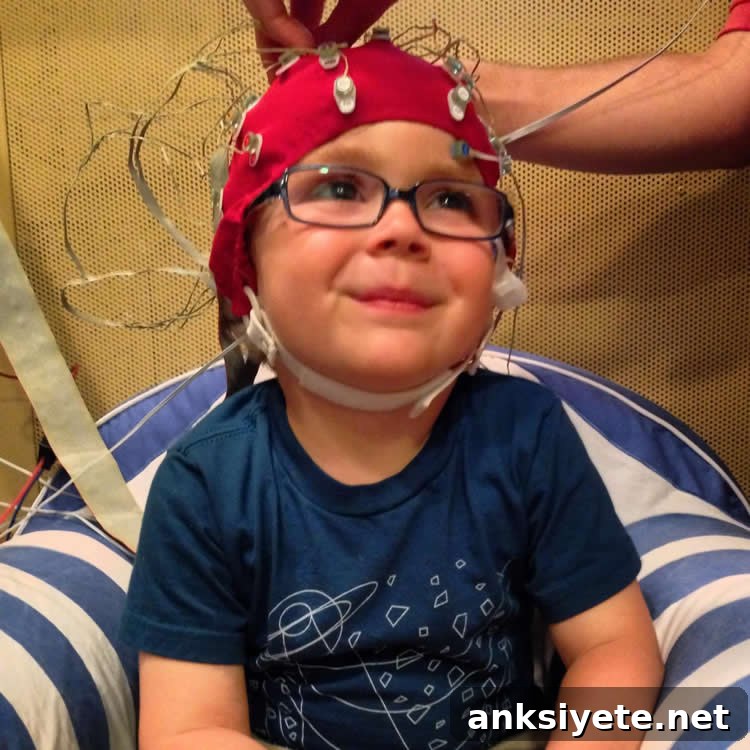
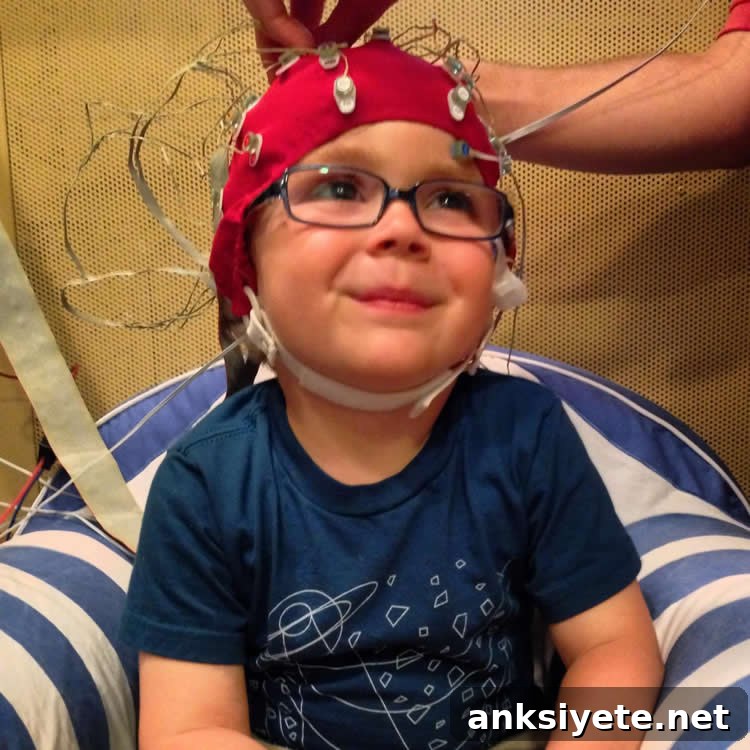
In the experiment, researchers placed EEG electrodes on children’s scalps to capture the tiny electrical responses the brain produces when it processes sound. While children watched a movie in one ear to stay calm, the team presented the syllable “da” in the opposite ear layered over a six-person babble. This allowed the researchers to measure how consistently, how quickly, and how accurately the brain represented the consonant sound in a noisy environment.
From those recordings the team derived three objective measures: response stability (how consistently the neural circuits respond), response timing (how quickly circuits fire), and representation quality (how faithfully the timbre and spectral details of the sound are encoded). They combined these measures into a statistical model that predicts preliteracy skills.
Across 112 children aged 3 to 14, the researchers showed that a 30-minute neurophysiological assessment can predict how a 3-year-old will perform on multiple pre-reading tests and can forecast performance a year later across language skills critical for reading. The same neural coding model also predicted reading skills and the presence of diagnosed learning disabilities in older, school-age children.
“The value of this biological approach is that it reveals how the brain makes sense of speech and how that process constrains literacy development,” Kraus said. “Having a uniform, objective metric that applies across ages is unprecedented and highly useful for early screening.”
The study’s co-authors include Travis White‑Schwoch, Kali Woodruff Carr, Elaine C. Thompson, Samira Anderson, Trent Nicol, Ann R. Bradlow, and Steven G. Zecker, all affiliated with Northwestern’s Auditory Neuroscience Laboratory and the department of communication sciences. The research team will continue to track these children through the “Biotots” project as they progress through school to learn how early neural markers relate to long-term outcomes.
Key findings:
- Background noise can disrupt neural mechanisms important for literacy development.
- This is among the first studies to demonstrate brain–behavior links in pre-reading children.
- The neural signature of consonant processing in noise offers a biological window into future literacy.
- The findings point to a new, objective way to identify children who may benefit from early reading interventions.
Funding: The research was funded by the NIH.
Source: Julie Deardorff, Northwestern University. Image credit: Auditory Neuroscience Laboratory at Northwestern University. Original research: “Auditory Processing in Noise: A Preschool Biomarker for Literacy” by N. Travis White‑Schwoch et al., published in PLOS Biology, July 14, 2015, doi:10.1371/journal.pbio.1002196.
Abstract (condensed)
Learning to read is a critical developmental milestone with long-term consequences. While many children develop reading skills smoothly, some struggle and would benefit from early identification and intervention. Neural markers tied to the fidelity of speech processing in noise have been identified in older children and adults; this study extends those findings to preschoolers. In 112 children ages 3–14, integrity of neural coding for speech in noise correlated with phonological skills and predicted preliteracy performance and subsequent emergent literacy. The same neural measures predicted literacy outcomes and learning-disability diagnoses in school‑age children. These results suggest that accurate neural processing of consonants in noisy environments is a fundamental constraint on language and reading development and point to a practical tool for early screening and intervention.