
A moderate amount of fear is adaptive—it prevents risky choices and helps us avoid repeating mistakes. However, new research from neuroscientists and molecular biologists at USC suggests that absence of a specific brain protein may cause pathological, persistent fear that continues even when there is no real danger.
Published the week of July 15 in the Proceedings of the National Academy of Sciences, the study explored mice lacking the enzymes monoamine oxidase A and B (MAO A/B). In both humans and mice these two enzymes sit adjacent in the genome and regulate monoamine neurotransmitters such as serotonin, norepinephrine and dopamine. Earlier studies have linked deficiencies in these enzymes to developmental disorders on the autism spectrum, especially behaviors characterized by perseveration—the difficulty in changing or adapting actions according to social or environmental context.
“These mice provide a useful model for testing interventions for neuropsychiatric conditions,” said Jean Shih, University Professor and senior author of the study, Boyd & Elsie Welin Professor of Pharmacology and Pharmaceutical Sciences at the USC School of Pharmacy and professor at the Keck School of Medicine. “The pronounced behavioral differences seen in MAO A/B double knockout mice, compared to mice missing only MAO A, support the idea that the severity of autistic-like features may be related to the levels of monoamines during critical stages of development.”
Led by Shih, with lead author Chanpreet Singh (then a USC doctoral student, now at Caltech) and co-author Richard Thompson (USC University Professor Emeritus), the team examined how loss of MAO A/B alters learning and emotional processing. When both enzymes are absent, monoamine levels rise markedly during development, producing changes in brain circuitry and receptor expression that affect synaptic plasticity—the neural basis for learning.
In one key experiment, researchers placed MAO A/B knockout mice and their wild-type littermates into a neutral environment and delivered a brief, mild foot shock. When returned to the same environment, all animals displayed learned fear, but the MAO A/B knockout mice showed a significantly stronger and more persistent fear response.
Strikingly, while wild-type mice were able to recover and explore new environments normally after the shock, the MAO A/B knockout mice generalized their fear to other, unrelated contexts. Their fear response “spilled over” into places where there was no reason to be afraid, indicating impaired contextual discrimination and a failure to extinguish or forget the aversive association.
“The neural systems that process fear are altered in these mice,” Singh explained. “They demonstrate enhanced learning for the wrong context—an inability to let go of an emotional memory that should fade. Forgetting is an important adaptive function; without it, fear becomes maladaptive.”
The double knockout mice also acquired eye-blink conditioning more rapidly than wild-type animals. This accelerated associative learning has been reported in some individuals on the autism spectrum and was not observed in mice lacking only one of the MAO enzymes, suggesting a dose-dependent effect of monoamine dysregulation on specific forms of learning.
Importantly, the study found that the MAO A/B knockout mice performed normally on tasks assessing spatial learning and object recognition. Their deficits were selective to emotional learning and the regulation of fear, underscoring that absence of both enzymes specifically alters circuits involved in emotional memory and behavioral flexibility rather than causing broad cognitive impairment.
Singh and colleagues propose that the elevated neurotransmitter levels during early development drive changes in receptor expression and synaptic plasticity, producing behavioral outcomes that resemble aspects of the autism spectrum—particularly rigid, perseverative behaviors and an exaggerated, generalized fear response.
Notes about this neuroscience and fear research
The research was funded by the National Institute of Mental Health (NIH grant R01MH39085) and the Eunice Kennedy Shriver National Institute of Child Health and Human Development (NIH grant R21HD070611). Co-authors included Marco Bortolato (University of Kansas), Namrata Bali (Caltech), and Sean Godar, Anna Scott and Kevin Chen (USC).
Written by Suzanne Wu
Contact: Suzanne Wu, USC
Source: USC press release
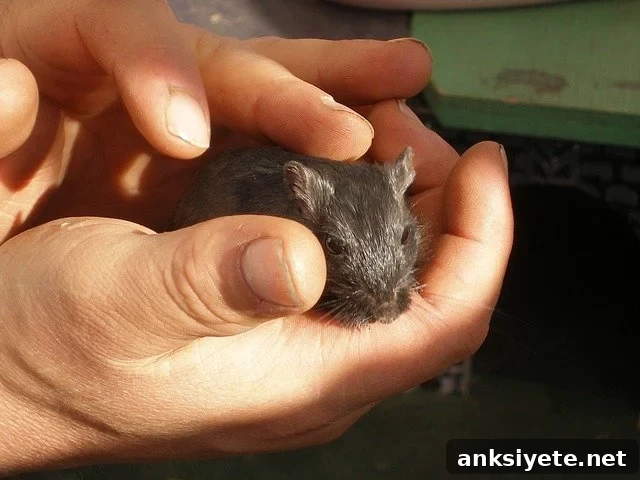
Image Source: The photograph of a person holding a mouse is credited to the original photographer and is in the public domain.
Original Research: “Cognitive abnormalities and hippocampal alterations in monoamine oxidase A and B knockout mice” by Chanpreet Singh, Marco Bortolato, Namrata Bali, Sean C. Godar, Anna L. Scott, Kevin Chen, Richard F. Thompson, and Jean C. Shih. Published online July 15, 2013 in Proceedings of the National Academy of Sciences (doi:10.1073/pnas.1308037110).