
Summary: Researchers have identified a cellular pathway involving the protein Rab35 that restricts glioblastoma growth and invasiveness. The study suggests restoring Rab35 activity could offer a new therapeutic approach for this aggressive brain cancer.
Source: Rockefeller University Press
Rab35 and Arf5 pathway limits glioblastoma growth, McGill study shows
Scientists at McGill University have uncovered a previously unrecognized cellular cascade that controls the recycling and degradation of surface receptor proteins and, in doing so, constrains the growth and spread of glioblastoma brain tumors.
Published in the Journal of Cell Biology, the study identifies a regulatory axis centered on the small GTPase Rab35 and its activator pathway that is frequently impaired in human glioblastoma. The researchers report that restoring or enhancing Rab35 activity dampens tumor growth and invasiveness in experimental models, pointing to a potential avenue for therapeutic development against this deadly disease.
Glioblastoma is the most aggressive and lethal form of brain cancer. Due to its highly invasive nature and resistance to current treatments, median survival after diagnosis remains poor. Like many cancers, glioblastoma growth and invasion are driven by receptor proteins on the cell surface that transmit growth and survival signals. The abundance and activity of these receptors are controlled by intracellular trafficking systems that either recycle receptors back to the surface or route them to lysosomal degradation.
Small GTPases, including members of the Rab family, are central regulators of membrane trafficking. The McGill team, led by Peter S. McPherson of The Neuro (Montreal Neurological Institute-Hospital), previously observed that Rab35 levels are reduced in human glioblastomas. In the current study they examined how Rab35 loss affects tumor biology and whether modulating this pathway might alter disease progression.
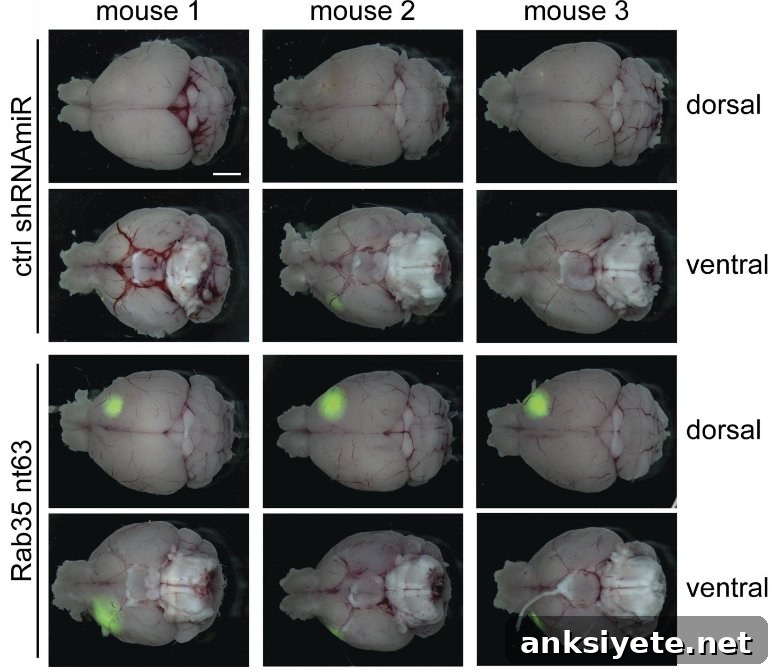
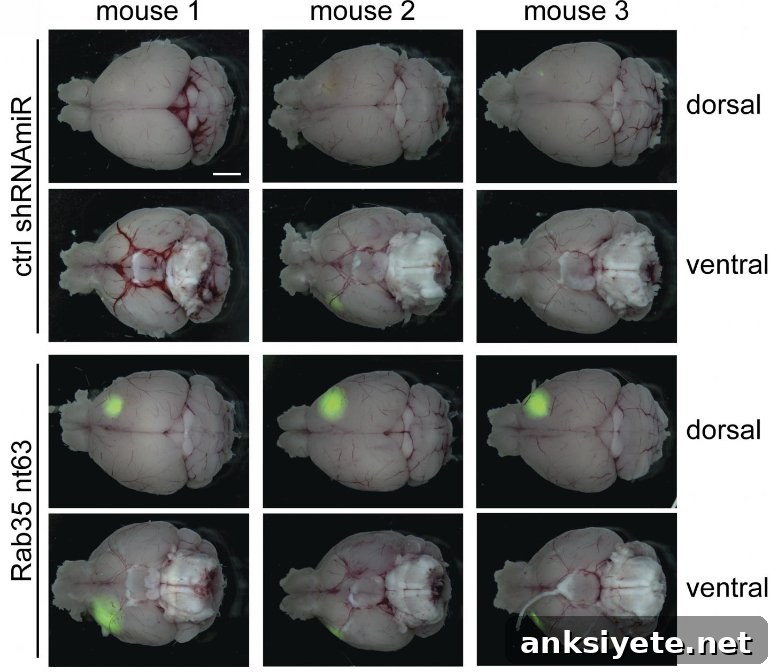
Using brain tumor–initiating cells (BTICs) and mouse implantation models, the investigators found that reducing Rab35 expression accelerated tumor growth, increased invasiveness, and shortened survival. Conversely, raising Rab35 levels suppressed tumor expansion and extended survival in the same models. These opposing outcomes support a direct role for Rab35 in restraining glioblastoma aggressiveness.
Mechanistically, the researchers identified that Rab35 is activated by an Arf family GTPase, Arf5, through interaction with the Rab35 guanine nucleotide exchange factor (GEF) DENND1/connecdenn. Arf5 binds to and allosterically enhances the GEF activity toward Rab35, establishing an Arf-to-Rab cascade that coordinates endosomal trafficking. Disruption of either Arf5 or Rab35 produced similar effects: increased cell migration, greater invasiveness, enhanced self-renewal of BTICs in culture, and more aggressive tumor formation in mice.
A key consequence of Rab35 loss was altered handling of the epidermal growth factor receptor (EGFR). In glioblastoma cells lacking Rab35, EGFR was preferentially recycled back to the cell surface rather than sent for degradation, leading to elevated receptor signaling. This amplified EGFR signaling correlated with increased expression of the transcription factor SPOCD1, which has been linked to tumor promotion in multiple cancer types. Treatment with the EGFR inhibitor erlotinib reduced SPOCD1 production in these cells, indicating that enhanced EGFR activity contributes to the tumor-promoting effects seen when the Arf5/Rab35 axis is disrupted.
Taken together, the data indicate that the Arf5–DENND1–Rab35 pathway helps limit glioblastoma growth and spread by governing the endosomal sorting of multiple surface receptors, including EGFR. Restoring activity within this cascade may therefore reduce pro-tumor signaling and blunt the aggressive features of glioblastoma.
“Rab GTPases are emerging as an important new set of drug targets in cancer,” says Peter S. McPherson. “Our study reveals an unexpected link between Arf and Rab proteins and points to new molecular loci for therapeutic intervention in glioblastoma.”
Publication details and credits
Source: Rockefeller University Press
Contact: Ben Short, Rockefeller University Press
Image: Credit to Kulasekaran et al.; originally published in Journal of Cell Biology.
Original research (open access): “An Arf/Rab cascade controls the growth and invasiveness of glioblastoma” by Peter S. McPherson et al., Journal of Cell Biology. The study details the functional and molecular evidence linking the Arf5–DENND1–Rab35 axis to endosomal trafficking and tumor behavior.
Abstract
An Arf/Rab cascade controls the growth and invasiveness of glioblastoma
Glioblastoma is the most common and deadly malignant brain cancer. We now demonstrate that loss of function of the endosomal GTPase Rab35 in human brain tumor initiating cells (BTICs) increases glioblastoma growth and decreases animal survival following BTIC implantation in mouse brains. Mechanistically, we identify that the GTPase Arf5 interacts with the guanine nucleotide exchange factor (GEF) for Rab35, DENND1/connecdenn, and allosterically enhances its GEF activity toward Rab35. Knockdown of either Rab35 or Arf5 increases cell migration, invasiveness, and self-renewal in culture and enhances the growth and invasiveness of BTIC-initiated brain tumors in mice. RNA sequencing of the tumors reveals up-regulation of the tumor-promoting transcription factor SPOCD1, and disruption of the Arf5/Rab35 axis in glioblastoma cells leads to strong activation of the epidermal growth factor receptor, with resulting enhancement of SPOCD1 levels. These discoveries reveal an unexpected cascade between an Arf and a Rab and indicate a role for the cascade, and thus endosomal trafficking, in brain tumors.