
Summary: The anterior cingulate cortex (ACC) is critically involved in regulating social behavior. In mouse models carrying mutations in the SHANK3 gene, structural and functional impairments in the ACC were associated with social interaction deficits resembling features of autism spectrum disorder (ASD).
Source: MIT
Background: Although specific genes have been linked to psychiatric and neurodevelopmental disorders, the precise brain regions and circuit mechanisms that produce particular behavioral symptoms are often unclear. Mutations or deletions of the SHANK3 gene are strongly associated with autism spectrum disorder (ASD) and with Phelan-McDermid syndrome, a related rare condition. Mice that lack or carry mutations in SHANK3 exhibit behavioral traits that mirror aspects of human autism, including reduced social interactions, but the neural substrates responsible for those social deficits have not been definitively identified.
Researchers from MIT and collaborators in China conducted a detailed study to pinpoint the neural circuits underlying social impairments in SHANK3 mutant mice. Published in Nature Neuroscience, their work highlights the anterior cingulate cortex (ACC) as a key node whose dysfunction contributes to altered social behavior in these animals.
Multiple brain areas have been implicated in social behavior, including regions of the prefrontal cortex (PFC) and downstream targets such as the nucleus accumbens and habenula. Previous work, however, did not conclusively link PFC dysfunction to the social avoidance observed in SHANK3-deficient mice. The new study instead focused on the ACC, a region known to contribute to social cognition in humans and animals as well as to core cognitive processes like motivation, decision-making, and cost-benefit evaluation.
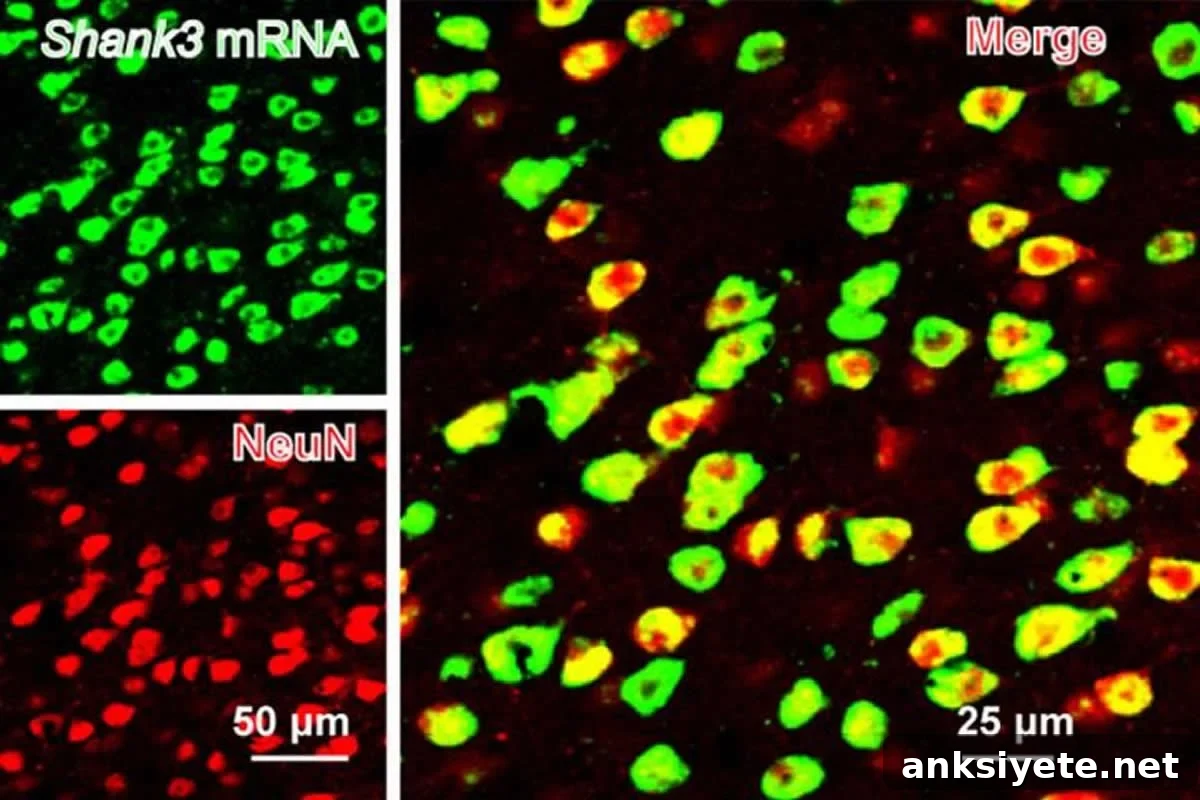
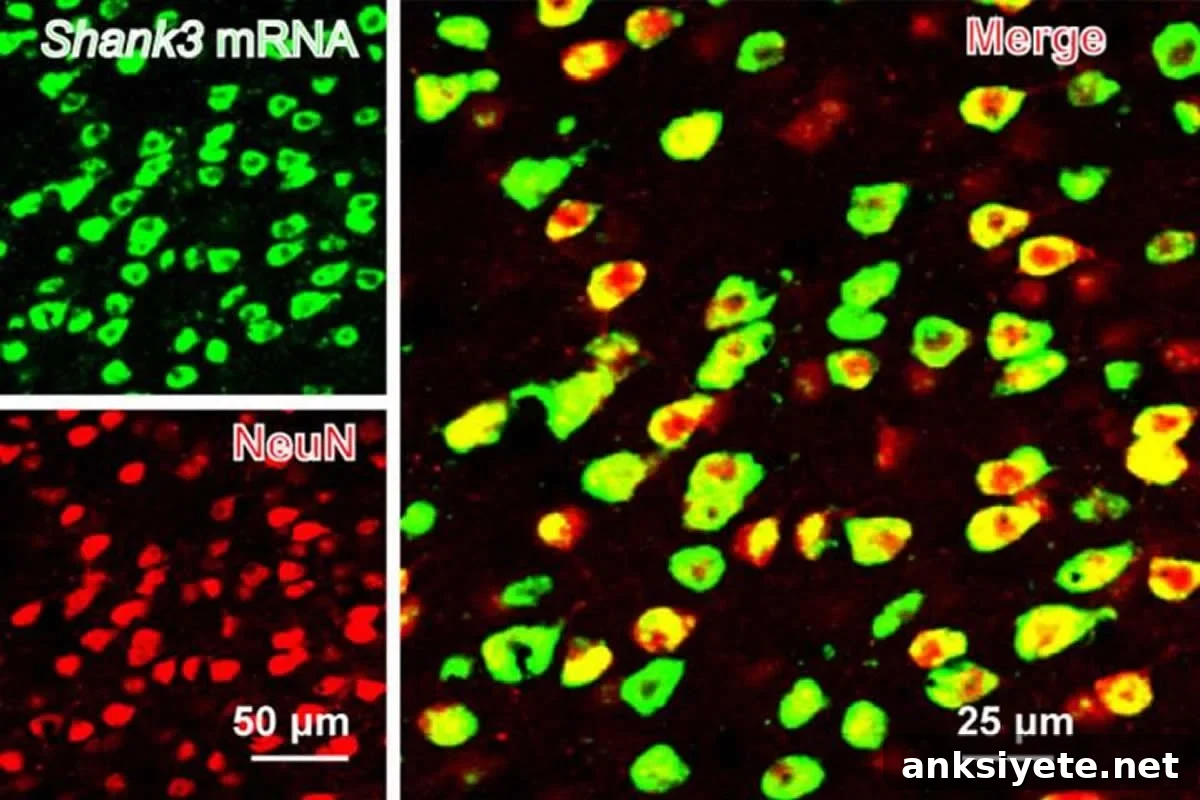
In SHANK3 mutant mice, the investigators found both structural and functional deficits at excitatory synapses formed by pyramidal neurons in the ACC. These synaptic impairments included alterations in glutamatergic signaling that reduced the efficiency of excitatory communication among ACC neurons. Using cell-type-specific genetic approaches, the team showed that deleting SHANK3 selectively from excitatory neurons within the ACC was sufficient to produce excitatory synaptic dysfunction and measurable deficits in social interaction.
To determine whether ACC dysfunction was not only associated with but also causal for social deficits, the researchers used targeted interventions to increase activity in the same ACC neurons that showed diminished responsiveness. By employing optogenetic stimulation and pharmacological modulation, they were able to enhance ACC excitatory neuronal activity in SHANK3 mutant mice. These manipulations produced notable improvements in social preference and interaction behaviors, demonstrating that restoring ACC activity can rescue social deficits in this model.
“Neurobiological mechanisms of social deficits are very complex and involve many brain regions, even in a mouse model,” said Guoping Feng, the James W. and Patricia T. Poitras Professor at MIT and a senior author on the study. “These findings add another piece of the puzzle to mapping the neural circuits responsible for social deficits in ASD models.”
Co-corresponding author Wenting Wang emphasized the next steps: “We are planning to explore brain regions downstream of the ACC that modulate social behavior in normal mice and in models of autism. Mapping these connections will help us understand how ACC activity influences broader circuits that support social function and how their disruption leads to social impairments in neurodevelopmental disorders.”
Clinical imaging and anatomical studies have previously reported structural and functional alterations in the ACC of people with ASD, providing an initial indication that the mouse findings may be relevant to human biology. The current results strengthen the idea that ACC dysfunction is a plausible contributor to social difficulties observed in ASD and highlight the ACC as a potential target for interventions that aim to restore social functioning.
Funding: This research received support from the Natural Science Foundation of China and from U.S. sources including NIMH grant MH097104. Additional support came from the Poitras Center for Psychiatric Disorders Research and the Hock E. Tan and K. Lisa Yang Center for Autism Research at the McGovern Institute, MIT.
Source:
MIT
Media Contacts:
Julie Pryor – MIT
Image Credit:
Guoping Feng
Original Research:
“Anterior cingulate cortex dysfunction underlies social deficits in Shank3 mutant mice.” The study reports that structural and functional impairments occur in glutamatergic synapses of ACC pyramidal neurons in mice with Shank3 mutations. Conditional knockout of Shank3 in the ACC produced excitatory synaptic dysfunction and disrupted social behaviors, while selective enhancement of ACC activity, restoration of SHANK3 in the ACC, or systemic administration of an AMPA receptor–positive modulator improved social behavior in Shank3 mutant mice. These results provide direct evidence that ACC dysfunction can drive social deficits in this genetic model of ASD.