
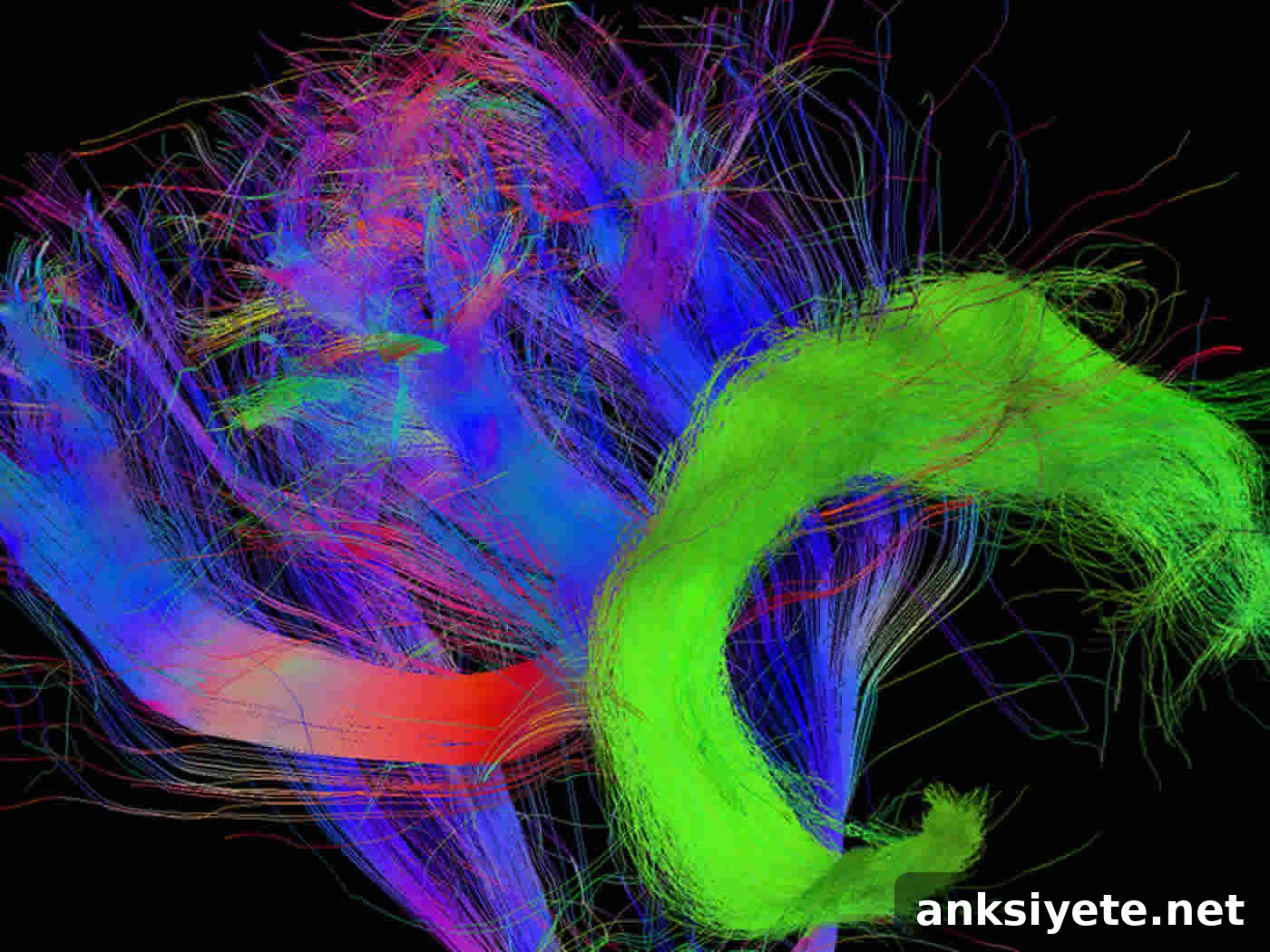
Summary: Researchers identify brain regions and connections that enable children to begin “putting themselves in others’ shoes.”
Source: Max Planck Institute
By around age four, children typically reach a major cognitive milestone: they begin to understand that other people can hold beliefs different from their own. A study from the Max Planck Institute for Human Cognitive and Brain Sciences in Leipzig links this breakthrough to the maturation of a specific white matter fibre tract in the brain.
Classic developmental tests illustrate the change. In one familiar scenario, a child named Maxi places a chocolate on the kitchen table and then leaves to play outside. While Maxi is gone, his mother moves the chocolate into the cupboard. When asked where Maxi will look for the chocolate, three-year-old children often fail to predict that Maxi will search where he originally left it. Only by about four years do most children correctly infer that Maxi’s belief—based on his earlier experience—will lead him to look on the table.
Another common test shows that a child is not yet able to separate personal knowledge from another person’s expectations. If a familiar chocolate box actually contains pencils, a three-year-old will typically say a second person would expect pencils to be in the box. Around age four, children begin to recognize that the other person would still expect chocolates, because they lack the same information. This transition marks the emergence of what psychologists call “Theory of Mind”: the capacity to attribute mental states—beliefs, desires, intentions—to other people and to understand that those mental states can differ from reality and from one’s own knowledge.
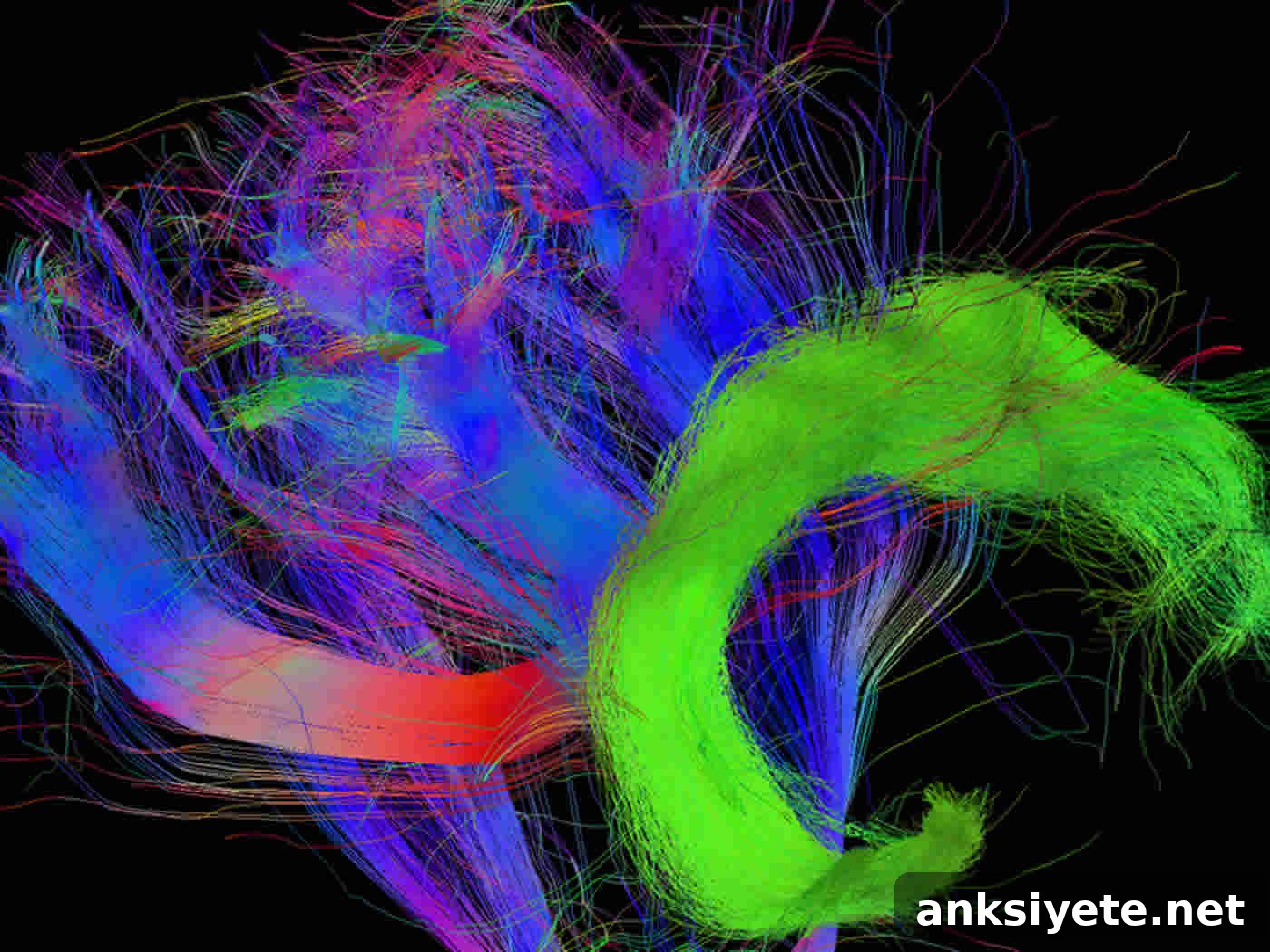
The Leipzig research team investigated what brain changes accompany this rapid developmental shift. Their results point to a specific white matter pathway, the arcuate fascicle, which strengthens between ages three and four. This pathway connects a region at the back of the temporal lobe—an area known to be active when adults reason about others’ mental states—with a region in the frontal lobe that supports holding information at different levels of abstraction and maintaining representations across time. When these two regions become well connected by the arcuate fascicle, children gain the neural infrastructure needed to distinguish their own knowledge from another person’s perspective. In practical terms, this connectivity helps a child predict that Maxi will look for chocolate where he left it, not where it actually is now.
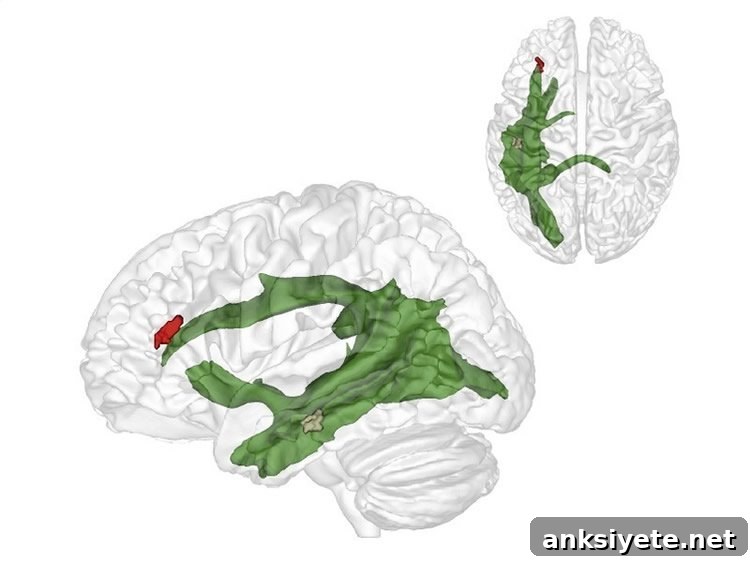
Charlotte Grosse Wiesmann, lead author of the study, suggests that a robust arcuate fascicle may underlie humans’ exceptional ability to infer others’ thoughts and predict their behavior. While some non-human primates show limited forms of social understanding, the human arcuate fascicle is comparatively stronger and may support more advanced Theory of Mind abilities.
Source: Verena Müller – Max Planck Institute for Human Cognitive and Brain Sciences
Image source: Images credited to Max Planck Institute.
Original research: Charlotte Grosse Wiesmann, Jan Schreiber, Tania Singer, Nikolaus Steinbeis, and Angela D. Friederici. “White matter maturation is associated with the emergence of Theory of Mind in early childhood.” Nature Communications. Published online March 21, 2017. DOI: 10.1038/ncomms14692
Max Planck Institute. Brain Structure That Helps Us Understand What Others Think Revealed. NeuroscienceNews. March 27, 2017.
Abstract
White matter maturation is associated with the emergence of Theory of Mind in early childhood
The capacity to attribute mental states to others is a fundamental aspect of human cognition. A key milestone occurs around age four, when children begin to understand that others can hold false beliefs about the world. The neural basis of this developmental step has been unclear. Using tract-based spatial statistics and probabilistic tractography in three- and four-year-old children, this study links the behavioural emergence of false-belief understanding to age-related changes in local white matter structure in temporoparietal regions, the precuneus, and the medial prefrontal cortex. The research also shows increased dorsal white matter connectivity between temporoparietal and inferior frontal regions, effects that remain after controlling for related cognitive abilities. These findings indicate that the maturation of core belief-processing regions and their prefrontal connections supports the early emergence of mental-state representation.
Reference: “White matter maturation is associated with the emergence of Theory of Mind in early childhood” — Charlotte Grosse Wiesmann et al., Nature Communications, March 21, 2017. DOI: 10.1038/ncomms14692