Summary: What did the earliest complex vertebrate brain look like? To address this foundational question in evolutionary neuroscience, researchers have produced the first three-dimensional, single-cell transcriptomic atlas of an entire lamprey brain. The lamprey—a jawless, eel-like fish whose body plan has remained largely unchanged for roughly 360 million years—serves as a living window into early vertebrate brain organization.
The study produced a high-resolution, spatially resolved map that locates every individual cell in the lamprey brain and records which genes are active in each cell. Comparing this primitive blueprint with modern mammalian models revealed strikingly conserved gene-expression programs across many core regions, despite a divergence of roughly 450 million years. Those parallels indicate that the common ancestor of all vertebrates already possessed a complex, molecularly organized brain rather than a simple nerve mass.
Key Facts
- 3D single-cell atlas: The research team assembled the first comprehensive three-dimensional cellular map of a jawless vertebrate brain, combining precise spatial location with single-cell gene-expression profiles.
- Deep evolutionary homology: Core frontostriatal and subcortical networks in the lamprey show molecular and genetic expression patterns similar to those found in mouse brains, pushing the origin of complex vertebrate brain organization back into deep evolutionary time.
- “Moonlighting” neurons: The atlas identifies anamniote-enriched neurons (AENs), versatile cells capable of both excitatory and inhibitory signaling within the same cell.
- Duplication and specialization: AENs are common in basal vertebrates such as lampreys and zebrafish but are rare in amniotes (reptiles, birds, mammals), which instead evolved dedicated specialist neurons—an evolutionary outcome likely linked to an ancient whole-genome duplication.
- Giant Müller cells and midbrain innovations: Researchers observed lineage-specific features in the lamprey, including oversized Müller glia-like cells and unique midbrain neuron types, contrasting with mammals’ later development of a multi-layered neocortex.
- Primitive cerebellum-like region: Cellular signatures matching cerebellar neuron types indicate a diffuse, ancestral cerebellum-like region in the lamprey, suggesting early origins for motor coordination circuits.
Source: Chinese Academy of Sciences
Why study the lamprey to reconstruct the ancestral vertebrate brain?
The lamprey occupies a pivotal place in vertebrate evolution: it diverged from jawed vertebrates about 450 million years ago and has preserved many primitive anatomical features. Because it lacks later innovations such as a layered neocortex, the lamprey provides a clearer view of the ancestral blueprint that gave rise to diverse vertebrate brains. This makes it an essential model for tracing ancient cellular and molecular features that predate jaws and more derived brain architectures.
Published in Science on June 18, the study was led by SU Bing from the Kunming Institute of Zoology, Chinese Academy of Sciences, with collaborators from BGI-Research and Liaoning Normal University. Using single-nucleus RNA sequencing (snRNA-seq) together with high-resolution spatial transcriptomics, the team reconstructed a complete 3D molecular atlas of the adult lamprey brain, then compared it across species including zebrafish, reptiles, birds, and mouse spatial transcriptomes.
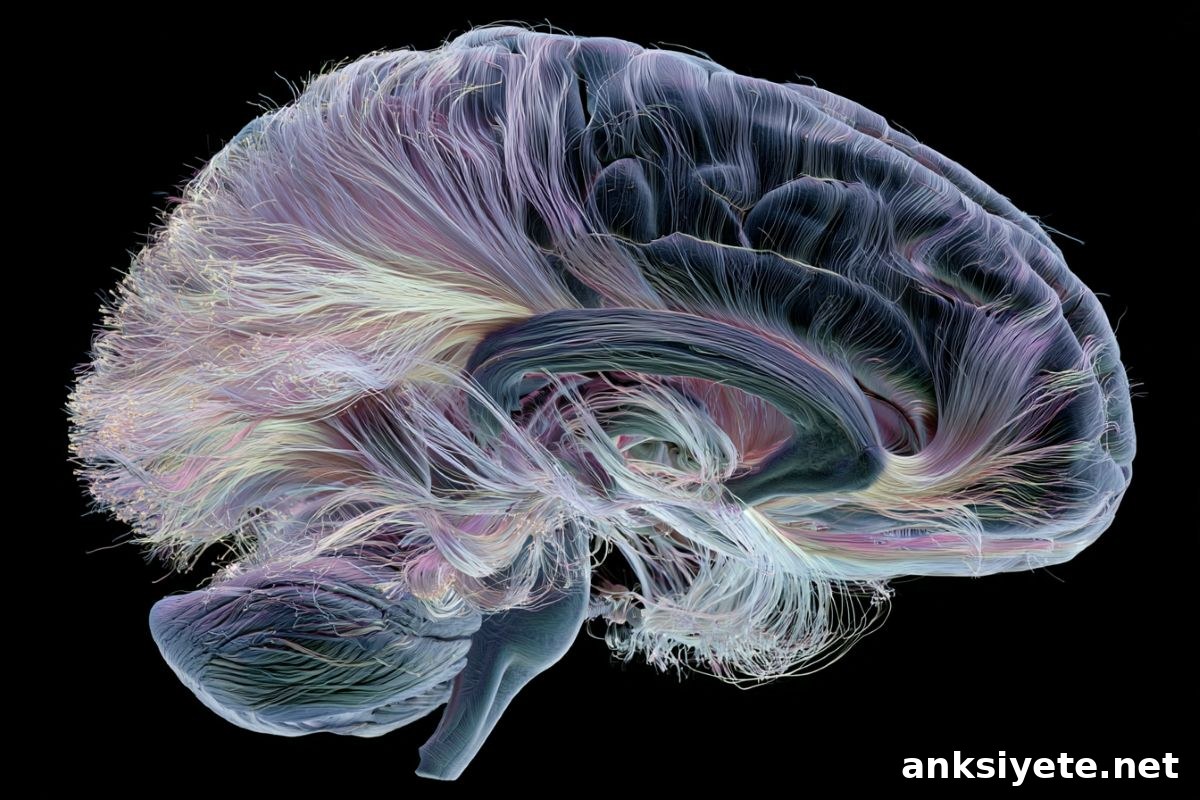
Although lampreys split from jawed vertebrates hundreds of millions of years ago, the researchers demonstrated conserved gene-expression patterns across many brain regions when compared to mice. Those conserved molecular signatures imply that the last common vertebrate ancestor already had distinct brain regions—telencephalon, diencephalon, mesencephalon, and rhombencephalon—and a diverse array of cell types organized in space.
At the same time, lineage-specific innovations are clear. Lampreys exhibit unique midbrain neuron classes and exceptionally large Müller-like glial cells, whereas mammals evolved a layered cerebral cortex and further specialized neuronal subtypes. The atlas also reveals how ancestral neurons underwent functional specialization over time: versatile AENs that both excite and inhibit are frequent in lampreys and zebrafish but were largely replaced by specialist neurons in amniotes following genome duplication events.
Importantly, the atlas identifies cells with cerebellar-like molecular profiles, indicating that the building blocks of cerebellar circuitry existed before the fully formed cerebellum appeared in jawed vertebrates. This provides evidence that fundamental coordination and motor-control elements were present very early in vertebrate history.
Key Questions Answered:
A: The lamprey is one of the most basal living vertebrates, having split from jawed vertebrates about 450 million years ago and retained many ancestral features. It lacks later specializations, so its brain preserves elements of the ancestral blueprint. Studying the lamprey lets researchers observe ancient organizational and molecular patterns that informed the evolution of more complex brains.
A: “Moonlighting” neurons, labeled here as anamniote-enriched neurons (AENs), are versatile cells that can carry both excitatory and inhibitory signals. The atlas shows that these multitasking cells are common in lampreys and zebrafish but rare in amniotes. After an ancient whole-genome duplication, duplicated genes enabled the emergence of distinct cell lineages that evolved into specialized excitatory or inhibitory neuron types.
A: The atlas reveals a diffuse population of cells in the lamprey with molecular signatures matching cerebellar neurons. While not organized into the compact, folded cerebellum seen in mammals, these cells indicate that a primitive, cerebellum-like circuitry for motor coordination existed in the vertebrate ancestor.
Editorial Notes:
- This article was edited by a Neuroscience News editor.
- The journal paper was reviewed in full.
- Additional context was added by staff.
About this brain mapping and evolutionary neuroscience research
Author: SU Bing
Source: Kunming Institute of Zoology, Chinese Academy of Sciences
Contact: SU Bing – Kunming Institute of Zoology
Image: Image credited to Neuroscience News
Original Research: Open access.
“Lamprey 3D single-cell transcriptomics reveals ancestral and specialized features of the vertebrate brain” by Haixu Wu et al., published in Science.
DOI: 10.1126/science.aea2535
Abstract
Lamprey 3D single-cell transcriptomics reveals ancestral and specialized features of the vertebrate brain
INTRODUCTION
The vertebrate brain is a highly complex organ composed of distinct regions and diverse cell types that enabled wide-ranging behavioral adaptations across more than 500 million years. To understand how this complexity evolved, systematic cross-species analyses that capture cell identity, molecular signatures, and spatial arrangement are essential.
As one of the most basal living vertebrates, the lamprey diverged from jawed vertebrates about 450 million years ago. Its brain contains many fundamental regions—telencephalon, diencephalon, mesencephalon, and rhombencephalon—but lacks later specializations like a layered cortex, making it a critical model for distinguishing ancestral traits from later innovations.
RATIONALE
Although single-cell sequencing has cataloged brain cell types in several species, a full three-dimensional spatial transcriptomic view of a jawless vertebrate brain was lacking. This study combined single-nucleus RNA sequencing with high-resolution spatial mapping to construct a complete 3D molecular atlas of the adult lamprey brain, then performed cross-species comparisons that included zebrafish and available datasets from reptiles, birds, and mammals.
RESULTS
The 3D atlas identified 209 distinct cell populations across 14 major brain regions. It revealed deep conservation in brain architecture and cell-type organization: regions such as the olfactory bulb, thalamus, and hindbrain show similar cellular compositions and spatial relationships in both lampreys and mice. At the same time, the atlas highlights evolutionary divergence, including differences in forebrain layering and novel midbrain cell groups unique to lampreys.
A major evolutionary trend uncovered by the study is increasing neuronal specialization. Ancestral multifunctional neuron types gave way to more segregated, functionally dedicated cell classes in later vertebrates. The atlas also identified cerebellar-like cell types in the lamprey, suggesting that the fundamental cellular architecture for motor coordination existed long before the emergence of a fully developed cerebellum in jawed vertebrates.
CONCLUSION
These results indicate that the last common ancestor of vertebrates already had a sophisticated brain blueprint characterized by distinct anatomical regions and diverse cellular populations. Vertebrate brain evolution proceeded through both the addition of new structures and the progressive specialization and spatial reorganization of ancestral cell types, ultimately yielding the precise, segregated neural circuits observed in modern mammals.