
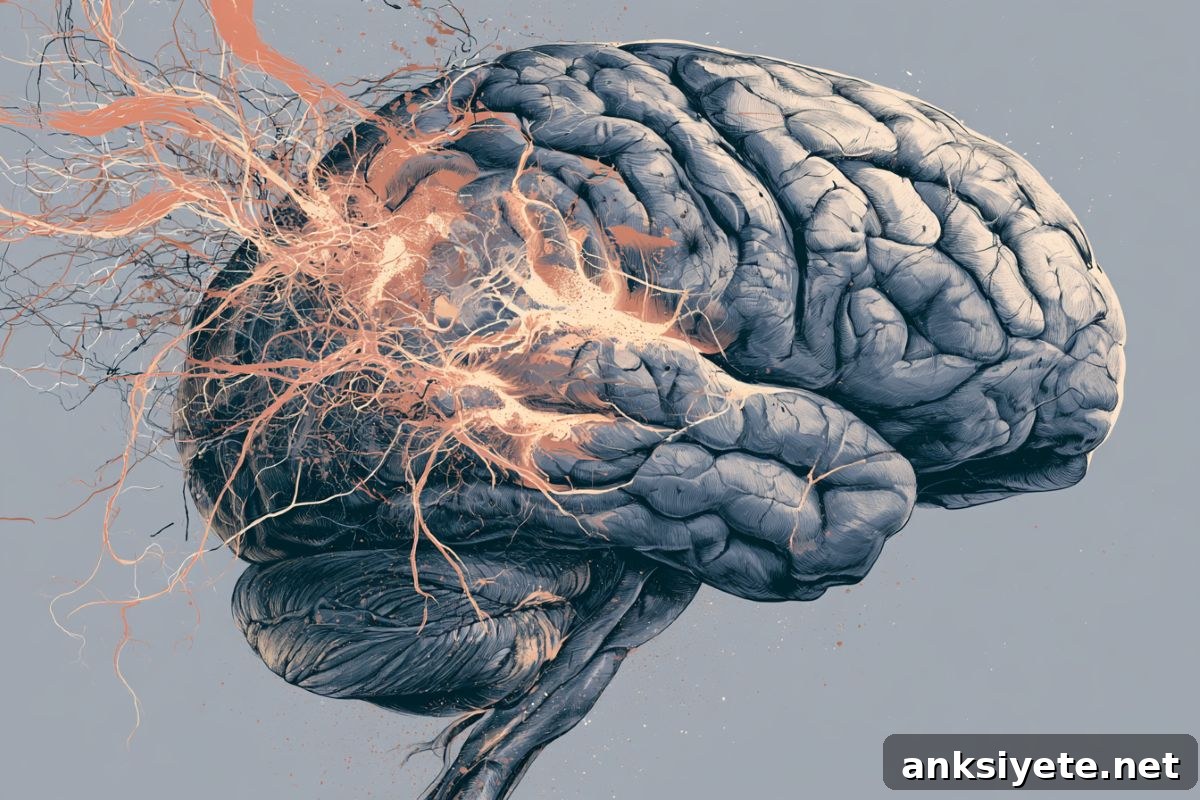
Summary: A global meta-analysis of more than 4,700 encephalitis survivors shows that psychiatric and behavioural problems — including depression, anxiety, emotional instability and disinhibition — are common and persistent after brain inflammation. The pooled evidence indicates about 27% of survivors meet criteria for clinical depression and roughly 20–23% experience long-term anxiety, emotional instability or disinhibited behaviour months to years after recovery.
These psychiatric consequences occur at similar rates to prominent neurological sequelae such as memory loss and seizures. Despite this parity, routine clinical follow-up often overlooks mental health. The authors recommend integrating standardized neuropsychiatric screening and mental health care into post-encephalitis rehabilitation pathways.
Key Facts
- As common as neurological deficits: Psychiatric complications occur at rates comparable to major neurological impairments, like cognitive deficits and epilepsy.
- Prevalence of depression: Approximately 27% of survivors experience depression or related behavioural problems.
- Anxiety and emotional changes: Around 20–23% of survivors suffer long-term anxiety, emotional volatility or disinhibition.
- Consistent across causes: Elevated psychiatric burden was observed across both infectious and autoimmune encephalitis, though mood changes were particularly frequent after infectious causes.
- Care gap: Few studies reported consistent long-term mental health follow-up; standardized assessment and routine screening are lacking in current clinical practice.
Source: King’s College London
Overview of the study
A team from the Institute of Psychiatry, Psychology & Neuroscience (IoPPN) at King’s College London, together with researchers at the University of Oxford and the University of Liverpool, performed the most comprehensive systematic review and meta-analysis to date on psychiatric and behavioural outcomes after encephalitis. Published in the journal Brain Communications and funded by the National Institute for Health and Care Research (NIHR), the study synthesised data from 101 observational studies including 4,703 survivors worldwide and examined outcomes at least three months after the acute illness.
Encephalitis — inflammation of the brain caused by infection (for example, herpes simplex virus or Japanese encephalitis) or autoimmune processes — affects thousands of people annually in the UK and can be life-threatening. Improved treatments have increased survival, but many patients face long-term consequences that extend beyond physical and neurological recovery. This analysis focused on quantifying psychiatric and behavioural sequelae, comparing infectious and autoimmune causes, and exploring factors such as age and follow-up duration.
Methods in brief
Following PRISMA guidelines, the authors searched major medical databases through December 13, 2024, and included observational studies that reported psychiatric outcomes three months or more after encephalitis. Two reviewers independently screened studies and extracted data on prevalence of symptoms, study design, aetiology and participant demographics. Random-effects meta-analysis produced pooled prevalence estimates for depression, anxiety, disinhibition and emotional instability. Subgroup analyses compared infectious versus autoimmune aetiologies and paediatric versus adult cohorts, while meta-regression assessed the influence of follow-up duration, mean age and sex distribution.
Main findings
- Depression: pooled prevalence 26.9% (95% CI 22.2–32.3%).
- Anxiety: pooled prevalence 22.8% (95% CI 14.2–32.0%).
- Disinhibition: pooled prevalence 20.5% (95% CI 15.1–27.3%).
- Emotional instability: pooled prevalence 22.9% (95% CI 15.6–32.4%).
- Infectious versus autoimmune differences: infectious encephalitis showed higher rates of mood symptoms compared with autoimmune causes.
- Heterogeneity: Substantial variability across studies reflected differences in aetiology, study methods, assessment tools and demographic factors, highlighting the need for standardized approaches.
Meta-regression indicated that follow-up duration, cohort age and the proportion of female participants affected prevalence estimates for some symptoms. Despite heterogeneity, the overall signal is clear: psychiatric sequelae after encephalitis are frequent and often persistent, affecting at least one-quarter of survivors for key symptom domains.
Clinical implications
The researchers argue that routine mental health assessment must become a standard component of post-encephalitis care. Neuropsychiatric complications can be disabling but are often treatable when identified early. Integrating specialist neuropsychiatric expertise into follow-up pathways, using validated outcome measures and providing timely access to psychological and pharmacological treatments should reduce long-term distress and improve recovery.
Expert perspectives
Dr Cameron Watson, the study’s lead author, notes that encephalitis “doesn’t end when patients leave hospital” and that many survivors experience lasting mental health and personality changes. Dr Thomas Pollak, Senior Clinical Lecturer and Consultant Neuropsychiatrist at the IoPPN, emphasises that psychiatry should not be an afterthought: routine screening and accessible treatment can prevent needless suffering. Co-lead author Dr Jack Fanshawe highlights remaining knowledge gaps, including which treatments are most effective and which patients are most vulnerable, and calls for more prospective, detailed research.
Survivor voices amplify these findings: many people and families report that emotional and behavioural changes can be as distressing as, or more disruptive than, physical symptoms. The study’s authors and patient advocates urge investment in services that address the full range of post-encephalitis needs.
Key questions answered
A: Encephalitis often inflames frontal and temporal brain regions that regulate mood, impulse control and personality. Even after the acute phase resolves, inflammation can leave subtle structural damage or alter neurotransmitter systems and neural connectivity, producing lasting changes in emotional regulation and behaviour.
A: Psychiatric and behavioural sequelae are at least as common as many neurological deficits and are frequently highly disabling. Survivors and families report that invisible emotional changes — anxiety, depression and sudden shifts in behaviour — often cause the greatest long-term disruption to daily life.
A: The authors call for mandatory, routine mental health and neuropsychiatric screening in post-encephalitis care, the inclusion of neuropsychiatric specialists in follow-up teams, consistent use of validated outcome measures, and better access to evidence-based treatments so survivors receive timely support.
Editorial notes
- This article was edited by a Neuroscience News editor.
- The underlying journal paper was reviewed in full.
- Additional context was added by editorial staff.
About this neurology and mental health research news
Author: Franca Davenport
Source: King’s College London
Contact: Franca Davenport – King’s College London
Image: The image is credited to Neuroscience News
Original research: “Psychiatric and behavioural sequelae following encephalitis: a systematic review and meta-analysis” by Cameron Watson et al., published in Brain Communications. DOI: 10.1093/braincomms/fcag175. Open access.
Abstract
Psychiatric and behavioural sequelae following encephalitis: a systematic review and meta-analysis
Survivors of encephalitis frequently experience chronic neuropsychiatric sequelae, but the prevalence and patterns of mental health outcomes have been poorly characterised. This systematic review and meta-analysis quantified the prevalence of psychiatric and behavioural symptoms after encephalitis, compared infectious and autoimmune causes, and examined age-related differences.
Following PRISMA guidelines, researchers searched MEDLINE, EMBASE, PsycINFO, CINAHL and PubMed through 13 December 2024. Observational studies reporting psychiatric outcomes three months or more after encephalitis were included. Random-effects meta-analyses estimated pooled prevalence of depression, anxiety, disinhibition and emotional instability, with subgroup analyses by aetiology and age group.
One hundred one studies (n = 4,703 patients; weighted mean age 36.5 years) met inclusion. Across all aetiologies, pooled prevalence estimates were: depression 26.9% (95% CI 22.2–32.3%); anxiety 22.8% (95% CI 14.2–32.0%); disinhibition 20.5% (95% CI 15.1–27.3%); emotional instability 22.9% (95% CI 15.6–32.4%). Infectious encephalitis showed higher rates of mood symptoms than autoimmune causes in available data.
Meta-regression indicated that follow-up duration, cohort age and female proportion influenced prevalence estimates. Considerable heterogeneity across studies underscores the need for prospective cohorts, consistent diagnostic criteria and a standardised mental health outcome set to improve both clinical care and research.