
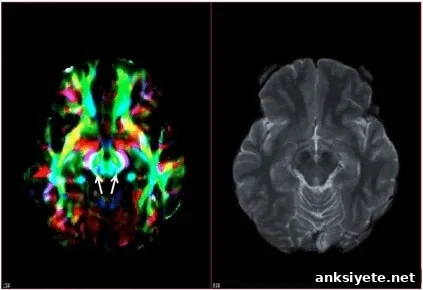
A new University of Florida study indicates that a promising brain-imaging technique could improve diagnosis for the millions of people affected by movement disorders such as Parkinson’s disease.
Using diffusion tensor imaging (DTI), researchers found they could distinguish among different movement disorder diagnoses with a high degree of accuracy, a result that could help clinicians identify the correct condition earlier and tailor treatment and therapy sooner in the disease course.
The three-year study enrolled 72 patients, each previously given a clinically defined movement disorder diagnosis. Applying diffusion tensor imaging and advanced statistical analysis, the team was able to separate participants into distinct disorder groups reliably. The study appears in the journal Movement Disorders.
“The purpose of this study is to identify markers in the brain that differentiate movement disorders which have clinical symptoms that overlap, making [the disorders] difficult to distinguish,” said David Vaillancourt, associate professor in the Department of Applied Physiology and Kinesiology and the study’s principal investigator. “No other imaging, cerebrospinal fluid or blood marker has been this successful at differentiating these disorders. The results are very promising.”
Movement disorders such as Parkinson’s disease, essential tremor, multiple system atrophy and progressive supranuclear palsy often share overlapping symptoms in their early stages—tremor, slowed movement and balance problems—which can make an accurate early diagnosis difficult. It is common for initial clinical diagnoses to change as the disease progresses and clearer patterns emerge.
DTI is a non-invasive MRI-based technique that measures the diffusion of water molecules in brain tissue. Because water diffuses differently along healthy versus damaged neural pathways, DTI provides information about the microstructural integrity of white matter tracts and, to an extent, gray matter regions. In this study, Vaillancourt and colleagues focused their measurements on key motor-related structures, including regions of the basal ganglia and the cerebellum, which play central roles in movement control and coordination. They then applied statistical classification methods to these imaging measures to predict diagnostic groupings.
Rather than relying on a single region or metric, the researchers examined patterns across several brain areas and tested multiple models to determine which combinations best separated one disorder from another. By comparing groups against each other and analyzing the imaging data with rigorous statistical techniques, they demonstrated clear separations among disorder types in their cohort.
“Our goal was to use these measures to accurately predict the original disease classification,” Vaillancourt explained. “The idea being that if a new patient came in with an unclear diagnosis, you might be able to apply this algorithm to that individual.” He likens the approach to commonly used risk assessments in other fields of medicine: “If you have high cholesterol, it raises your chances of developing heart disease. There are tests that provide a probability or likelihood for future disease. We’re going a step further and trying to use imaging information to predict the classification of specific tremor and Parkinsonian disorders.”
This research is part of the National Institute of Neurological Disorders and Stroke Parkinson’s Disease Biomarkers Program, an initiative launched in 2012 to support biomarker discovery across multiple centers. The program awarded nine grants in its first year, distributing more than $5 million to investigators around the United States and facilitating larger, multi-site studies and standardized data collection.
Building on these initial findings, Vaillancourt’s team is conducting a longitudinal study at the University of Florida that will follow 150 to 180 participants over the coming years. That project will use DTI alongside other MRI-based techniques to classify subjects, monitor disease progression, and evaluate how imaging markers change over time, with the aim of improving diagnostic precision and informing clinical decisions.
Notes about this neuroimaging and movement disorder research
Contact: Allison Vitt – University of Florida
Source: University of Florida press release
Image Source: The Parkinson’s brain diffusion tensor imaging scan is credited to NIBIB/NIH and is in the public domain.
Original Research: Abstract for “Diffusion tensor imaging of Parkinson’s disease, atypical parkinsonism, and essential tremor” by Janey Prodoehl et al., published in Movement Disorders. DOI: 10.1002/mds.25491