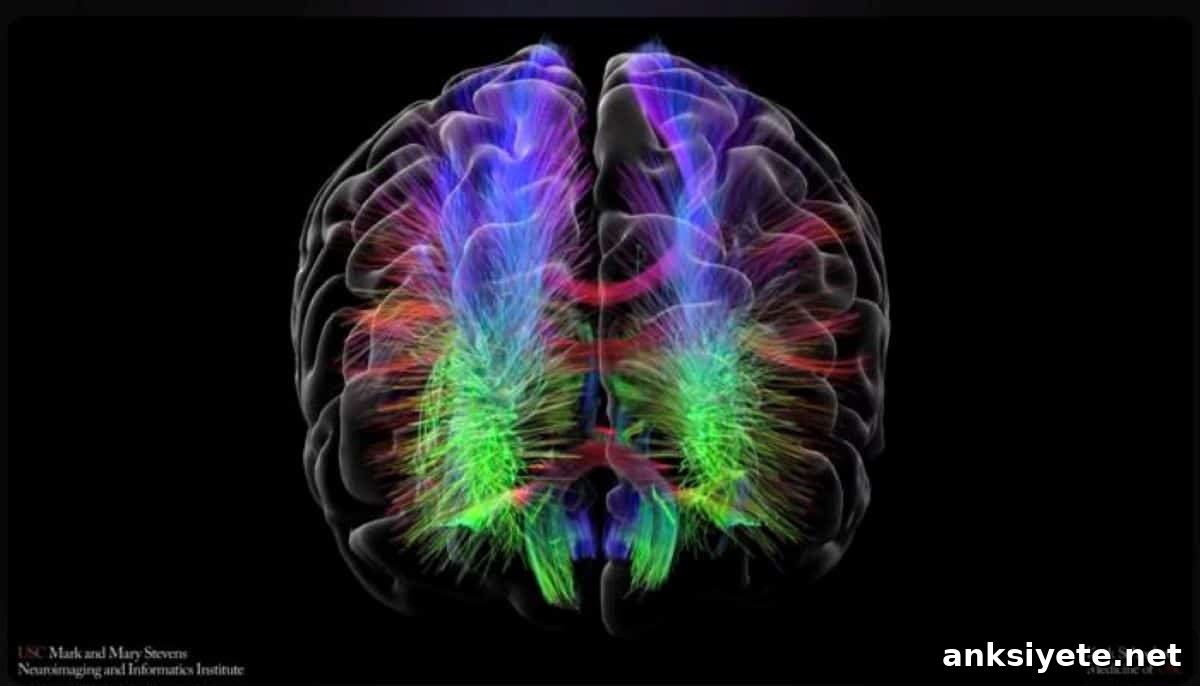
Summary: A large multisite study has mapped structural white matter networks in people with bipolar disorder, revealing subtle but widespread differences in how brain regions communicate. Researchers harmonized diffusion MRI data from 449 individuals with bipolar disorder and 510 healthy controls across 16 international sites through the ENIGMA Bipolar Disorder Working Group to identify system-level wiring changes linked to illness history and treatment exposure.
Using graph theory to model the brain as a transport system of nodes (regions) and routes (white matter pathways), the study detected reduced connection density, longer communication paths, and a greater reliance on a limited set of highly connected hub regions in bipolar disorder. These changes were most pronounced in networks that support emotion regulation, motivation and reward, attention, and self-referential thought.
Key Facts
- Multisite scale and sensitivity: Pooling standardized diffusion MRI data from 16 sites gave the statistical power to detect subtle, system-level white matter differences that single-site studies often miss.
- Graph-theoretic connectomics: Diffusion MRI and tractography were combined with graph theory metrics to quantify network density, efficiency, path length, and hub architecture—measures that reflect how efficiently information can travel across the brain.
- Widespread connectivity reductions: Compared with healthy controls, people with bipolar disorder showed lower network density and efficiency and longer average path lengths, indicating less direct communication between regions.
- Concentrated functional vulnerability: Structural alterations clustered in fronto-limbic circuits (emotion regulation), basal ganglia pathways (motivation and reward), the default mode network (self-reflection), and the salience network (attentional prioritization).
- Clinical associations: Longer illness duration correlated with reduced global network efficiency and altered amygdala–hippocampus wiring. Later age of onset linked to changes in circuits connecting the cerebellum, thalamus, and fronto-limbic regions.
- Symptom signatures: A history of psychosis associated with more widespread network disorganization. More frequent manic episodes related to increased connectivity in some fronto-limbic pathways, which may reflect illness-related alteration or compensatory adaptation.
- Medication-related patterns: For the first time at this scale, medications were examined by their biological mechanisms. Use of selective serotonin reuptake inhibitors (SSRIs), anticonvulsants, and antipsychotics was associated with distinct connectivity variations in emotion-regulation and cognitive-control circuits.
Source: USC
Overview
Researchers at the Mark and Mary Stevens Neuroimaging and Informatics Institute (Stevens INI), Keck School of Medicine of USC, led a large international effort to characterize white matter network architecture in bipolar disorder. The study, published in Biological Psychiatry, was led by Leila Nabulsi, PhD, with collaborators including Dara M. Cannon, PhD, and colleagues across the ENIGMA Bipolar Disorder Working Group. Data included diffusion MRI scans from 449 people with bipolar disorder and 510 healthy controls collected at 16 sites worldwide.
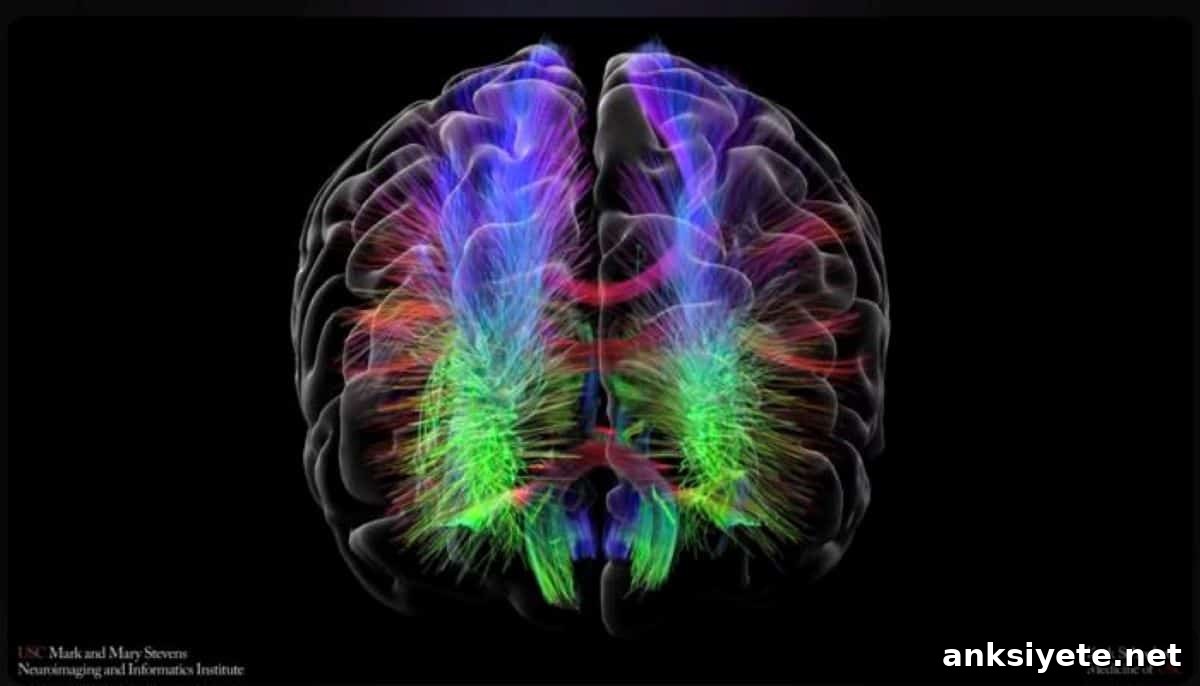
ENIGMA, an international consortium co-led by Paul M. Thompson, PhD, provided the harmonized platform that allowed these cross-site analyses. Harmonization ensured comparable segmentation, parcellation, and tractography across different scanners and imaging protocols, enabling robust detection of reproducible network effects.
Mapping the brain’s communication network
Diffusion MRI traces water movement along white matter fibers, enabling reconstruction of structural pathways that connect brain regions. The authors applied tractography and graph-theory metrics to model network topology: nodes represent cortical and subcortical parcels, and edges represent estimated white matter streamlines linking them. Network measures—density, efficiency, path length, and betweenness centrality—quantify how directly and flexibly information can flow across the system.
Main findings: subtle, consistent network alterations
Across the large sample, bipolar disorder was associated with consistent but modest reductions in network density and global efficiency, and with longer characteristic path length—metrics that together indicate less direct and efficient structural communication. Networks in affected participants showed greater reliance on a few hub regions, suggesting a shift toward centralized routing of information that may reflect compensatory reorganization or vulnerability from disrupted peripheral connections.
The strongest effects localized to circuits implicated in core clinical domains of bipolar disorder: fronto-limbic emotion-regulation pathways, basal ganglia-motivational systems, and nodes of the default mode and salience networks. These systems support mood regulation, reward processing, internal thought, and attention—all commonly altered in bipolar disorder.
Clinical and treatment associations
Linking network metrics to clinical history, the study found that longer illness duration associated with broader declines in network efficiency and altered amygdala–hippocampus connectivity. Later age at onset produced a different anatomical signature involving cerebellum–thalamus–fronto-limbic circuits. Psychosis history predicted more extensive network disruption, while a greater number of manic episodes correlated with increased fronto-limbic connectivity.
Medication exposure was examined both by conventional drug classes and by biological mechanism. Antidepressants—especially SSRIs—anticonvulsants, and antipsychotics showed associations with altered global and fronto-limbic connectivity. The cross-sectional design prevents causal interpretation: medication-related findings may reflect treatment effects, illness severity, or selection factors.
Implications and next steps
This study demonstrates that harmonized multisite diffusion MRI can reveal reproducible network-level signatures in bipolar disorder. Findings emphasize that bipolar disorder affects large-scale systems rather than isolated regions, and that illness trajectory and treatment exposure shape network architecture. Because data were cross-sectional, longitudinal studies are needed to determine causality and to test whether network profiles predict clinical course or treatment response.
Ongoing longitudinal efforts within ENIGMA-BD aim to follow patients over time to clarify how treatment, progression, and recovery relate to structural connectivity. Such work could inform more personalized, biologically informed approaches to diagnosis, prognosis, and intervention.
Key Questions Answered
Q: How does graph theory help researchers study bipolar disorder?
A: Graph theory models the brain as a network of nodes (regions) and edges (white matter pathways), allowing precise measurement of how efficiently information travels and how network topology differs in illness.
Q: What did this ENIGMA study reveal about information flow in bipolar disorder?
A: The study showed that structural communication is less efficient, with signals taking longer, more circuitous routes and a greater dependence on a few central hubs—patterns concentrated in emotion, reward, attention, and self-reflection circuits.
Q: Do these findings prove medications damage white matter?
A: No. The study is cross-sectional, so it cannot establish causation. Medication associations highlight the importance of accounting for treatment history when studying brain biology, but they do not prove direct harm.
About the study
Lead authors: Leila Nabulsi, PhD; Dara M. Cannon, PhD; Paul M. Thompson, PhD. Additional contributors include a broad international team for the ENIGMA Bipolar Disorder Working Group. Funding was provided by a 2025 NARSAD Young Investigator Grant, the Milken Institute Baszucki Brain Research Fund, the Irish Research Council, the Health Research Board, the National Institutes of Health, and other international sources.
Original research: Structural Brain Network Alterations in Relation to Treatment and Illness Severity in Bipolar Disorder. Biological Psychiatry. DOI: 10.1016/j.biopsych.2026.04.020
Abstract (condensed)
This large multisite diffusion MRI study in 449 individuals with bipolar disorder and 510 controls identified widespread network disruptions—lower density and efficiency, longer path length, and higher centrality of hubs—especially within limbic, basal ganglia, default mode, and salience systems. Illness duration, age of onset, psychosis history, manic episode count, and medication exposure were each associated with distinct patterns of network alteration. Multisite harmonization proved feasible and highlights ENIGMA-BD as a scalable framework to identify reproducible neurobiological markers.
Editorial notes
- Article edited by a Neuroscience News editor.
- Journal article reviewed in full by staff.
- Additional context provided by editorial staff.
Author: Laura LeBlanc (USC). Source: USC. Image credit: Stevens INI.