
Summary: Patients who survive severe traumatic brain injuries can enter prolonged states of reduced responsiveness, described clinically as Prolonged Disorders of Consciousness (PDoC) or Locked-In Syndrome (LIS). For decades, standard bedside diagnostics have depended largely on visible motor responses—eye tracking, reflexive movements, or simple physical command following—to judge awareness.
When the neural pathways that connect intention to muscle movement are disrupted, a person may be fully conscious yet unable to produce outward behavior. As a result, conventional physical exams can miss signs of awareness: past studies estimate that a substantial proportion of patients classified as minimally conscious are sometimes misidentified as entirely unaware because their motor output is inaccessible.
To address this diagnostic blind spot, researchers developed a wearable brain–computer interface (BCI) system that detects intentional brain activity patterns without requiring any physical movement. The approach uses a structured, multi-session protocol combined with immediate auditory neurofeedback to help patients learn to generate clearer internal signals. In a multi-site study with 42 participants, repeated training sessions significantly enhanced the quality of covert cognitive signals and substantially increased the clinical detection of minimal consciousness, nearly doubling detection rates from 39% to 69% and enabling a path toward basic non-verbal communication.
Key Facts
- BCI paradigm shift: Earlier BCI trials typically tested patients in a single session. This study introduces a longitudinal, multi-session training framework that enables damaged brains to learn to modulate their signals over time.
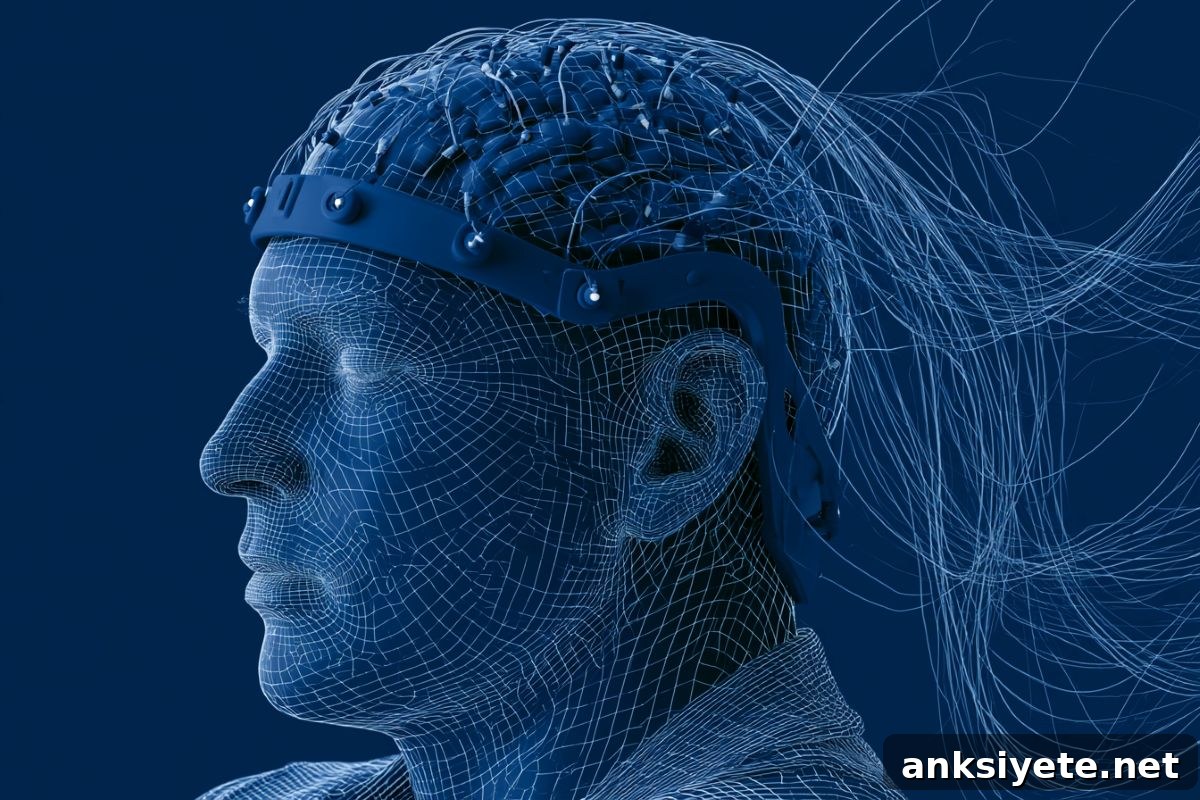
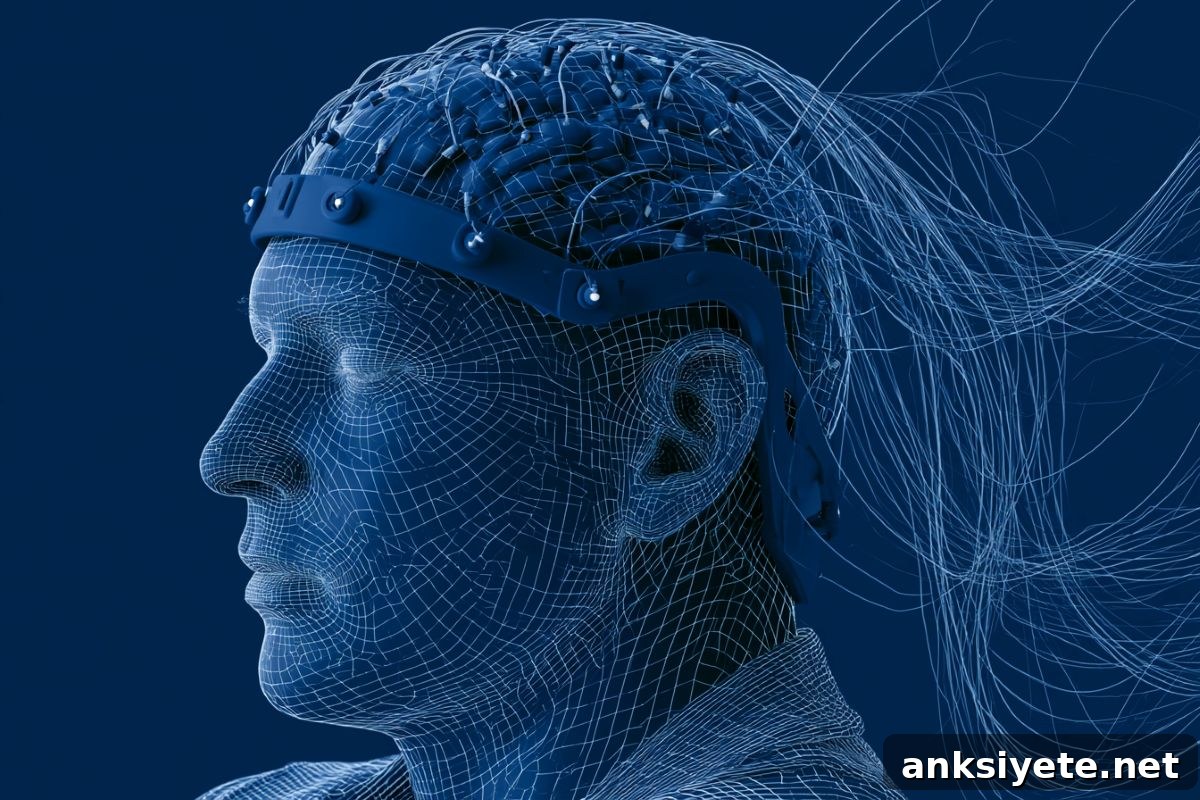
- Motor imagery detection: A wearable EEG headset records sensorimotor rhythms and identifies distinct patterns when an unresponsive patient imagines a movement (for example, lifting the left hand or both feet), even when no physical movement is possible.
- Auditory neurofeedback: The system gives immediate sound feedback the instant the algorithm recognizes an intentional motor imagery pattern. This feedback lets patients refine the mental strategies that produce those brainwave signatures, improving consistency across sessions.
- Staged questioning: Roughly 90% of participants who achieved reliable brainwave modulation progressed to a phase where specific imagined movements were used to indicate binary “yes” or “no” answers to exploratory questions.
- Quantitative diagnostic gains: When combined with standard behavioral assessments, the multi-session BCI protocol raised the clinical detection of minimal consciousness from 39% to 69%, revealing awareness that bedside examinations alone had missed.
- Practical deployment: The lightweight, portable design avoids bulky lab equipment, making it suitable for use in hospitals, long-term care facilities, and residential settings.
Source: University of Bath
Overview: Researchers at the University of Bath have demonstrated a new, practical approach for identifying hidden awareness in people who cannot speak or move after severe brain injury. The system uses wearable EEG and a multi-session training protocol to detect intent-based brain signals and train patients to produce clearer neural responses.
Over repeated sessions, the research team uncovered signs of awareness that earlier single-session approaches had missed. The method offers improvements for diagnosis and rehabilitation planning and opens possibilities for future non-verbal communication tools for severely impaired patients.
Published in the journal Communications Medicine, the study tested the protocol in people with prolonged disorders of consciousness and locked-in syndrome—conditions where awareness may persist but cannot be expressed through behavior. By recording brainwaves while patients imagined hand or arm movements, the BCI detected intentional activity and showed that accuracy improved when auditory feedback was provided across sessions.
Structured approach
The study used a structured multi-session protocol combining three core elements:
- Repeated training: Participants were taught to intentionally alter their brain signals by imagining specific actions, such as lifting a weight with the left hand or lifting both feet. These mental tasks generated detectable, repeatable EEG patterns even in the absence of movement.
- Real-time feedback: Each time the system detected the target brain pattern it provided an immediate auditory cue. That feedback helps participants recognize which mental strategies produce the desired neural signature, allowing them to sharpen those strategies across sessions, much like learning a new skill.
- Staged questioning: After establishing reliable modulation, participants entered a yes–no question phase in which one imagined movement indicated “yes” and another indicated “no.” These questions were designed to probe different aspects of cognition and awareness.
Study outcomes
The protocol was evaluated in 42 participants aged 17 to 73, recruited across multiple clinical sites in the NHS and Ireland.
Key findings:
- 31 of 42 participants (73.8%) exhibited reliable, intentional modulation of brain activity when asked to imagine specific movements.
- About 90% of those who modulated their brain signals advanced to the yes–no response phase.
- Brain responses generally became more consistent with repeated sessions, improving decoding reliability.
- When combined with standard behavioral tests, the multi-session BCI protocol increased detection of the minimally conscious state from 39% to 69%, uncovering awareness that might otherwise have gone unnoticed.
Why behavioral tests alone are not enough
Standard bedside assessments rely primarily on visible movement—eye tracking, reflexes, or following commands. When motor pathways are disrupted, these tests can significantly underestimate a person’s awareness.
Earlier research has suggested that a notable fraction of patients labeled as minimally conscious may be misdiagnosed because their internal cognitive activity cannot be expressed physically. Brain-based assessments, particularly those that do not depend on muscle movement, provide a pathway to detect intentional responses despite the absence of behavioral output.
While single-session brain assessments can sometimes reveal covert awareness, they provide only a brief snapshot. The researchers hypothesized—and demonstrated—that signals can be strengthened by turning assessment into a training process with repeated sessions and immediate feedback, producing more robust evidence of awareness over time.
Lead author Dr Naomi du Bois, of the Institute for the Augmented Human at the University of Bath, noted that brain-based responses to structured questioning can complement bedside exams and help clinicians detect hidden awareness earlier.
Senior author Professor Damien Coyle, director of the Institute for the Augmented Human, emphasized the importance of moving beyond single-session testing: a structured, multi-session BCI framework with training, feedback, and staged questioning can be used in real clinical settings, care homes, or private residences to strengthen the reliability of detecting signs of awareness and create a pathway toward basic communication for some patients.
Key Questions Answered:
A: Traditional tests rely on visible motor responses—squeezing a hand, blinking on command, or tracking an object. Severe brain injuries can break the pathways that link a conscious mind to the muscles. A patient may understand commands and be fully aware but unable to produce motor responses. Because bedside exams measure only physical output, covert awareness can be missed.
A: The system’s immediate auditory feedback turns assessment into active learning. When a patient imagines a movement, the headset monitors for a target neural rhythm. As soon as the pattern is detected, an audible cue confirms success. That instant feedback lets the patient learn which mental strategies work, and with practice over multiple sessions they can refine those strategies and make their brain signals more distinct.
A: The goal is to move the technology out of specialized labs and into hospitals, care homes, and private homes as an accessible communication tool. By teaching patients to use different imagined movements for “yes” and “no,” the system can provide a non-invasive channel for basic communication—allowing non-verbal, paralyzed individuals to indicate needs, comfort, or preferences and to engage more actively in their care.
Editorial Notes:
- This article was edited by a Neuroscience News editor.
- The full journal paper was reviewed.
- Additional context was provided by staff.
About this neurotech research news
Author: Vittoria D’Alessio
Source: University of Bath
Contact: Vittoria D’Alessio – University of Bath
Image: The image is credited to Neuroscience News
Original Research: Open access.
“Advancing EEG-based assessment of consciousness and cognition in prolonged disorders of consciousness” by Naomi du Bois et al., Communications Medicine.
DOI: 10.1186/s43856-026-01574-x
Abstract
Advancing EEG-based assessment of consciousness and cognition in prolonged disorders of consciousness
Background
Accurate assessment of residual awareness in people with Prolonged Disorders of Consciousness is clinically challenging because conventional behavioral tools can overlook covert cognition. This study evaluates whether a structured, multi-phase motor imagery BCI protocol can provide objective EEG indicators of awareness that complement behavioral assessments.
Methods
Forty-four participants completed repeated imagined-movement tasks using wearable EEG (groups included Unresponsive Wakefulness Syndrome, Minimally Conscious State, and Locked-In Syndrome). The protocol measured sensorimotor rhythm modulation, compared training with and without neurofeedback, and assessed binary question answering across phases. Standard behavioral assessments were administered at each session.
Results
Significant motor-imagery BCI decoding accuracy was achieved by 73.8% of patients, and most of those progressed to question-and-answer testing, often exceeding usability thresholds. Results showed variability between diagnostic groups and demonstrated that combining EEG decoding with behavioral assessments improved balanced diagnostic accuracy—raising sensitivity to minimally conscious states from 39% to 69% while providing spatial and task-related information useful for classification.
Conclusions
The structured motor imagery BCI protocol shows promise as a movement-independent, EEG-based tool to distinguish between unresponsive wakefulness, minimal consciousness, and locked-in states. Integrating decoding accuracy and spatial EEG patterns can augment bedside assessments and advance objective evaluation of awareness in prolonged disorders of consciousness.