
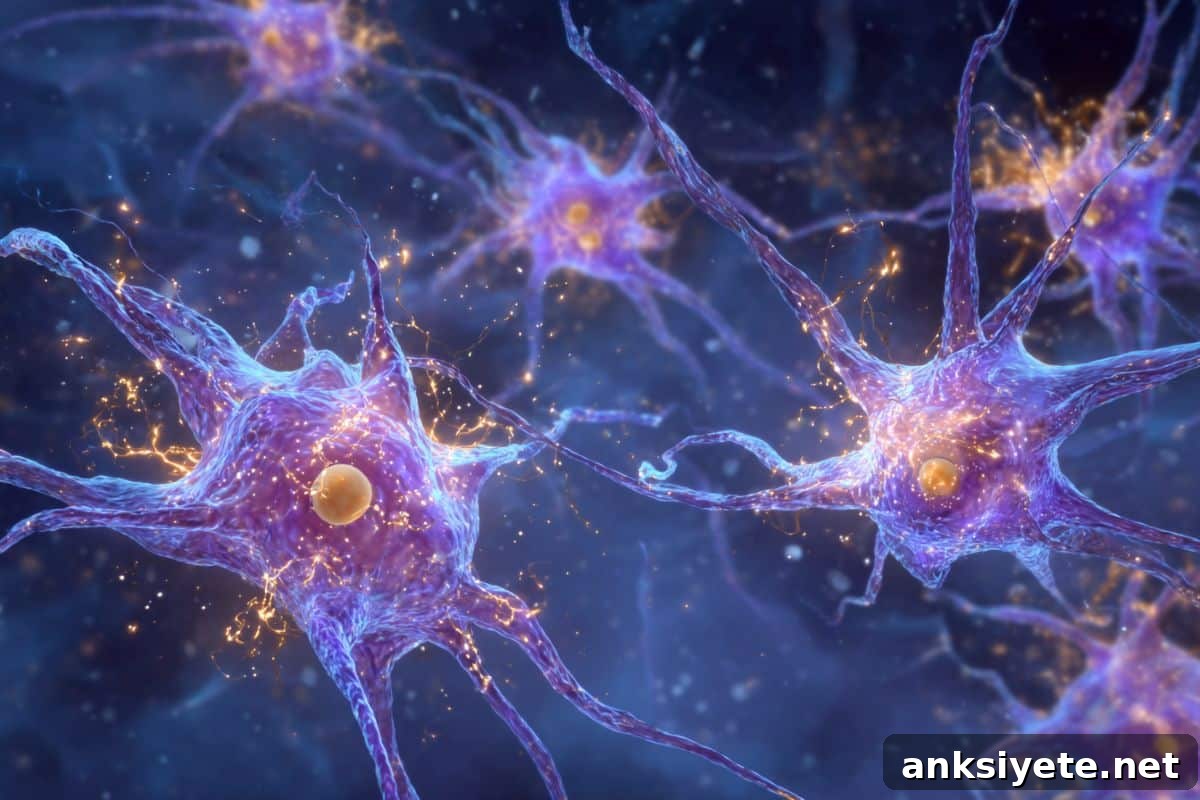
Summary: For decades, astrocytes — the star-shaped cells that envelop neurons — were largely thought to be support cells, maintaining the brain’s environment and holding circuits together. New research overturns that view, showing astrocytes in the amygdala actively shape fear learning, memory retrieval, and the extinction of fear. Rather than passive bystanders, these cells influence how fear signals form and flow through neural circuits, opening fresh directions for understanding and treating conditions such as PTSD, phobias, and chronic anxiety.
Key Facts
- Active participants: Astrocytes in the amygdala encode and sustain fear-related neural signaling, indicating they play a central role alongside neurons in memory processes.
- Extinguishing fear: Astrocyte activity decreases as fear memories are extinguished. Artificially boosting or suppressing their signaling can respectively strengthen or weaken fear memories.
- Circuit consequences: Disrupting astrocyte function prevents neurons from forming the coordinated activity patterns needed to produce defensive responses and relay them to other brain regions.
- Prefrontal impact: Changes in amygdala astrocytes alter communication with the prefrontal cortex, a region involved in decision-making during fearful situations.
- Therapeutic potential: Targeting astrocyte-specific mechanisms offers a complementary approach to neuron-focused therapies for PTSD, anxiety disorders, and phobias.
Source: University of Arizona
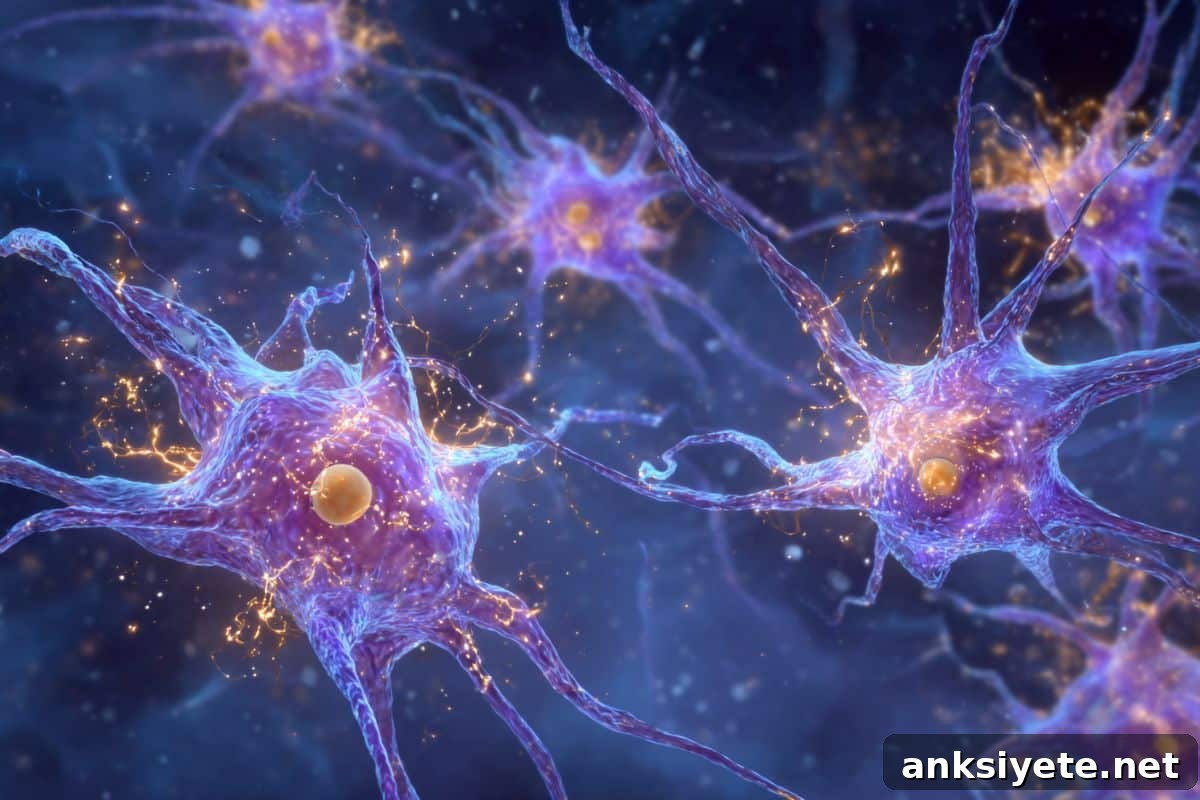
Imagine a tiny star-shaped cell extending fine processes that cradle nearby neurons. That is an astrocyte — long assumed to be the brain’s maintenance crew. New evidence shows these cells do much more: they actively participate in forming, recalling, and extinguishing fear memories.
“Astrocytes are interwoven among neurons in the brain, and it seemed unlikely they were there just for housekeeping,” said Lindsay Halladay, assistant professor in the University of Arizona Department of Neuroscience and a senior author on the study. “We aimed to discover what these cells actually do and how they influence neural activity.”
The multi-institutional study, which included collaborators from the National Institutes of Health and was led by Andrew Holmes and Olena Bukalo, was published in Nature. Using a mouse model, the researchers investigated how fear is learned, how fear memories are retrieved, and how astrocytes contribute relative to neurons.
The team monitored astrocyte activity with fluorescent calcium sensors while mice formed and later recalled fear memories. Astrocytes showed dynamic responses that tracked fear states: their activity rose during memory formation and retrieval and fell as memories were extinguished. Crucially, when researchers selectively increased or suppressed signaling from astrocytes to nearby neurons, the strength of fear memories changed accordingly. This causal manipulation demonstrates that astrocytes actively shape fear-related neural processing rather than merely supporting it.
Beyond local effects in the amygdala, astrocyte disruption altered broader circuit function. Neurons were unable to establish normal fear-related activity patterns when astrocyte signaling was disturbed, preventing effective communication of defensive responses to other brain areas. The interventions also shifted the pattern of signaling to the prefrontal cortex, a region that uses fear information to guide decisions. These results indicate astrocytes influence not only how fear memories are encoded in the amygdala but also how those memories inform behavior through larger brain networks.
Understanding astrocytes’ role in fear retrieval and extinction has important clinical implications. Persistent, intrusive fear memories underlie conditions like post-traumatic stress disorder and some anxiety disorders. If astrocytes help determine whether a fear memory is expressed or successfully extinguished, treatments that target astrocyte pathways could complement existing neuron-focused therapies and offer new strategies for reducing pathological fear.
Halladay and colleagues plan to extend their work beyond the amygdala to map astrocyte function across the broader fear circuitry. Regions such as the prefrontal cortex, which helps evaluate and decide how to respond to threats, and deeper midbrain structures that execute defensive behaviors, may also rely on astrocyte contributions. Clarifying astrocytes’ roles across this network could explain why some individuals display exaggerated or inappropriate fear responses to non-threatening cues.
Key Questions Answered
Q: Aren’t neurons responsible for all the brain’s decision-making?
A: That view is changing. Astrocytes are tightly integrated with neurons and act like computational co-processors. They help decide which fear signals are amplified and which are dampened, shaping the information neurons pass along.
Q: Could targeting astrocytes treat PTSD?
A: Potentially. Since PTSD involves fear memories that fail to extinguish, interventions aimed at astrocyte-related mechanisms might help the brain diminish or overwrite traumatic associations, offering a new avenue for therapy.
Q: Why are they called astrocytes?
A: The name comes from their star-like shape — “astro” from the Greek for star — visible under the microscope as branching processes that contact many neurons.
Editorial Notes
- This article was edited by a Neuroscience News editor.
- The original journal paper was reviewed in full by our staff.
- Additional context and explanation were added for clarity.
About this PTSD and neuroscience research news
Author: Niranjana Sahasranamam Rajalakshmi
Source: University of Arizona
Contact: Niranjana Sahasranamam Rajalakshmi – University of Arizona
Image credit: Neuroscience News
Original research: Open access. Title: “Astrocytes enable amygdala neural representations supporting memory” by Olena Bukalo et al., published in Nature. DOI: 10.1038/s41586-025-10068-0.
Abstract (condensed)
Brain systems that mediate responses to previously encountered threats are vital for survival. Fear memory and its extinction rely on neural representations in the basolateral amygdala (BLA), but the role of non-neuronal cells like astrocytes has been unclear. Using in vivo calcium imaging and targeted astrocyte manipulations, the researchers found that BLA astrocytes dynamically track fear state and support retrieval and extinction of fear memories. Combining astrocyte manipulations with neuronal imaging and electrophysiology showed astrocyte calcium signaling enables neuronal encoding of fear memory and its readout through a BLA–prefrontal circuit. These findings indicate astrocytes play a central role in generating and adapting fear-related neural representations, prompting a revision of neuron-centric models of amygdala function.