
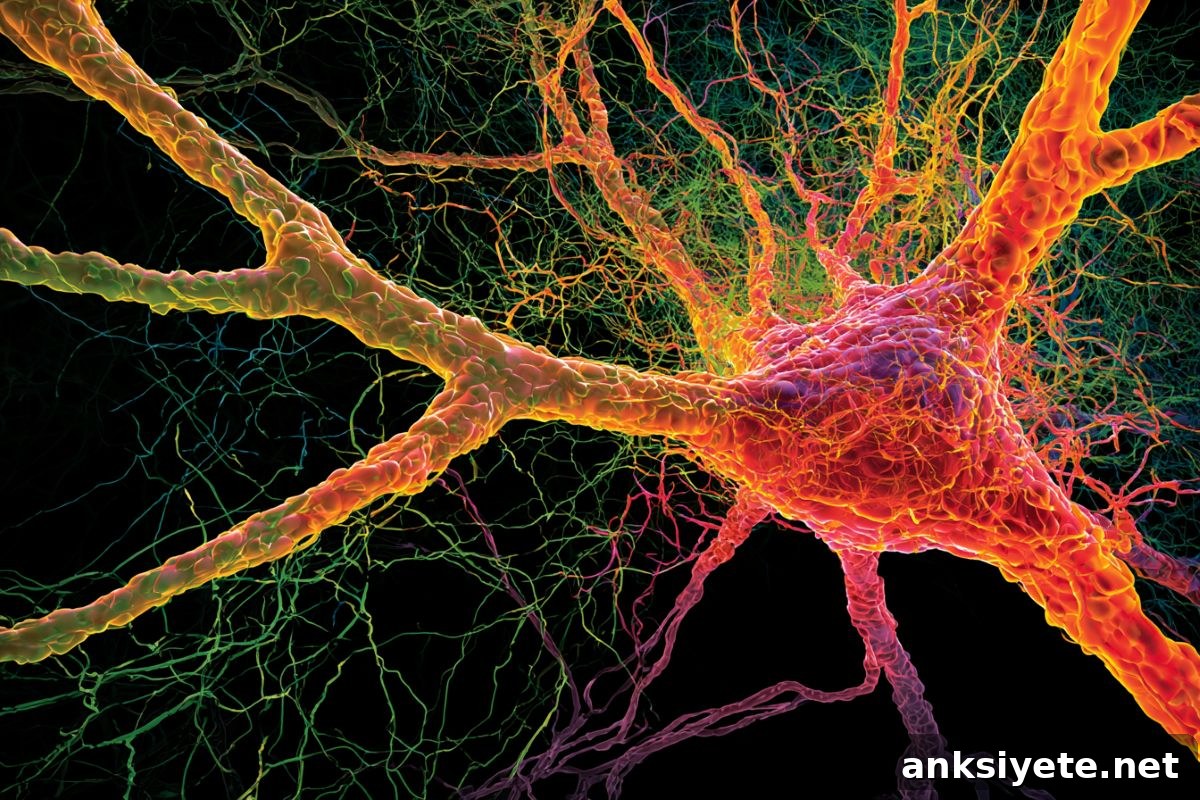
Summary: A new study from Niigata University reveals an important, previously unrecognized protective role for full-length Amyloid Precursor Protein (APP). Beyond its well-known relationship to amyloid-β (Aβ) production in Alzheimer’s disease (AD), intact APP helps damaged neurons survive by clearing leaked nuclear material from the cytoplasm through lysosomal exocytosis.
Under conditions associated with aging, oxidative stress, or DNA damage, the nuclear envelope can become compromised. When that happens, DNA fragments, chromatin and histones may leak into the cytoplasm. These nuclear components are highly inflammatory when mislocalized and can trigger strong innate immune responses and cell death. Using a broad experimental approach that included human iPSC-derived neurons, cultured cells, mouse models and postmortem human AD brain tissue, the investigators show that wild-type APP binds to nuclear-derived debris and directs it into lysosomes that then fuse with the plasma membrane to expel the material outside the cell.
When APP levels are reduced or when familial AD-associated APP mutations are present, this clearance pathway fails. Cells accumulate nuclear waste, display elevated inflammatory markers and die more rapidly. In human AD brain samples, the researchers observed fewer APP molecules per neuron, abnormal nuclear morphology and intracellular accumulation of nuclear debris—consistent with loss of APP-dependent disposal of nuclear material during disease.
Key facts
- Protective role for full-length APP: Intact APP works inside neurons to identify and remove nuclear-derived debris, a function distinct from its later processing into Aβ peptides.
- Nuclear waste is toxic: DNA fragments, chromatin and histone proteins that escape the nucleus provoke inflammation and cell death when present in the cytoplasm.
- Lysosomal exocytosis is the clearance route: APP helps route nuclear debris into lysosomes, which migrate to the cell surface and release their contents extracellularly.
- Familial mutations disable clearance: APP variants linked to familial AD or experimentally reduced APP expression impair this pathway, causing intracellular blockages and increased neuronal vulnerability.
- Evidence in human brains: Postmortem AD tissue showed reduced neuronal APP, distorted nuclear shapes and buildup of nuclear-derived material, supporting a disease-relevant failure of this clearance mechanism.
Research overview
The research team employed complementary models to map APP’s role in nuclear damage defense. In cultured cells and human iPSC-derived neurons, wild-type APP localized with nuclear-derived material and lysosomal markers after nuclear damage. Functional experiments showed that APP-dependent clearance required intact lysosomal exocytosis machinery; blocking lysosomal function or exocytosis eliminated APP’s protective effects. Cells with APP knockdown or familial APP mutations accumulated nuclear debris, induced inflammatory signaling and progressed to cell death.
In mouse experiments, lowering APP increased neuronal sensitivity to nuclear injury and raised DNA damage markers, whereas restoring wild-type APP alleviated these signs. Mutant APP associated with familial AD failed to provide the same protection. Examination of human AD brains revealed consistent hallmarks of impaired nuclear waste clearance: fewer APP molecules per neuron, abnormal nuclei and cytoplasmic accumulations of nuclear material.
Authors’ interpretation
The senior author and collaborators propose that APP should no longer be regarded solely as a precursor to toxic Aβ peptides. Instead, full-length APP appears to function as a cellular guardian that recognizes and helps remove harmful nuclear debris. Loss of this function—through reduced expression or pathogenic mutations—could trigger neuroinflammation and degeneration and may represent an upstream driver of AD pathology. The findings connect nuclear integrity and lysosomal function to mechanisms of neurodegeneration and open new questions about how APP’s housekeeping role relates to Aβ accumulation across aging and disease progression.
Key questions answered
Q: Why is leaked nuclear material so harmful to neurons?
A: DNA and nuclear structural proteins are normally confined and organized inside the nucleus. When they appear in the cytoplasm, cellular sensors treat them as danger signals—similar to viral or microbial nucleic acids—activating robust inflammatory pathways and cell death programs that can severely damage neurons.
Q: How does APP remove nuclear debris?
A: Full-length APP associates with nuclear-derived material and lysosome-associated components, helping package the debris into lysosomes. Those lysosomes then undergo exocytosis—fusing with the plasma membrane—and release their contents extracellularly, removing toxic material from the neuron.
Q: Why does this change the way we think about Alzheimer’s disease?
A: The dominant view in AD research has emphasized APP as the source of Aβ and related extracellular plaques. This work shows that intact APP has a crucial intracellular maintenance role. If APP’s housekeeping function is lost, neurons accumulate toxic nuclear waste and trigger inflammation, suggesting that impaired clearance—not only extracellular plaque toxicity—may contribute to neurodegeneration in AD.
Editorial notes
- This article was edited by a Neuroscience News editor.
- The original journal paper was reviewed in full by the editorial team.
- Additional contextual information was provided by staff for clarity.
About this neuroscience research news
Author: Hideaki Matsui (listed contact)
Source: Niigata University
Contact: Hideaki Matsui, Niigata University
Image: Image credit: Neuroscience News
Original research: Dougnon G, Otsuka T, Nakamura Y, Sakai A, Yamanaka T, Matsui N, Nakahara A, Ito A, Hatano A, Matsumoto M, Igarashi H, Kakita A, Ueno M, Matsui H. A protective role for APP in nuclear waste clearance via lysosomal exocytosis. Proceedings of the National Academy of Sciences. DOI: 10.1073/pnas.2524190123. Closed access.
Abstract (condensed)
Full-length APP promotes disposal of nuclear-derived debris through lysosomal exocytosis under genotoxic stress. Loss or mutation of APP results in nuclear waste accumulation, elevated inflammation and neuronal cell death, while APP overexpression alleviates these effects. Human AD brain tissue shows reduced APP per neuron, abnormal nuclear morphology and cytoplasmic accumulation of nuclear material, indicating impaired nuclear waste clearance may contribute to neurodegeneration.