Summary: Researchers have advanced our understanding of how the brain forms and consolidates memories during periods of rest and sleep. New work examines how the hippocampus — a region central to memory — replays sequences of neuronal activity and how those replays may be prioritized to improve learning.
This study highlights the role of hippocampal place cells, which become active at specific locations, and shows how their sequential reactivation — often called “replay” — can reflect not only past experience but also reorganized or novel sequences that support learning and planning.
Using a computational approach, the researchers developed an artificial intelligence model that mimics hippocampal replay. The model reveals that replayed sequences are not chosen at random: instead, they are stochastically prioritized based on familiarity, similarity to other experiences, and associations with rewards. When the AI agent replayed these prioritized sequences, it learned spatial tasks more efficiently.
Key Facts:
- The hippocampus contains place cells that fire at particular locations, and these cells take part in replay events during rest and sleep.
- Replay sequences follow discernible prioritization rules: familiar paths and locations linked to rewards tend to be replayed more often.
- The research team implemented a biologically plausible prioritized replay mechanism in an AI agent; this agent learned spatial tasks faster than agents using random replay.
Source: RUB
The hippocampus is fundamental to forming new memories — a fact evident from landmark clinical cases such as patient H.M., who lost the ability to form new long-term memories after parts of his hippocampus were removed.
Animal studies, especially in rodents, have clarified the hippocampus’ role in spatial learning and navigation. A key discovery was that individual neurons, called place cells, become active when an animal is at specific locations in an environment.
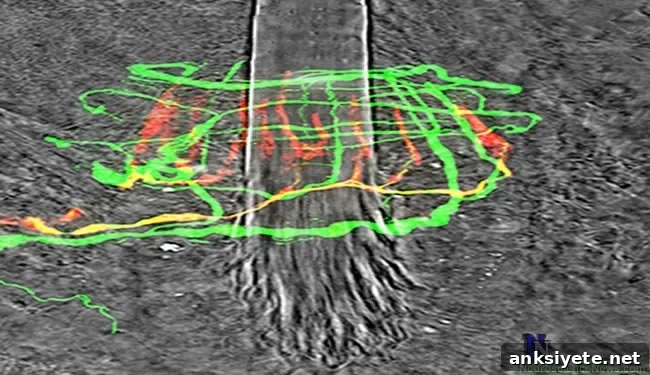
“These neurons are central to a remarkable phenomenon known as replay,” explains Nicolas Diekmann. “As an animal explores, different place cells fire sequentially along the route. Later, during rest or sleep, many of those same place cells reactivate, either in the same order or reversed.”
Replay sequences do not merely replay past behavior verbatim. They can be recombined, altered to reflect changes in the environment, or even represent locations the animal has not physically visited but has observed. This flexible replay suggests a mechanism for planning and for integrating new information into memory networks.
“We wanted to understand how the hippocampus can produce a wide variety of replay types efficiently, and what functional benefits those different replay patterns provide,” says Diekmann.
To explore these questions, the researchers built a computational model in which an artificial agent learns spatial layouts. They measured learning by how quickly the agent could locate an exit or goal in a given environment — a faster exit-finding time indicates better learned spatial knowledge.
Replay follows prioritization rules
In the model, the agent improves by replaying sequences of internal representations, analogous to neuronal sequences. Importantly, these replays are not uniformly random. Instead, sequences are selected according to a stochastic prioritization scheme.
“Sequences are replayed with probabilities that reflect their prioritized value,” Diekmann notes. The model prioritizes sequences that are more familiar, sequences that are similar to other strong experiences, and locations associated with rewards. The combination of these factors determines which sequences are more likely to be replayed.
The model is designed to be biologically plausible while remaining computationally efficient. It imposes only modest overhead and, in simulations, it enables the AI agent to learn spatial tasks significantly faster than when replay events are sampled at random. According to Diekmann, this provides a clearer picture of possible neural rules that support memory consolidation and spatial learning.
About this AI and learning research news
Author: Meike Driessen
Source: RUB
Contact: Meike Driessen – RUB
Image: The image is credited to Neuroscience News
Original Research: Open access.
“A model of hippocampal replay driven by experience and environmental structure facilitates spatial learning” by Nicolas Diekmann et al., published in eLife.
Abstract
A model of hippocampal replay driven by experience and environmental structure facilitates spatial learning
Replay of neuronal sequences in the hippocampus during rest and sleep contributes to learning and memory consolidation. While replay sequences often follow the structure of current spatial constraints, they do not always mirror prior behavior precisely and can generate sequences that represent novel or unexperienced trajectories.
The authors propose a stochastic replay mechanism that prioritizes experiences using three interacting factors: (1) experience strength, (2) similarity to other experiences, and (3) an inhibition-of-return factor that reduces repeated replay of the same sequence. Applying this prioritized replay to train reinforcement-learning agents yields substantially better performance than random replay and approaches the effectiveness of more computationally demanding algorithms.
Because the replay selection is stochastic and experience-dependent, the model naturally produces a variety of replay types observed in biological systems. The results suggest a unified, efficient replay mechanism that both reproduces diverse replay statistics and powerfully supports spatial learning.