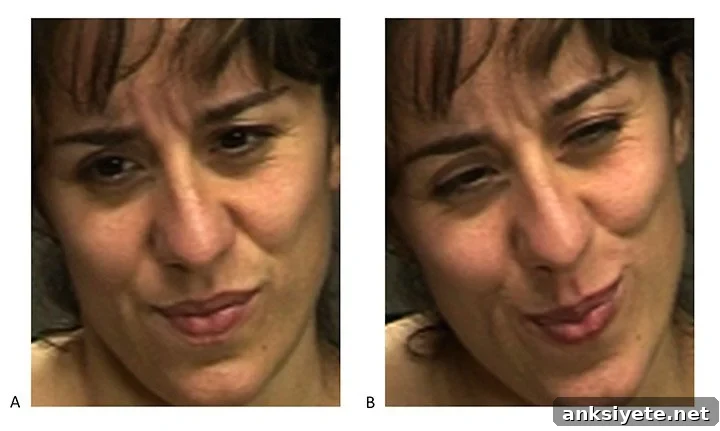
Researchers at the University of California, San Diego and the University of Toronto report that a computer system can tell real from faked expressions of pain more reliably than human observers.
The study, titled “Automatic Decoding of Deceptive Pain Expressions,” appears in the current issue of Current Biology. It demonstrates that machine-vision techniques can detect subtle, time-varying facial dynamics that people typically overlook.
“The computer system identified distinctive dynamic features of facial expressions that people missed,” said Marian Bartlett, research professor at UC San Diego’s Institute for Neural Computation and lead author of the study. “Human observers simply aren’t very good at distinguishing genuine from feigned pain.”
Kang Lee, senior author and professor at the Dr. Eric Jackman Institute of Child Study at the University of Toronto, added that humans are skilled at simulating expressions and can often deceive other people. “The computer’s pattern-recognition abilities make it better at distinguishing involuntary from voluntary facial movements, and thus better at determining whether pain is authentic,” he said.
The researchers report that untrained human observers performed no better than chance at discriminating genuine from faked pain expressions. Even after training, human accuracy rose only modestly to about 55 percent. By contrast, the computer-vision system achieved roughly 85 percent accuracy in classifying real versus deceptive pain expressions.
The study emphasizes that the most predictive indicator of a falsified pain expression was the mouth: how it opened, the timing of that opening, and the variability of its movement. People who attempted to fake pain tended to open their mouths with less variation and in a more regular, overly consistent pattern than occurred in real pain.
“By exposing the dynamics of facial actions through machine-vision systems,” Bartlett explained, “our approach may reveal behavioral fingerprints of the neural control systems that generate emotional signaling.” In other words, temporal patterns in facial movement can reflect underlying neural commands and help distinguish authentic affective states from acted ones.
The authors note that follow-up work will explore whether the over-regularity observed in faked pain expressions is a general hallmark of other fake emotions. If so, dynamic signatures discovered by automated systems could form a broader basis for recognizing deception in facial behavior.
Beyond detecting pain malingering, the computer-vision approach has potential applications across a range of real-world contexts where accurate assessment of facially signaled states matters. The study mentions possible uses in homeland security, clinical assessment of psychopathology, employment screening, medical diagnostics, and legal settings. Bartlett also suggested practical domains where facial dynamics might yield useful information—examples include monitoring driver sleepiness, assessing students’ attention and comprehension during lectures, and tracking responses to treatments for affective disorders.
Those potential uses rest on the idea that many situations that generate strong emotions also prompt attempts to mask, minimize, or simulate those emotions. When people attempt to control or fake an expression, the face may be driven by competing voluntary and involuntary signals; machine-vision systems that quantify fine-grained temporal patterns can pick up on those conflicts.
Contact: Paul K. Mueller – UCSD
Source: UCSD press release
Image Source: The image is adapted from the UCSD press release.
Original Research: Abstract for “Automatic Decoding of Facial Movements Reveals Deceptive Pain Expressions” by Marian Stewart Bartlett, Gwen C. Littlewort, Mark G. Frank, and Kang Lee in Current Biology. Published online March 20, 2014. doi:10.1016/j.cub.2014.02.009