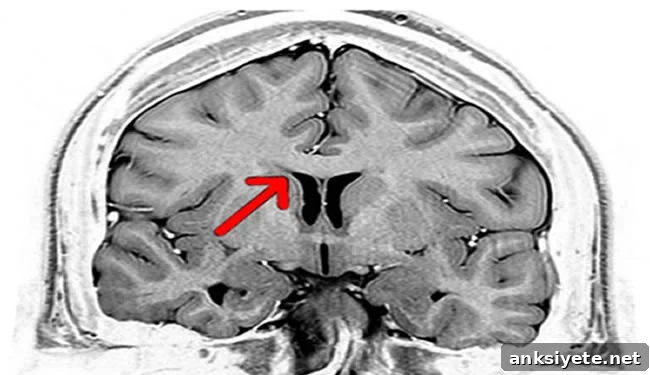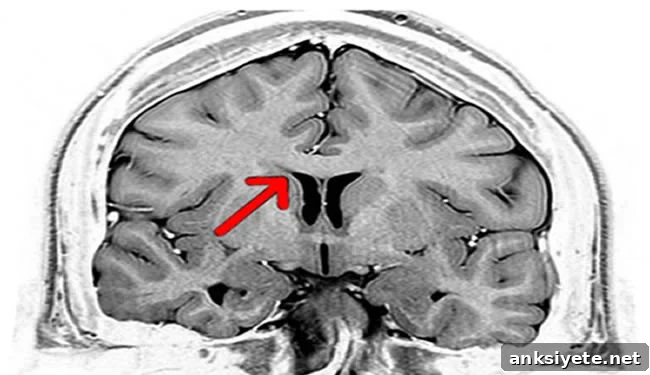
The connections that run through the corpus callosum — the large bundle of nerve fibers that links the brain’s left and right hemispheres — show measurable decline with age. When those connections weaken, unwanted communication or “cross-talk” between hemispheres increases. This increased cross-talk appears to help explain why older adults and animals often show slower motor responses: both sides of the brain are active at the same time during one-sided movements, producing confusion and delayed reactions.
Brain connections break down as we age
New research led by Rachael Seidler, associate professor at the University of Michigan School of Kinesiology and in the Department of Psychology, finds that age-related deterioration of the corpus callosum is linked to slower physical response times. The corpus callosum normally performs two complementary roles. In some contexts it functions like a bridge, enabling coordinated activity across hemispheres for tasks that require both sides of the brain. In other situations it operates more like a dam, suppressing unnecessary signals between hemispheres so that one-sided motor actions remain focused and precise.
Seidler and colleagues report that as the corpus callosum degrades with age, its ability to block unwanted interhemispheric signals weakens. The result is greater cross-talk even at rest — a state when a person is not performing a task — which indicates the extra communication is not serving as a helpful or compensatory mechanism. Instead, when both hemispheres activate during a one-sided movement, the opposite hemisphere sends interfering signals to the side that should control the action, slowing response times and producing greater motor confusion.
Previous studies had observed increased interhemispheric cross-talk during motor tasks in older adults, but it was unclear whether that pattern represented compensation or impairment. Seidler’s team demonstrates that cross-talk is present even without movement, supporting the interpretation that it contributes to poorer motor performance rather than helping it. “Cross-talk is not a function of task difficulty, because we see these changes in the brain when people are not moving,” Seidler notes.
The study also highlights parallels with clinical conditions and developmental stages where the corpus callosum is underdeveloped or damaged. For example, people with multiple sclerosis, a condition that can severely impair the corpus callosum, sometimes show “mirror movements” during one-sided tasks — involuntary synchronous activity in the opposite limb. Mirror movements are also common in very young children whose corpus callosum has not yet fully matured, underlining how proper interhemispheric regulation supports selective motor control.
In their experiment, researchers compared two age groups. Older adults aged 65 to 75 used joysticks while researchers measured their reaction times and brain activity. A younger comparison group in their 20s served as a baseline for faster, less interfered-with responses. Functional MRI scans were used to measure blood-oxygen-level-dependent (BOLD) signals across brain regions; areas showing greater recruitment of the hemisphere opposite the active limb were linked with slower behavioral responses. “The more they recruited the other side of the brain, the slower they responded,” Seidler says.
Although these findings document an age-related decline in interhemispheric regulation, they do not mean slower responses are inevitable and unchangeable. Seidler’s group is exploring motor training interventions intended to strengthen or preserve the corpus callosum’s selective regulation, with the goal of reducing harmful overflow between hemispheres. There is promising prior evidence: another research team found that three months of aerobic exercise produced structural improvements in the corpus callosum, suggesting physical activity can mitigate age-related degeneration.
Seidler’s lab is also applying the same imaging approaches to disease-related changes in Parkinson’s disease and has submitted work for review, extending the relevance of corpus callosum research to neurodegenerative disorders that affect motor control.
About this neuroscience study:
The findings were published in the journal Frontiers in Systems Neuroscience. For additional context, Rachael Seidler is affiliated with the University of Michigan School of Kinesiology and the Neuroscience Graduate Program, and the research team used functional MRI to link interhemispheric recruitment with behavioral slowing in older adults.
The University of Michigan School of Kinesiology focuses on prevention and rehabilitation, the business of sport, lifelong health and mobility, and promoting health across the lifespan through physical activity. Its programs include Athletic Training, Movement Science, Physical Education, and Sport Management and bring together expertise in physiology, biomechanics, public health, urban planning, economics, marketing, public policy, education, and behavioral science.
Contact: Laura Bailey
Source: University of Michigan