
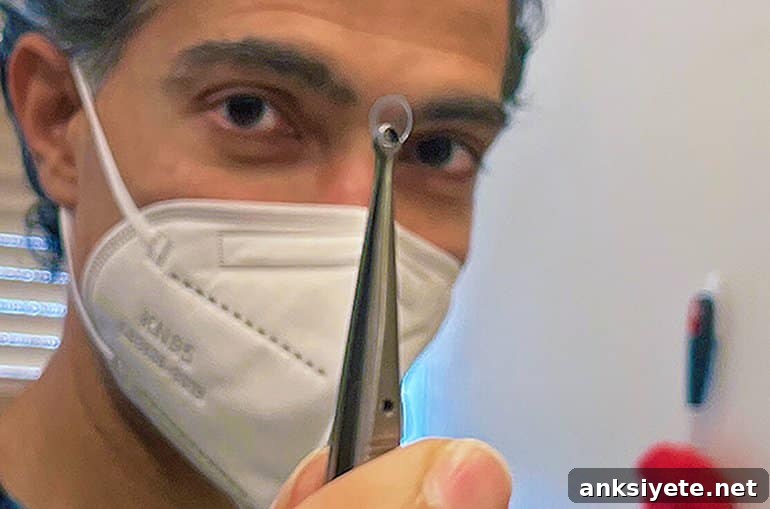
Summary: Researchers have created an improved “brain window” that enables longer-term imaging and electrophysiological studies to map visual areas across the cortex.
Source: Georgia Tech
Bilal Haider and his colleagues are investigating how multiple brain regions coordinate to produce visual perception. Their work aims to reveal whether transient overloads in neural activity—so-called “traffic jams”—contribute to visual failures, from missing a traffic signal while distracted to perceptual differences associated with autism.
Accurate studies of visual processing require a stable, individualized map of the visual cortex for each subject. Mapping these regions typically depends on monitoring hemodynamic signals—blood flow and oxygenation changes—through a cranial window that provides optical access to the cortex. Conventional windows often involve thinning or removing part of the skull, which can compromise long-term stability and the physiological integrity needed for later neural recordings.
To overcome those limitations, Haider’s lab at Georgia Tech and Emory University has developed an alternative intact-skull window system that preserves skull integrity while delivering high-quality intrinsic signal imaging (ISI) and supporting stable electrophysiological recordings over weeks to months. The method and validation experiments are described in a paper published in February in Scientific Reports.
The lab uses intrinsic signal imaging to visualize hemodynamic responses evoked by visual stimuli. ISI reveals active and inactive regions by tracking changes in blood oxygenation and flow across the cortex. These intrinsic signals are used to identify primary visual cortex (V1) and higher visual areas (HVAs) and to produce retinotopic maps that guide targeted neural recordings.
Traditional cranial preparations that remove or thin bone can yield excellent vascular contrast for imaging, but they create a trade-off: the exposed or weakened skull is less mechanically stable in the awake, behaving animal, which impairs later electrophysiology and long-term behavioral training. Haider explains that for experiments requiring weeks of training followed by targeted neural recordings, preserving skull stability is essential.
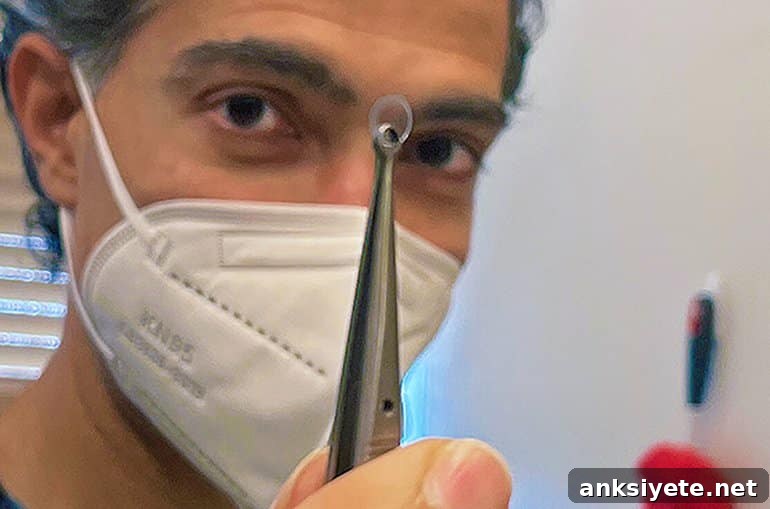
The key innovation in Haider’s approach is a minimally invasive, durable optical access method that combines a thin layer of surgical-grade cyanoacrylate (Vetbond) applied to the intact skull with a small, curved glass coverslip sealed over it. The adhesive renders the bone optically clear without removing it, creating what the team describes as a “transparent skull.” This preserves the bone’s protective function and physiological environment while allowing high-quality ISI measurements.
Practically, the procedure involves applying a micro-volume of the glue to the skull surface and placing a curved glass window over the treated area. The glue forms a stable, transparent barrier that maintains normal cortical physiology beneath the skull and minimizes movement during recordings. Haider likens the effect to placing a protective screen over a smartphone: the outer layer is protected while the underlying display remains clear and functional.
The team validated the intact-skull ISI method by assessing how imaging duration and trial counts affect the reliability of retinotopic maps in V1 and multiple HVAs, and by confirming that those maps accurately predict the locations of visually responsive neural signals measured later with multi-site electrophysiology. Their results show that reliable maps emerge with about 60 imaging trials (roughly an hour of imaging), and that these ISI-derived maps strongly correlate with local field potential (LFP) retinotopy in superficial cortical layers.
Because the glass-and-glue window preserves skull integrity, the preparation supports subsequent targeted electrophysiology weeks to months after imaging. This stability is particularly valuable for experiments that combine long-term behavioral training with precise, multi-area neural recordings, enabling researchers to link learning, perception, and neural dynamics across time.
Haider emphasizes that reproducible measurements of neural activity across areas and timescales are critical to understanding how neural circuits support perception. To accelerate adoption, his team has publicly released the complete design: code, hardware specifications, and detailed protocols so other laboratories can implement the intact-skull ISI system for mapping visual cortex or for studies of other brain regions that require long-term, stable recordings.
This open approach supports broader efforts to investigate how patterns of neural activity lead to lapses in visual attention and how those mechanisms may differ in neurodevelopmental conditions such as autism. The project has received support from the Simons Foundation Autism Research Initiative, reflecting its relevance to understanding circuit-level contributions to perceptual differences.
About this neurotech research news
Author: Press Office
Source: Georgia Tech
Contact: Press Office – Georgia Tech
Image: The image is credited to Jerry Grillo
Original Research: Open access. “Optimizing intact skull intrinsic signal imaging for subsequent targeted electrophysiology across mouse visual cortex” by Armel Nsiangani et al., Scientific Reports.
Abstract
Optimizing intact skull intrinsic signal imaging for subsequent targeted electrophysiology across mouse visual cortex
Understanding brain function requires repeatable measurements of neural activity across multiple spatial scales and brain regions. In mice, large-scale cortical activity evokes hemodynamic changes that are detectable with intrinsic signal imaging (ISI). Pairing ISI with visual stimulation allows reliable identification of primary visual cortex (V1) and higher visual areas (HVAs), traditionally achieved using windows that thin or remove skull bone.
Such skull-removal or thinning procedures can reduce long-term mechanical and physiological stability needed for delicate electrophysiological recordings performed weeks to months after imaging, for example in animals trained on behavioral tasks. In this work, the authors optimized and validated an intact-skull ISI system for mouse visual cortex. They quantified how imaging quality and session duration affect the reliability of retinotopic maps and then confirmed those maps with targeted, multi-site electrophysiology performed several weeks after imaging.
The study found that reliable ISI maps of V1 and multiple HVAs appear with approximately 60 imaging trials (about 65 ± 6 minutes) and that ISI retinotopy strongly correlates with local field potential retinotopy in superficial cortical layers (r2 = 0.74–0.82). These results indicate the system is well suited for targeted, multi-area electrophysiology weeks to months after imaging. The authors provide detailed instructions and code so other laboratories can implement this intact-skull imaging and recording approach.