
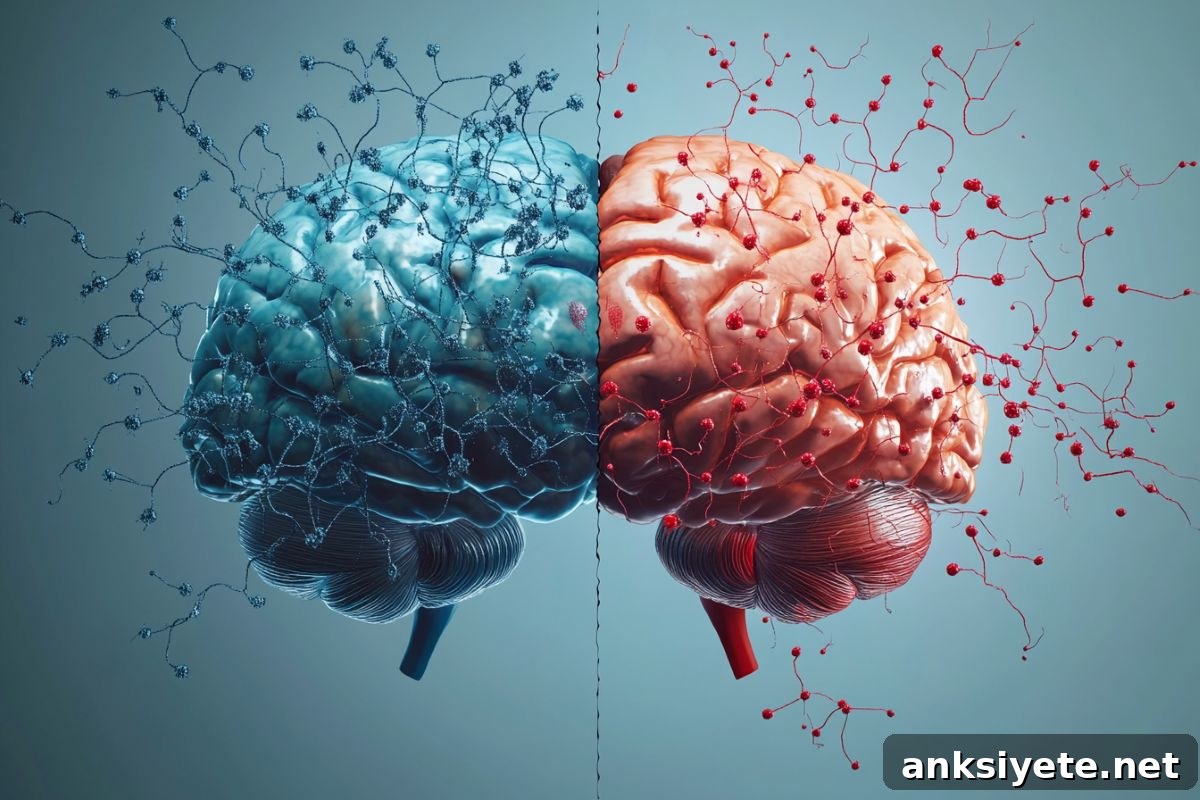
Summary: A new study shows that adults diagnosed with attention deficit hyperactivity disorder (ADHD) have brain changes that resemble those seen in early-stage dementia. Researchers using advanced MRI techniques and blood biomarkers found increased iron accumulation in specific brain regions and higher levels of neurofilament light chain (NfL) in the blood—both recognized indicators of neurodegenerative processes. These findings point to a possible biological pathway linking ADHD to a higher risk of age-related dementia and highlight the importance of early diagnosis and long-term management of ADHD.
Researchers compared brain scans and blood tests from adults with ADHD to those of healthy controls and identified distinct differences in iron distribution and markers of neuronal injury. Because both elevated brain iron and raised NfL levels are established precursors of neurodegenerative disorders such as Alzheimer’s disease, these results raise important questions about long-term cognitive risk in people with ADHD.
Key Facts:
- Brain iron accumulation: Adults with ADHD showed increased iron levels in brain regions linked to cognition and motor function.
- Nerve injury marker: Blood concentrations of neurofilament light chain (NfL), an indicator of axonal damage, were higher in the ADHD group.
- Potential dementia connection: The combination of excess iron and elevated NfL suggests a biological mechanism that could raise the risk of age-related dementia in people with ADHD.
Source: University of Geneva
Overview
A collaborative study by Geneva University Hospitals (HUG) and the University of Geneva (UNIGE) examined whether adults with ADHD show brain changes associated with neurodegeneration. Compared with matched healthy volunteers, participants with an ADHD diagnosis had greater iron accumulation in certain brain regions and higher circulating levels of neurofilament light chain (NfL), a sensitive blood biomarker of neuronal axonal damage.
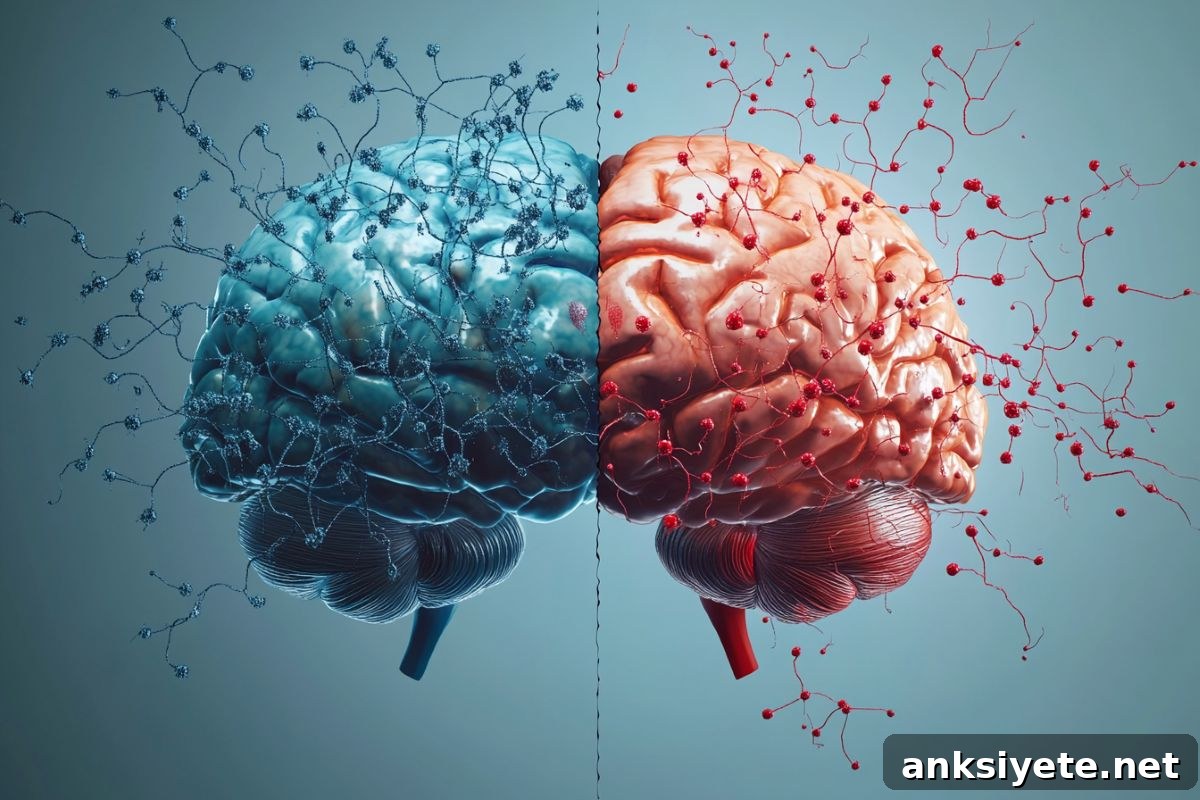
These findings suggest that ADHD may be associated with biological changes known to precede common age-related dementias, such as Alzheimer’s disease. The research is published in the journal Psychiatry and Clinical Neurosciences.
ADHD is a neurodevelopmental condition affecting attention, impulsivity and activity levels, and it persists into adulthood for many people. According to earlier global estimates, roughly 3.5% of adults meet criteria for ADHD. Dementia, including Alzheimer’s disease which accounts for the majority of cases, affects tens of millions worldwide and is a leading cause of disability in older adults.
“Epidemiological studies have suggested an increased risk of dementia among adults with ADHD, but the biological mechanisms have been unclear,” says Professor Paul G. Unschuld, Head of the Division of Geriatric Psychiatry at HUG and Associate Professor in the Department of Psychiatry at UNIGE, who led the study. This research explores iron deposition and neuroaxonal vulnerability as candidate mechanisms.
Iron and neurofilaments as biological indicators
The team used quantitative susceptibility mapping (QSM), a specialized MRI technique sensitive to magnetic susceptibility changes that reflect local iron content, to examine brain iron in 32 adults aged 25–45 years with ADHD and 29 age- and sex-matched healthy controls. In parallel, blood samples were analyzed to quantify plasma neurofilament light chain (NfL), a biomarker that rises when neuronal axons are damaged.
The study observed differences in iron distribution across several brain regions in the ADHD group. The most pronounced effect was increased iron in the right precentral cortex. Importantly, higher iron levels in this region correlated with elevated NfL concentrations in blood, linking regional iron excess to neuroaxonal vulnerability.
Iron is essential for normal neuronal function, but excessive iron can catalyze oxidative stress and contribute to neuronal injury and progressive degeneration. Elevated NfL in blood reflects axonal damage and is widely used as a marker of neuroaxonal integrity in clinical research. The simultaneous presence of increased brain iron and higher NfL therefore supports the hypothesis of an underlying neurodegenerative process in some adults with ADHD.
Implications for prevention, diagnosis and management
These findings open avenues for further research to determine whether altered brain iron handling and neuroaxonal vulnerability contribute to the long-term risk of dementia in people with ADHD. Professor Unschuld emphasizes that the results could guide the development of targeted prevention strategies aimed at reducing dementia risk in this population, particularly because lifestyle factors can influence brain iron levels.
The authors stress the need for additional longitudinal studies to confirm whether reducing brain iron or addressing other modifiable factors can alter the course of neurodegenerative risk in adults with ADHD. In the interim, the study reinforces the importance of early detection and proactive management of ADHD in adults—not only to improve daily functioning and quality of life, but also to address potential long-term cognitive health consequences.
Funding: This study was supported by a SPARK grant from the Swiss National Science Foundation (SNSF) awarded to Professor Paul G. Unschuld.
About this dementia and ADHD research news
Author: Antoine Guenot
Source: University of Geneva
Contact: Antoine Guenot – University of Geneva
Image credit: Neuroscience News
Original Research (Open access):
“Brain iron load and neuroaxonal vulnerability in adult attention-deficit hyperactivity disorder” by Paul G. Unschuld et al., published in Psychiatry and Clinical Neurosciences. DOI reference: 10.1111/pcn.13806
Abstract
Brain iron load and neuroaxonal vulnerability in adult attention-deficit hyperactivity disorder
Aim
This study investigated whether adults with ADHD show markers of liability for neurodegenerative brain disease—specifically increased regional brain iron content and associated neuroaxonal vulnerability—that could help explain epidemiological links between ADHD and higher dementia risk in later life.
Methods
Thirty-two adults with ADHD (mean age 35 ± 10 years) and 29 age- and sex-matched controls (mean age 32 ± 12 years) underwent MRI scans, standardized cognitive assessments and lifestyle evaluations. Quantitative susceptibility mapping (QSM) was used to quantify local magnetic susceptibility as a proxy for iron deposition. Plasma NfL levels were measured using a sensitive immunoassay to assess neuroaxonal integrity.
Results
Adults with ADHD exhibited altered regional brain iron content, most prominently in the right precentral cortex (controls: 0.0033 ± 0.0017 ppm; ADHD: 0.0048 ± 0.0016 ppm; t(59) = 3.56, P < 0.001). Right precentral cortex iron levels were significantly associated with higher blood NfL (F(1,57) = 13.2, P = 0.001, r2 = 0.19), suggesting a link between local iron excess and neuroaxonal damage.
Conclusion
The results indicate altered regional brain iron distribution in adults with ADHD and an association between increased precentral magnetic susceptibility and elevated NfL, implying a connection between local iron excess and neuroaxonal vulnerability. Given the modest sample size and naturalistic medication use in this cohort, longitudinal studies are needed to determine whether altered brain iron in ADHD contributes to a higher risk of dementia in older age.