Summary:
A neurobiology team at NYU Langone Health has resolved a central puzzle of working memory by identifying a “split attractor network” in fruit flies. Published in Nature, the study shows that short-term directional memories are formed through a gated interaction between two distinct neuron classes: PFG neurons, which carry ongoing heading information from the fly’s internal compass, and hΔK neurons, which control when that information is written into memory. When an attractive odor cue appears, an inhibitory gate is lifted so these neuron groups can engage, producing a persistent directional memory that endures for seconds after the stimulus disappears.
Key Facts:
- The split attractor architecture: Rather than depending on a single continuously active feedback loop, the fly brain separates memory content (PFG neurons) from memory timing (hΔK neurons). These components remain physically distinct until a gating mechanism allows them to interact.
- Gated directional storage: When the inhibitory gate opens, flies lock in a navigational heading toward an attractive odor (apple cider vinegar) and maintain purposeful travel for seconds after the odor plume vanishes.
- Connectome-level confirmation: The study validates a long-standing theoretical model of working memory by mapping function onto the fully reconstructed Drosophila connectome and combining electrophysiology, optical recordings, and computational modeling.
Source: NYU Langone Health
Working memory is a critical cognitive function across animals. Whether a person holds a brief code in mind or an insect remembers the direction of a transient food scent, neural systems must balance stability—retaining information for seconds or minutes—with flexibility—activating and clearing memory quickly without wasting energy.
For decades, theoretical neuroscientists have proposed that attractor networks—circuits of recurrently connected neurons that settle into stable activity states—provide that balance. But demonstrating how living circuits implement attractor dynamics without becoming stuck in runaway activity has been difficult, particularly in complex mammalian brains with billions of overlapping connections.
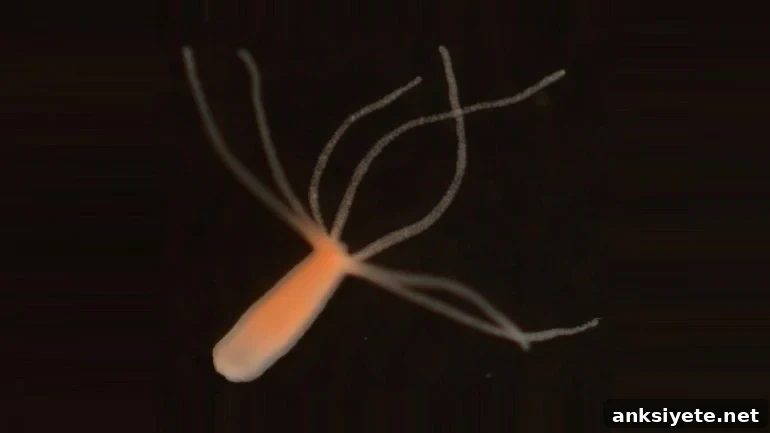
The NYU Grossman School of Medicine team addressed this challenge by studying the fruit fly, Drosophila melanogaster, whose much smaller nervous system and fully reconstructed synaptic connectome make it ideal for revealing circuit-level mechanisms. Their experiments show that fly working memory depends on a “split attractor” design: memory content and memory timing are carried by separate neuron populations and are coupled only when necessary by a gated disinhibition mechanism.
“Our study shows how a neuronal circuit forms a short-term memory in response to a fly sensing an odor, enabling it to remember a direction and travel toward a smell it wants to remember,” said senior investigator Katherine Nagel, Ph.D., associate professor in the Department of Neuroscience at NYU Grossman School of Medicine. “This arrangement has long been hypothesized to support working memory; our work demonstrates it exists and explains how it functions in a concrete navigational context.”
The PFG and hΔK Circuit in Action
With under 200,000 neurons and a complete connectome, the fly offers unmatched clarity for dissecting circuit logic. The researchers observed flies exposed to an attractive apple cider vinegar plume: the animals oriented toward the odor and continued walking in that direction for several seconds after the odor was turned off, a clear behavioral sign of working memory.
Electrophysiology and optical imaging identified two key neuron classes coordinating this persistent navigation:
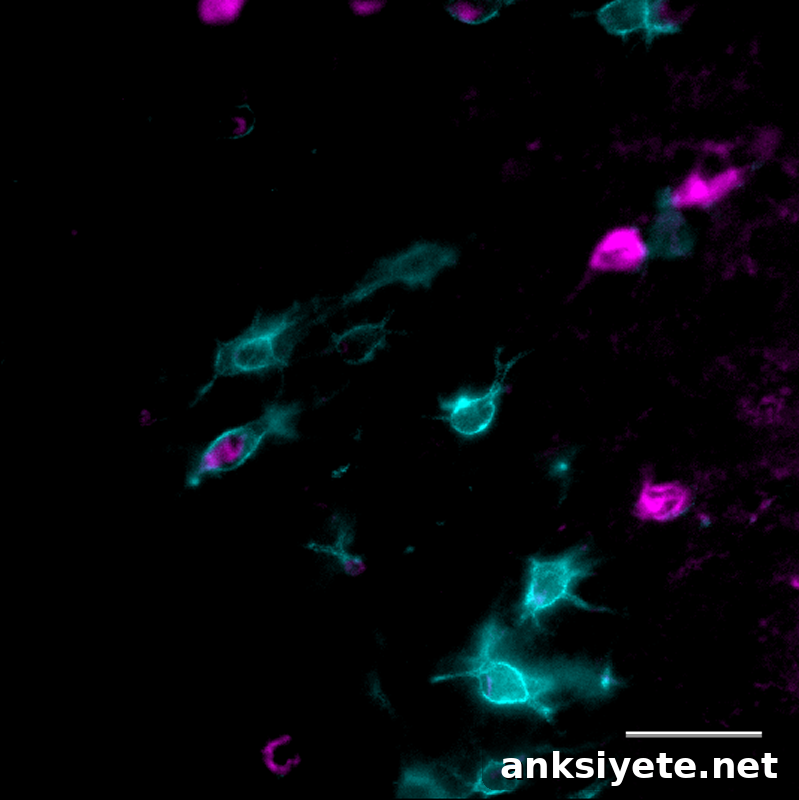
- PFG neurons (memory content): These neurons continuously receive heading information from the fly’s central complex “compass” and represent the animal’s current orientation in space under normal conditions.
- hΔK neurons (temporal control): These neurons determine when heading information becomes stored as a memory. Under most conditions, inhibitory inputs keep hΔK and PFG communication blocked, preventing irrelevant signals from remaining in memory.
When an olfactory cue appears, the inhibitory gate is released. PFG and hΔK neurons exchange reciprocal signals and settle into a stable, self-sustaining attractor state. This mutual feedback locks the fly’s heading into memory and sustains a navigational reference that guides the insect toward the odor source after the plume has dissipated.
The team’s recordings showed that inhibitory inputs to hΔK rise during turning and rest—periods when the system should not retain a heading—and are suppressed during odor-driven, goal-directed runs. Computational modeling reproduced how slow recurrent excitation and fast inhibition within the circuit yield persistent attractor dynamics across realistic synaptic strength ranges and how dynamic inhibition can rapidly uncouple or couple the two neuron populations to switch memory writing on and off.
From Fly Navigation to Cognitive Architectures
The split attractor design offers an elegant solution to the stability-versus-flexibility trade-off. By physically separating the substrate that carries sensory content from the mechanism that gates its storage, the nervous system reduces noise contamination while retaining the ability to update memories instantaneously. This architecture explains how a brief sensory event can be rapidly written into working memory and subsequently cleared when no longer relevant.
Nagel and colleagues will continue exploring how this circuit operates over longer timescales and which neuromodulators regulate the gating mechanism. Because attractor dynamics are thought to underlie human working memory, spatial orientation, and decision-making, mapping these principles in the fly connectome provides a foundational model that can inform studies of cognitive disorders—such as ADHD, schizophrenia, and dementia—where executive circuits fail.
Funding: This research was supported by National Institutes of Health grants R01NS127129 and R01DC017979, and National Science Foundation grant 2014217.
Editorial Notes:
- This article was edited by a Neuroscience News editor.
- The journal paper was reviewed in full.
- Additional context was added by staff.
About this Neurology and Neuropharmacology Research:
- Media Contact: David March
- Source: NYU Langone Health
- Image Credit: Image credited to Neuroscience News
- Original research (open access): Nature (Oct 7, 2026). “A split attractor design for rapidly writing a navigational goal.” Authors: Aaron J. Lanz, Nicholas D. Kathman, Emily Hao, Bard Ermentrout & Katherine I. Nagel.
- DOI: 10.1038/s41586-026-11144-9
Abstract
A split attractor design for rapidly writing a navigational goal
Recurrent attractor networks are widely believed to underlie working memory, but how such circuits can be rapidly switched on and off has remained unclear. In the fly navigation center, hΔK and PFG neurons form a recurrent, ring-like circuit that exhibits shared, persistent “bump” activity that appears with odor cues and ends at the conclusion of a goal-directed run.
Whole-cell recordings show that persistence in hΔK relies on recurrent connectivity: hΔK receives both slow recurrent excitation and fast inhibition from its partners. Computational models demonstrate that these synaptic dynamics support persistent attractor states across a realistic range of synaptic strengths. To explore rapid switching, the authors examined how the two populations decouple during turns and rest while remaining coupled during runs. Modeling indicates that targeted inhibition can dynamically uncouple hΔK from PFG: when hΔK is inhibited, PFG follows input from the compass system; when hΔK is disinhibited, recurrent interactions lock that input into a persistent heading memory.
Consistent with the model, inhibitory inputs to hΔK rise during turns and are suppressed during odor-driven runs, revealing disinhibition as an effective gate for rapidly writing an ongoing sensory measurement into a recurrent circuit.