
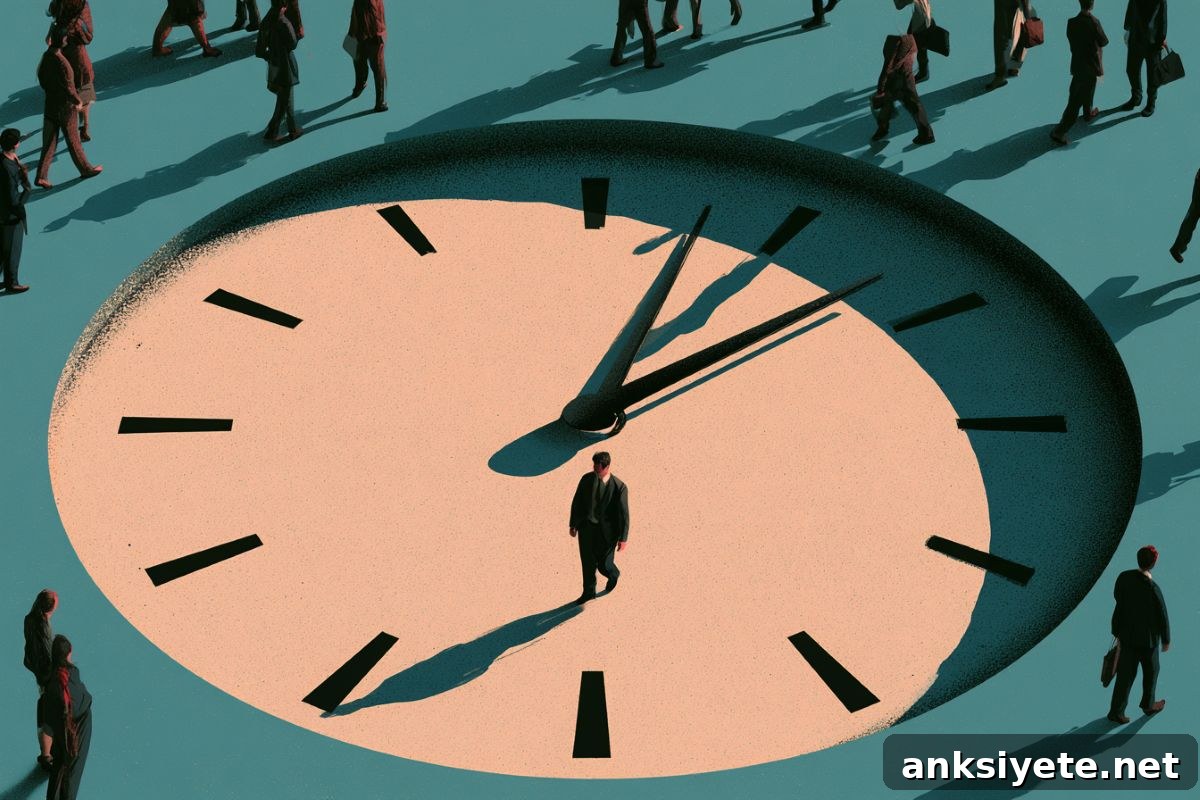
Summary: A new study from the University of Toronto finds that when people unexpectedly gain free time, their brains treat that time as subjectively longer than expected. This perceived expansion of time leads to slower behavior, choice of longer activities, and poorer time management—often causing people to miss or be late for later commitments despite having extra minutes.
Across seven experiments combining real-world observations and hypothetical scenarios, researchers show that an unexpected opening in a schedule triggers an expectancy-violation response: compared with a baseline expectation of zero available minutes, any suddenly gained time feels disproportionately large. This cognitive expansion affects how people use the extra minutes, changing both perception and behavior.
Key Facts
- Subjective time expansion: Unexpectedly gained free time feels longer than the same amount of planned free time because the brain compares it against an initial expectation of having no spare minutes.
- Behavioral dilation and delay: In a live lab study, students who were given an unanticipated 10 minutes at the end of a session took about 14% longer to leave the building than students who had expected the free time, spending more moments packing up and browsing items.
- Activity duration inflation: People who gain time unexpectedly tend to choose longer tasks and activities—walking slightly farther, selecting more distant coffee shops, or starting longer work blocks (for example, 45 minutes instead of 30).
- Contrast-driven effect: The expansion occurs regardless of emotional reaction (relief or disappointment) and becomes stronger as the amount of unexpectedly gained time increases.
- Practical countermeasure: To avoid falling into a “time famine” after gaining unexpected minutes, researchers recommend using external reminders—set an alarm or timer—rather than relying on subjective clock-watching.
Source: University of Toronto
Have you ever finished a meeting early and still arrived late to the next one? Or watched a flight get delayed and nearly missed boarding despite the extra hour? The study’s authors, including Sam Maglio, offer an explanation for these familiar experiences.
Maglio, a professor of marketing and psychology, and his co-authors explain that unexpectedly gained time often feels like a windfall compared with an initial expectation of having no spare time. That sudden jump from “I have nothing” to “I have time” creates a subjective sense that the new minutes are larger than they actually are, and people act accordingly.
The researchers describe the effect with everyday analogies: finding twenty dollars in an old jacket feels richer than simply having twenty dollars in your wallet because your reference point jumped from zero to something. Similarly, lighting a match in a dark room feels dramatically different than lighting one in a well-lit room. Whatever the amount—five minutes or several hours—the initial contrast makes gained time feel expanded.
Importantly, the study shows this effect is cognitive, not emotional. Whether people feel relieved or annoyed about a cancelled plan, the expansion still appears. It also compounds: the larger the unexpected gain, the stronger the subjective inflation. When participants compared ordinary planned free time to having no free time at all, the perceived difference disappeared—ordinary free time felt expanded when contrasted with no time.
In one experiment, participants who were told they had unexpectedly gained time said they would walk roughly 10% longer than those who had anticipated the same free interval. In another, respondents opted for longer versions of activities—choosing coffee shops that were farther away or committing to longer work sessions—whether the time was for leisure or for productivity.
A real-world field study reinforced these findings: students granted an unplanned 10 minutes before leaving a lab room dawdled, packed up more slowly, and lingered to browse a box of small items placed in the hallway. As a result, they took longer to exit than peers who had expected the free time.
Maglio notes the double-edged nature of gained time. On the one hand, extra minutes can be a relief for people who feel chronically short on time; slowing down may benefit well-being. On the other hand, the tendency to overestimate what can be accomplished in expanded time can create a new kind of time scarcity—people risk thinking they can do more than the minutes actually allow.
Practical advice from the research team is straightforward: outsource the timing. When an event ends early or a delay gives you extra time, set a timer or alarm immediately so you can enjoy the break without misjudging how much you can realistically do before your next commitment.
“A little intentionality goes a long way,” Maglio says.
Key Questions Answered:
A: The phenomenon depends on reference points used by cognition. When plans change suddenly, the mind contrasts the new free time with an expectation of having no spare minutes. That expectancy violation produces a mental contrast that makes the gained minutes feel larger than an equivalent amount of pre-planned free time.
A: No. The research shows the subjective expansion of time occurs regardless of whether a person feels relief or disappointment—the effect is driven by cognitive contrast rather than emotional state.
A: The recommended strategy is to use external timing tools rather than relying on internal estimation. Setting a phone alarm or timer as soon as you learn of an unexpected delay or early finish helps you enjoy the extra minutes while preventing overestimation of what can be completed before the next appointment.
Editorial Notes:
- This article was edited by a Neuroscience News editor.
- The underlying journal paper was reviewed in full.
- Additional context was added by editorial staff.
About this psychology research news
Author: Suniya Kukaswadia
Source: University of Toronto
Contact: Suniya Kukaswadia – University of Toronto
Image: The image is credited to Neuroscience News
Original Research: Open access. “Gained Time Is Expanded: Examining the Psychological and Behavioral Consequences of Gaining Time” by Gabriela N. Tonietto, Selin A. Malkoc, Kun Wang, and Sam J. Maglio. Journal of the Association for Consumer Research. DOI: 10.1086/740288
Abstract
Gained Time Is Expanded: Examining the Psychological and Behavioral Consequences of Gaining Time
People often feel a scarcity of time and wish for more of it. But when that resource arrives unexpectedly, what happens? Across seven studies that assessed both real and hypothetical gains of time, researchers found that gained time feels subjectively expanded and that this altered perception changes how people use the extra minutes.
Four studies showed that intervals of gained time feel perceptually longer than equivalent-length intervals of planned free time. This arises because people contrast the temporal gain with an expectation of having no free time. Three additional studies examined intended and actual behavior and showed that the subjective sense of expanded time leads people to spend more time on activities and to choose longer rather than shorter tasks during gained intervals.