
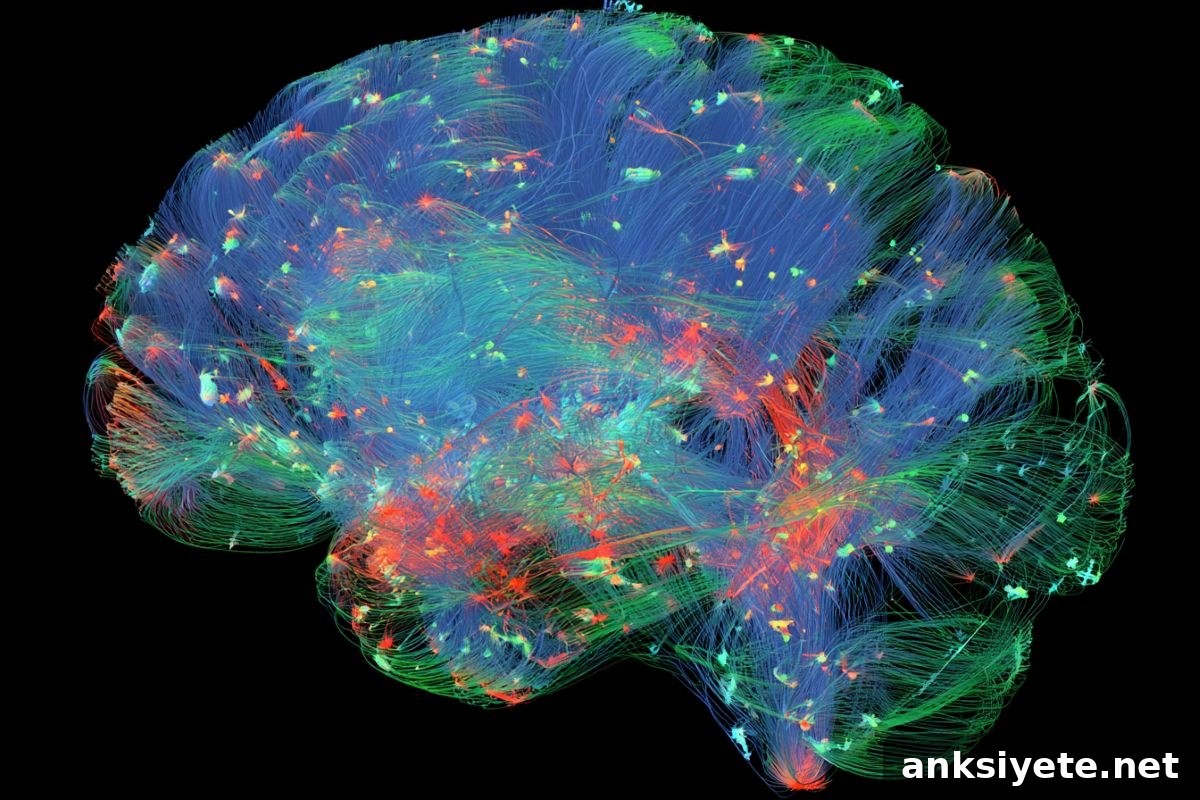
Summary: Researchers have developed an energy-efficient artificial intelligence model inspired by hippocampal mechanisms in the brain. The system reproduces how the human brain builds cognitive maps, performs stochastic computations, and uses compositional codes to solve complex planning tasks without exhaustive calculation.
Presented as a proof-of-concept for alternative AI architectures, the model adapts flexibly to unfamiliar environments without retraining and consumes only a fraction of the power required by conventional deep neural networks or large language models. This approach offers a practical framework for local deployment in autonomous robots, edge computing devices, and vehicles operating under strict energy constraints.
Key Facts
- Biological energy efficiency: The human brain performs complex planning and cognitive functions on roughly 20 watts of power, in stark contrast to the large energy budgets of contemporary large language models and deep learning systems.
- Hippocampal architectural principles: The model translates three neural mechanisms into algorithms: geometric cognitive maps, stochastic scenario generation, and compositional reuse of action components.
- Non-exhaustive search strategy: Guided by cognitive maps, the algorithm evaluates randomly generated intermediate steps toward a goal rather than computing full solution paths, dramatically lowering computational cost.
- Zero-shot adaptability: The system adapts to structural changes in the environment or to new tasks dynamically, without retraining or parameter fine-tuning.
- Validation tasks: The architecture was validated on three benchmark problems: 2D spatial navigation, abstract multidimensional orientation, and assembly/disassembly of building-block silhouettes.
Source: Graz University of Technology
The capabilities of large AI models continue to improve, but they demand substantial energy for training and inference. By contrast, the human brain is highly energy-efficient, operating on about 20 watts.
Researchers at Graz University of Technology, together with international collaborators, have designed a brain-inspired AI model that plans flexibly and solves complex problems while consuming far less energy than multi-layer neural networks or large language models.
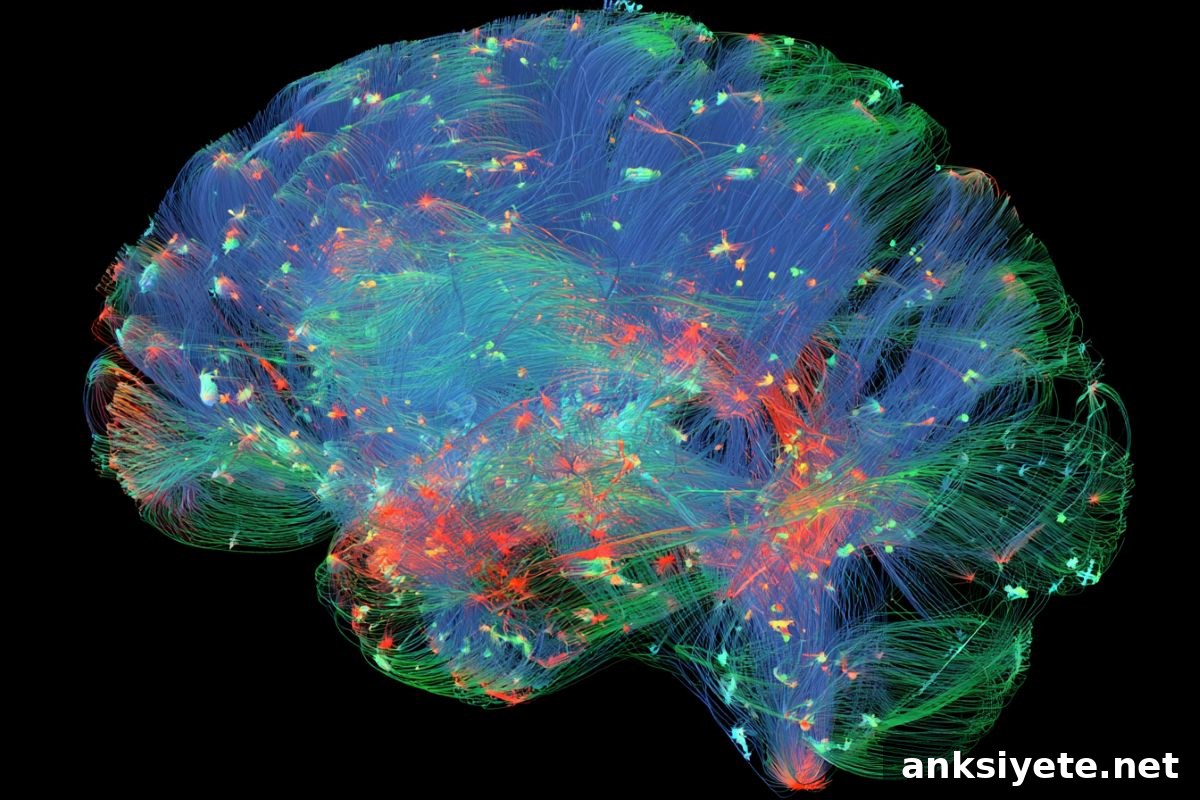
“The brain operates in a fundamentally different fashion from today’s AI systems,” says Wolfgang Maass from the Institute of Machine Learning and Neural Computation at Graz University of Technology. “We are translating those biological principles into algorithms and applying them to artificial intelligence.”
Three mechanisms of the brain
Drawing on neuroscientific studies of the hippocampus, Wolfgang Maass and Yukun Yang identified three mechanisms that the brain uses for planning and problem-solving:
- Construction of cognitive maps: transforming relationships between abstract elements into geometric relations among neural codes, creating a sense of direction analogous to a spatial map;
- Stochastic neural computation: continual generation of hypothetical scenarios and probabilistic predictions;
- Compositional coding: breaking down information and action plans into reusable components.
Translating these mechanisms into algorithms allows the Graz team’s model—like animals and humans—to imagine and test possible solutions to complex problems without fully computing every path to completion.
When a randomly sampled intermediate step appears to head toward the intended goal, the cognitive map guides the system to follow that direction. At the new position, the model again samples and evaluates options, iteratively progressing toward the goal while avoiding exhaustive search.
“With this strategy, our AI model can respond flexibly to changed or entirely novel situations without retraining,” explains Yukun Yang.
Assembling and disassembling a silhouette
The researchers tested the brain-inspired model on three tasks: navigating a two-dimensional environment, orienting in an abstract multidimensional space, and assembling or disassembling a silhouette composed of multiple building blocks. These diverse benchmarks demonstrate the model’s capacity for flexible planning across spatial and abstract domains.
The team emphasizes that this approach does not aim to replace large language models in general-purpose, large-scale applications. Rather, it establishes an alternative paradigm for energy-constrained settings. “We are still at an early stage,” says Wolfgang Maass, “but our results show that powerful AI does not always require massive data centers and enormous energy consumption.”
Suitable for robots and edge devices
Over time, brain-inspired systems like this could be integrated into robots, autonomous vehicles, and other edge devices—situations where AI must run locally under strict battery and thermal limits. The architecture’s low energy footprint and online adaptability make it well suited for real-time planning tasks in constrained hardware environments.
Wolfgang Maass is a principal researcher at the Bilateral AI Cluster of Excellence. This study was carried out in collaboration with teams from Tsinghua University and the National Research Council of Italy.
Key Questions Answered:
A: Traditional AI systems often compute many action sequences to completion to identify an optimal solution, consuming substantial memory and processing power. Cognitive maps convert abstract relationships into geometric coordinates, enabling the model to quickly assess whether a sampled intermediate step moves toward the goal and to discard unpromising paths before investing energy in full evaluation.
A: Stochastic computation adds controlled randomness that generates hypothetical scenarios and predictions on demand. Instead of exhaustive deterministic searches, the system samples probabilistic paths, reflecting how biological neurons exploit noise and variability to rapidly explore possible solutions.
A: These lightweight architectures are optimized for deployment on edge devices, autonomous vehicles, and mobile robots where local, energy-efficient, and low-latency planning is critical. They are not designed to replace large language models in centralized data centers but to complement AI capabilities in constrained environments.
Editorial Notes:
- This article was edited by a Neuroscience News editor.
- The journal paper was reviewed in full for accuracy.
- Additional context was provided by editorial staff.
About this AI and cognition research news
Author: Philipp Jarke
Source: Graz University of Technology
Contact: Philipp Jarke – Graz University of Technology
Image: Image credit: Neuroscience News
Original Research: Open access. “Neural sampling from cognitive maps enables goal-directed imagination and planning” by Hui Lin, Yukun Yang, Rong Zhao, Giovanni Pezzulo & Wolfgang Maass. DOI: 10.1038/s42256-026-01254-4
Abstract
Neural sampling from cognitive maps enables goal-directed imagination and planning
Artificial intelligence systems are becoming more capable, but often at a large cost in energy consumption and prolonged training. By comparison, biological brains operate on roughly 20 watts, learn continuously, and adapt instantly to changing conditions.
This raises the question of which data structures, algorithms, and learning mechanisms allow brains to achieve flexible, low-energy planning—and whether those principles can be adapted for artificial devices. We investigate this question for a central feature of intelligence: the ability to plan and solve problems, including novel tasks that involve previously unseen states.
We focus on three neural tools likely used by brains: cognitive maps, stochastic computing, and compositional coding. We integrate these elements into a transparent neural network model and demonstrate its effectiveness for flexible planning and problem-solving across spatial and abstract tasks.
Crucially, this approach is compatible with energy-efficient implementations such as in-memory computing and neuromorphic hardware. It relies on self-supervised, local synaptic plasticity suitable for on-chip learning and online adaptation.
Therefore, a fundamental capability of brain intelligence—the capacity to produce novel solutions to unseen problems—does not necessarily require deep neural networks or large language models and can be realized in energy-efficient edge devices.