
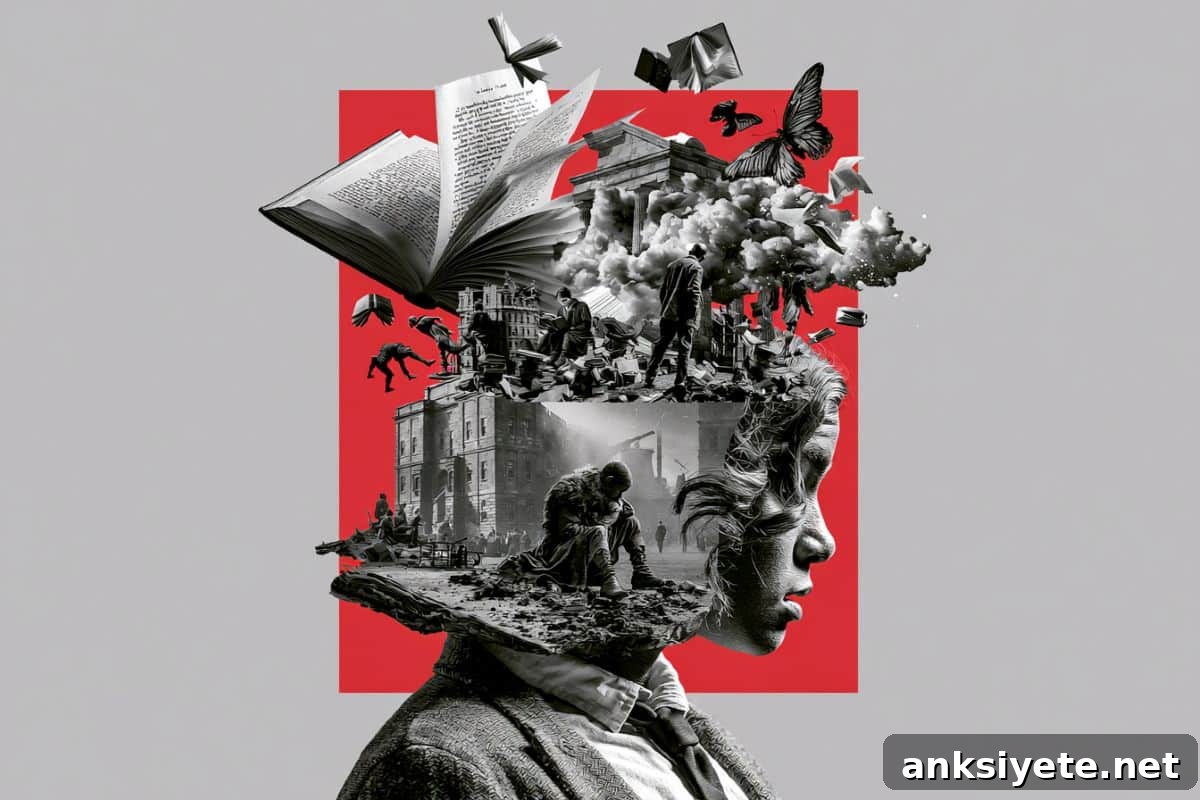
Summary: Long before cinema existed, the 19th-century boom in mass printing produced a similar cultural worry: that external images would crowd out private imagination. As illustrated editions of classic novels proliferated, critics and artists — including Charles Dickens’s contemporaries and Edward Burne-Jones — warned that pictures imposed by publishers threatened the private realm of the “mind’s eye.” Comparing that earlier illustration panic with the modern experience of people with aphantasia (the inability to form internal visual images) reveals how deeply embodied, neurobiological, and personal our responses to written narratives really are.
This article explains the historical context, the neurobiology behind the common reaction “that’s not how I pictured it,” and why illustrated books or film adaptations can be experienced very differently by people who do or do not form mental imagery while reading.
Key Facts:
- The neurobiology of the mismatch: When most people read, top-down processing and semantic memory activate the visual cortex to construct internal images. Those private visualizations — the so-called “mind’s eye” — can be disrupted when fixed external images (in illustration or film) conflict with a reader’s internal version of a story.
- The 19th-century illustration panic: The rise of cheap, mass-produced illustrations in the 1800s created anxiety that pictures would blunt readers’ independent imagination. Critics complained that once a reader had seen a specific engraving or drawing of a character, it became hard to imagine that character any other way.
- Disturbance and discomfort: When texts originally published without images were later reissued with illustrations, many readers reported disorientation and displeasure because the new pictures rarely matched their long-held mental images.
- The aphantasic exception: Aphantasia, a condition in which people do not form visual images when reading, changes this dynamic. For an estimated 4% of people, illustrated editions or film adaptations do not cause visual mismatch; instead, they supply the physical imagery that those readers do not generate internally.
Source: The Conversation
As the film adaptation of Hamnet arrives, many book fans will feel both excitement and worry. They may eagerly anticipate seeing Maggie O’Farrell’s portrait of Agnes and the loss of her son on screen, yet quietly fear that the movie will not match the private images already living in their minds.
Reading is often a visual experience. For many readers, novels are not simply processed as words: they are seen internally. We build scenes, cast characters, and imagine objects and gestures inside our “mind’s eye.” That inner visualization can be vague and fleeting for some readers and vivid and detailed for others, but for most people it contributes to the pleasure and immersion of reading.
We usually only notice these internal images when they are disturbed. A film or an illustrated edition that conflicts with a reader’s preexisting mental image can provoke disappointment, annoyance, or even disorientation — the familiar “that’s not how I pictured it.” That reaction is not merely aesthetic preference; it reflects a cognitive mismatch between a personal, internally generated visual representation and an externally presented, fixed image.
The complaint about imposed images is not new. In the 19th century, the explosion of illustrated newspapers, magazines and books prompted widespread debate. Technological advances made pictures inexpensive and pervasive, so publishers frequently added illustrations to texts that readers had previously experienced in silence. Critics and some artists argued that these images interfered with readers’ imaginative labor. When George Cruikshank published definitive illustrations of certain Charles Dickens characters, many readers found it hard afterwards to imagine those characters differently.
The challenge intensified when publishers reissued previously text-only works with illustrations. Readers who had already formed consistent mental models of characters and settings described feeling an uncomfortable mismatch. Contemporary accounts from the 1840s reported that new illustrations were “rarely encountered without disturbance and discomfort.” Even illustrators such as Edward Burne-Jones acknowledged the disappointment that could follow when a printed image did not align with a reader’s internal vision.
Aphantasia
Not everyone experiences visual disruption in the same way. Aphantasia describes the absence of voluntary visual imagery: people with aphantasia do not conjure pictures in their mind while reading. Although the term is recent, observers in the 19th century recognized that pictures served some readers better than others. For readers who do not visualize, illustrations and film adaptations can be liberating rather than jarring — they provide the concrete images that the reader’s own mind does not generate.
Aphantasics typically comprehend narrative, emotion, and detail through conceptual and semantic processing rather than visual simulation. Their understanding of characters, events, and moods is intact; it is simply organized differently, often as a structured network of facts, associations and verbal concepts rather than an internal movie. For these readers, screen adaptations and printed illustrations often enhance the story by supplying imagery without disrupting any preexisting mental pictures.
For readers who do visualize, however, a mismatch between internal and external images is not necessarily a sign of failure. Instead, it can be an illuminating glimpse into how uniquely personal and embodied literary imagination really is. When an adaptation clashes with our mental version, it can prompt reflection: why did I imagine it this way, and what does that reveal about my reading habits, cultural influences, or emotional responses to the text?
Key Questions Answered:
A: Aphantasia is a neurological variation in which a person does not form visual images in the mind when prompted by words or memories. People with aphantasia read and understand stories normally: they use semantic and conceptual networks to process meaning, emotion, and narrative structure rather than relying on visual simulations. Comprehension and enjoyment remain intact but are realized through different cognitive pathways.
A: The difference traces to whether a reader has a strong pre-existing visual representation of the story. Visualizers build private, often detailed mental imagery while reading, so a director’s concrete choices can collide with those images and cause frustration. Aphantasic readers, lacking prior images, encounter film or illustrated versions as added value rather than contradiction.
A: The phrase “mind’s eye” predates modern neuroscience and appears famously in Shakespeare’s Hamlet. Today, neuroimaging shows that internally generated images recruit regions of the visual cortex that also process real sight. Shakespeare’s language anticipated the idea that people can “see” vivid images within the mind — a concept neuroscience now links to measurable brain activity.
Editorial Notes:
- This article was edited by a Neuroscience News editor.
- Referenced journal paper reviewed in full by the editorial team.
- Additional context provided by staff contributors.
About this visual neuroscience and aphantasia research news
Author: Julia Thomas
Source: The Conversation
Contact: Julia Thomas – The Conversation
Image: Image credited to Neuroscience News