
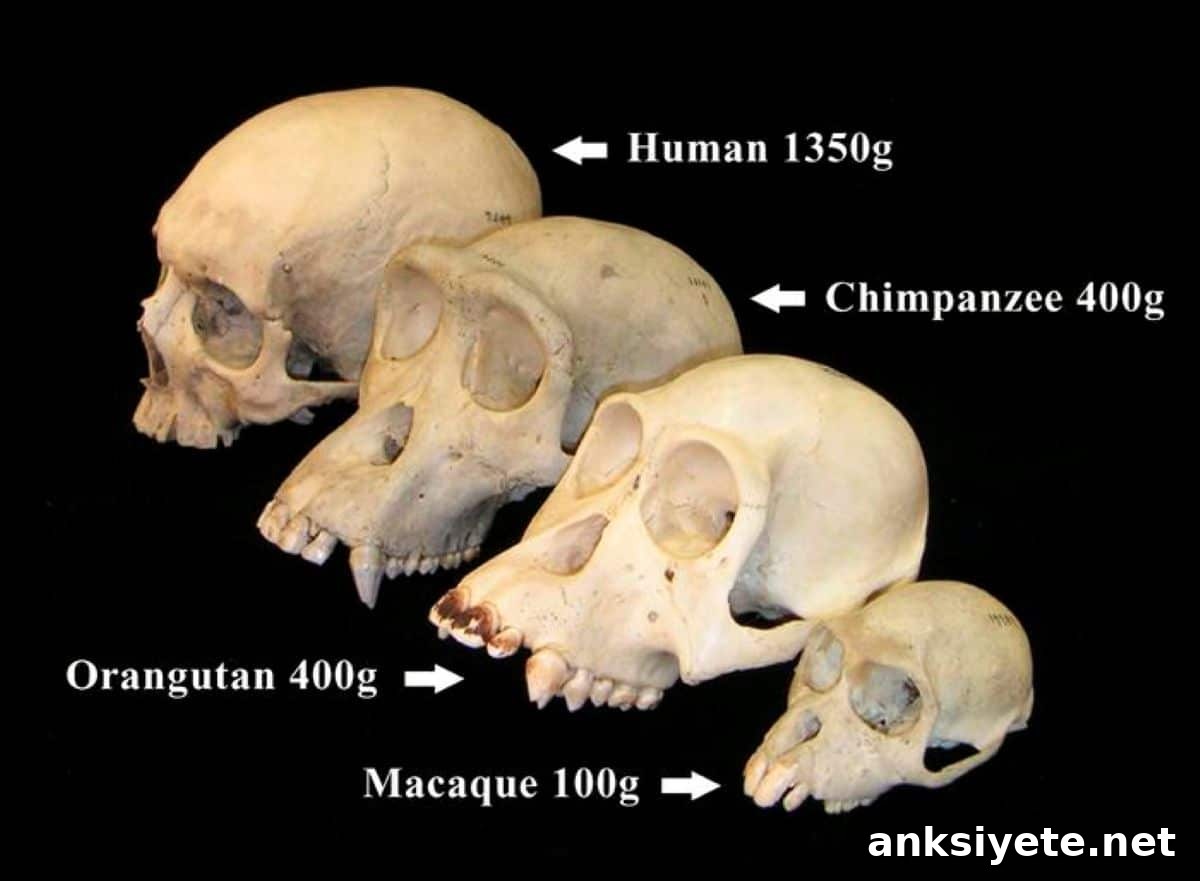
Summary: A new reanalysis has revived and expanded a long-debated chapter in primate and human evolution. Using modern molecular genetic dating and updated phylogenetic statistical methods, researcher Robin Dunbar re-examined a classic dataset and found clear evidence that, in several primate lineages including the hominin branch, body size increased first and brain size lagged behind—only later catching up and, in some cases, substantially overshooting expected brain-body scaling. These results strengthen and revise the “brain lag” hypothesis and have major implications for understanding the evolutionary origins of human cognitive capacity.
Key Facts
- Chronological delay verified: Re-dating the primate tree with molecular clocks shows that body mass often increased well before brain mass in specific lineages, including the ancestors of modern humans.
- Overshoot in brain evolution: When brains later expanded, many lineages did not merely return to the predicted brain-to-body relationship; they exceeded it, producing brains larger than expected for their body size.
- Shift from brawn to brain: The analysis supports a model in which some primates reduced reliance on raw physical power and instead evolved larger brains to support new behavioral strategies—especially social defenses and coordination in risky, open environments.
- Social cognition as a driver: Managing large, complex social networks places heavy cognitive demands on individuals, favoring increased neocortex size and other neural specializations.
- Diet as an enabling factor: Expanding brain tissue requires substantial metabolic resources. A shift toward higher-calorie, lipid-rich foods (fruits, seeds, nuts) likely provided the energetic foundation necessary for sustained neural growth.
- Active scientific debate: While this study offers strong statistical support for a social-brain interpretation of the overshoot, alternative explanations—such as technological innovation, environmental change, or foraging complexity—remain areas of lively research.
Source: PLOS
Robin Dunbar of the University of Oxford published these findings in PLOS One on July 1, 2026. By applying updated molecular dates and improved phylogenetic modeling to the same dataset used in the influential 1999 study, the analysis detects evolutionary lags that earlier fossil-only chronologies missed. Importantly, Dunbar shows that in some lineages the later expansion of brain size continued past the expected allometric baseline, suggesting a distinct evolutionary phase that produced brains unusually large for body size.
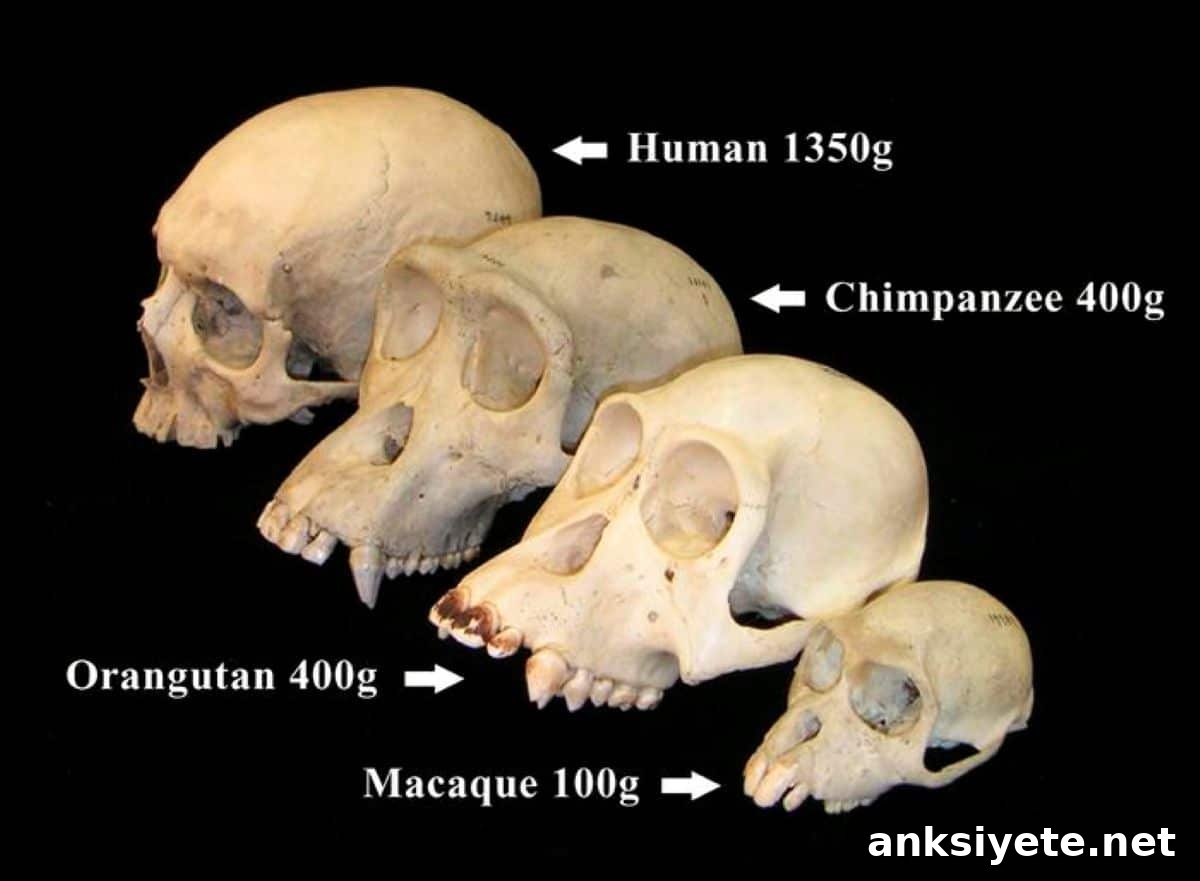
Late in human evolution, brain volume increased dramatically in absolute terms and relative to body mass. The updated analysis supports the original intuition behind the brain lag hypothesis: in several evolutionary branches, body growth preceded neural expansion. But Dunbar’s results go further: after the initial catch-up period, brain size continued to grow beyond the expected scaling relationship, creating the anatomical substrate for higher-level cognition such as symbolic thought, complex social reasoning, and language precursors.
Methodologically, this work highlights the value of molecular genetic clocks and modern comparative models for reconstructing evolutionary timelines. The 1999 study that rejected the brain lag relied largely on fossil-based dating and earlier statistical approaches; when the same phylogeny is dated with molecular evidence and reanalyzed using updated methods, a statistically significant lag emerges. That lag is not simply a temporary mismatch: for some taxa it precedes a sustained trend toward larger-than-expected brains.
Dunbar interprets these patterns through a social-brain lens. As some primates moved into more open and predator-exposed habitats, forming larger cooperative groups offered protection that individual body mass could not. Large-group living required sophisticated social cognition—tracking relationships, alliances, hierarchies, and reputations—which in turn selected for larger neocortical capacity. Diet change likely played a permissive role by increasing available energy per individual, enabling the metabolic costs of a sustained neural expansion.
The social-brain interpretation is well supported by the statistical correlations reported but is not the only possible explanation. Competing hypotheses—emphasizing tool use, ecological complexity, climatic variability, or locomotor changes—remain under active investigation. Dunbar’s study reframes the problem by showing a multi-stage evolutionary process: body enlargement, neurological catch-up, and then a distinct overshoot linked to behavioral and ecological shifts.
Key Questions Answered:
Q: What is the “brain lag” hypothesis, and why was it disputed?
A: The brain lag hypothesis proposes that during some evolutionary episodes species first increase in body size, and brain size lags behind for millions of years. A 1999 analysis using fossil dates found no statistical support and concluded brains and bodies evolved together. Dunbar’s reanalysis demonstrates that when the same phylogeny is dated with molecular genetic clocks and analyzed with updated statistical models, clear evidence of a temporal lag appears—evidence that fossil-only dating had obscured.
Q: What does it mean that the human lineage “overshot” its expected brain size?
A: Allometric rules predict typical brain size for a given body mass. When hominin brains expanded after an initial lag, they did more than match that expected baseline: they grew farther than necessary to support basic physiology. This surplus neural tissue likely supported new cognitive capacities beyond sensory-motor needs, enabling advanced social cognition, abstract thought, and complex communication.
Q: How could dietary change enable a shift from “brawn” to “brain”?
A: Brains are energetically expensive. Switching from low-calorie, fibrous foliage to energy-dense, lipid-rich foods such as fruits, nuts, and seeds increases available dietary energy and reduces digestive costs, providing the metabolic resources needed to support and maintain larger brains over evolutionary time.
Editorial Notes:
- This article was edited by a Neuroscience News editor.
- Journal paper reviewed in full.
- Additional context added by the editorial staff.
About this evolutionary neuroscience research news
Author: Hanna Abdallah
Source: PLOS
Contact: Hanna Abdallah – PLOS
Image credit: Jane Bradbury, 2005, PLOS Biology
Original Research (open access): “Evolutionary lags in the primate brain size/body size relationship revisited” by Robin Dunbar, PLOS One. DOI: 10.1371/journal.pone.0351073
Abstract
Evolutionary lags in the primate brain size/body size relationship revisited
The original brain lag hypothesis proposed that primate brain evolution depended on spare energy made available after increases in body size. A prior influential analysis concluded there was no evidence for such a lag. Revisiting that dataset with updated methods and molecular dating yields a significant brain lag effect. Contrary to the original formulation, the brain/body ratio does not simply return to the allometric regression line; in some lineages it continues to evolve beyond it. Increased brain size correlates more closely with exploiting larger group sizes as a defense against predation than with increasing body size per se. Significant brain growth, but not body size growth, appears constrained by diet; a more frugivorous, energy-rich diet is associated with neural expansion. Applying these patterns to hominin evolution suggests a trajectory from an australopithecine baseline toward accelerated brain enlargement linked to social and dietary shifts.