
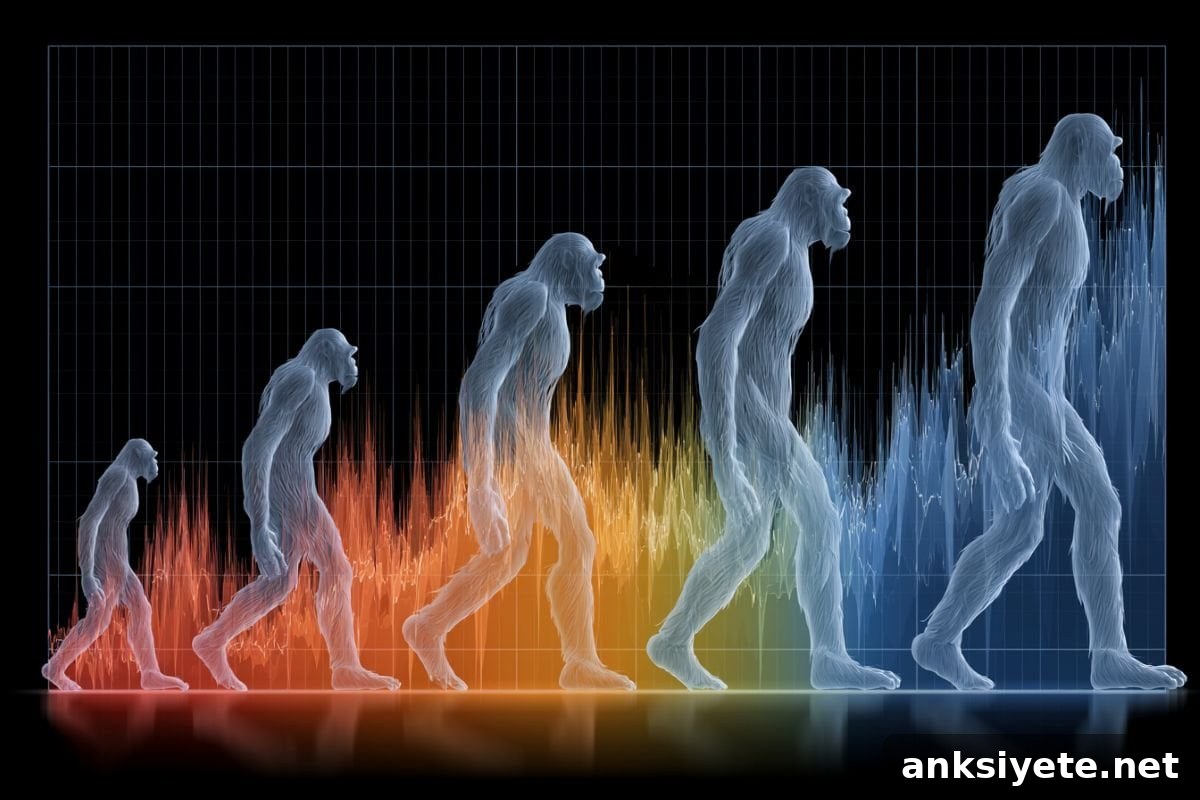
Summary: New research overturns the long-held idea that our ancestors gradually grew larger in a steady progression. An analysis of 386 fossil specimens from 21 hominin species supports a dual-mechanism model: slow, incremental size increases among early hominins such as Australopithecus, followed by a rapid, non-linear increase in body mass around 2–2.5 million years ago. That later jump coincides with the appearance of larger-bodied species in the genus Homo, most notably Homo rudolfensis and Homo erectus/ergaster.
By incorporating phylogenetic relationships, intraspecies variation, and uncertainties in species assignments, the study reconciles decades of conflicting results from localized or method-specific analyses. The findings show that while body weight generally rose across hominin evolution, the most dramatic shift occurred later within Homo and did not affect every branch of the hominin tree.
Key Facts
- Major evolutionary leap at 2–2.5 million years: The principal transition to modern adult body proportions appears as a rapid increase in body mass centered around 2–2.5 million years ago, driven by hominins like Homo rudolfensis and Homo erectus/ergaster rather than by a uniform trend across all hominins.
- Diverse evolutionary responses: Some hominin species diverged from the overall pattern; Homo floresiensis and Homo naledi, for example, retained small, child-sized statures long after the size increase began in other lineages.
- Australopithecus as the early baseline: Before the genus Homo expanded in size, Australopithecus species clustered around an average body mass near 40 kg, comparable to a modern child in height and weight.
- Ecological and behavioral drivers: The timing of the size increase lines up with more efficient bipedal locomotion, a dietary shift that included more meat consumption, and wider ranging behavior—factors that would favor larger body size for long-distance travel and new foraging strategies.
- Comprehensive, unified method: Using Bayesian phylogenetic generalized linear mixed models on a large fossil dataset allowed researchers to weigh competing hypotheses and account for missing or ambiguous fossil assignments, resolving previous methodological conflicts.
Source: University of Reading
Summary statement: The largest jump in hominin body size occurred around 2 to 2.5 million years ago with the emergence of Homo rudolfensis and/or Homo erectus/ergaster, rather than as a slow, steady trend throughout the hominin lineage.
Published in PNAS on 22 June 2026, the study finds that while early hominins such as Australopithecus remained relatively small (around 40 kg on average), later Homo species split into different trajectories. Some Homo lineages grew to average adult weights near or above 60 kg—similar to many modern humans—while others maintained small statures for extended periods.
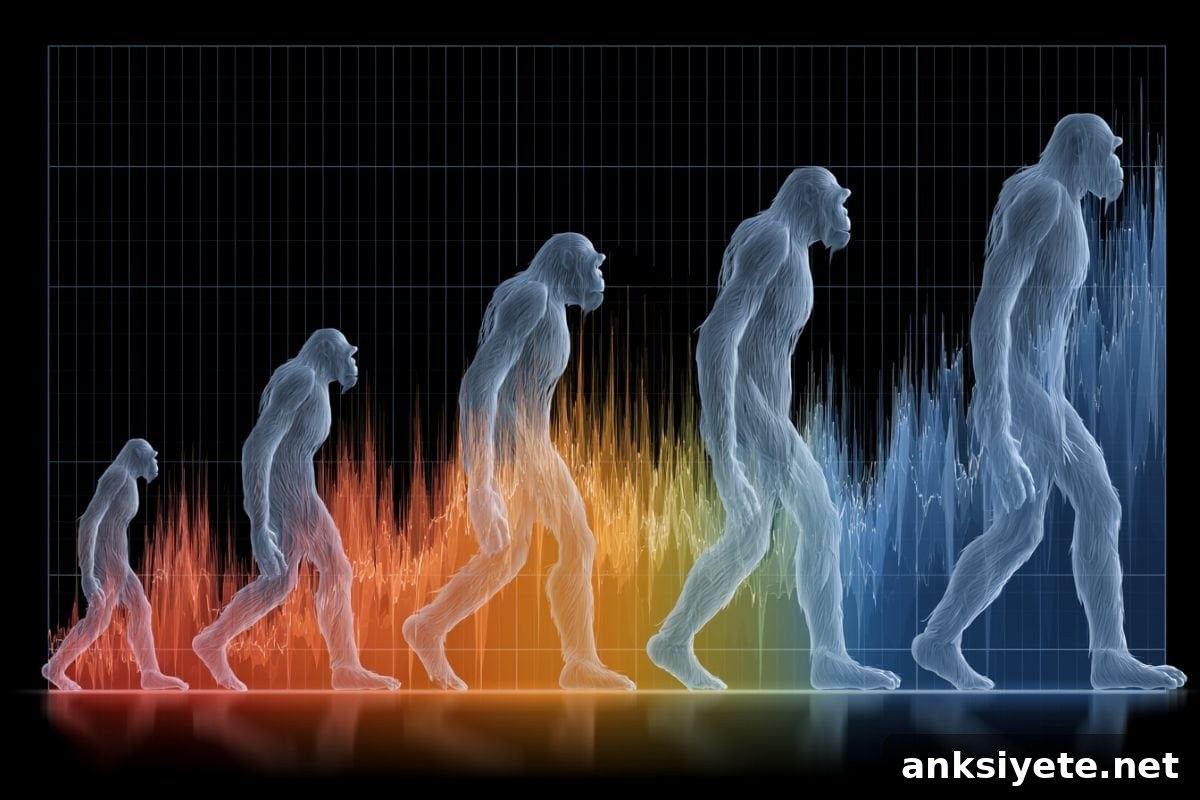
The multi-institution team, including researchers from the University of Reading and the University of Oxford, emphasizes that previous disagreements stemmed from narrower datasets or differing methods for estimating body mass from fossil remains. Many earlier studies examined time slices or individual species groups in isolation and did not simultaneously account for phylogenetic relationships or uncertainty about fossil classification.
Lead author Dr Jacob Gardner (University of Reading) explains that combining a broad fossil sample with statistical models that incorporate evolutionary relationships reveals a more complete picture: an initial phase of gradual size increase among early hominins, followed by a pronounced shift within Homo. Co-author Dr Thomas Püschel (University of Oxford) adds that this shift coincides with important changes in locomotion, diet, and territorial range, suggesting body size was closely linked to ecological and behavioral transitions.
Key Questions Answered:
A: Earlier discrepancies largely reflect differences in scope and method. Studies that focused on early hominins like Australopithecus found slow, steady increases, while analyses centered on later Homo taxa observed sharper shifts. By pooling 386 specimens across 21 taxa and accounting for phylogeny and data uncertainty in a single model, the new research demonstrates that both patterns occurred at different times and in different branches.
A: A larger body would improve the biomechanical efficiency of long-distance bipedal locomotion, help with hunting and scavenging meat, enable better defense against predators, and support persistence across highly variable environments. These advantages fit with archaeological and ecological evidence of broader ranges and changing subsistence strategies among later Homo.
A: No. Human evolution resembles a branching bush, not a ladder. While many direct ancestors increased in size, other lineages—such as Homo floresiensis and Homo naledi—remained small and diverged from the larger-bodied trend.
Editorial Notes:
- This article was edited by a Neuroscience News editor.
- The original journal paper was reviewed in full by the editorial team.
- Additional explanatory context was added by staff to clarify methods and implications.
About this evolutionary neuroscience research news
Author: Ollie Sirrell
Source: University of Reading
Contact: Ollie Sirrell – University of Reading
Image credit: Neuroscience News
Original Research: Open access. “Competing models of hominin body size evolution” by Jacob D. Gardner, Thomas A. Püschel, Suzy White, Manabu Sakamoto, and Chris Venditti. PNAS. DOI: 10.1073/pnas.2521732123
Abstract
Competing models of hominin body size evolution
The evolutionary trajectory of hominin body size has been debated, with different studies supporting either a gradual increase or lineage-specific shifts. This study applies Bayesian phylogenetic generalized linear mixed models to a dataset of 386 specimens across 21 taxa and finds strong evidence for a pronounced body mass increase among non-habilis or later-occurring Homo, alongside moderate support for a general increase over time. Contrary to some hypotheses, there is limited support for a uniform size increase across the entire genus Homo. By explicitly modeling phylogenetic nonindependence, intraspecific variation, and multiple sources of uncertainty, the analysis reconciles competing views and clarifies key body size transitions within Homo.