
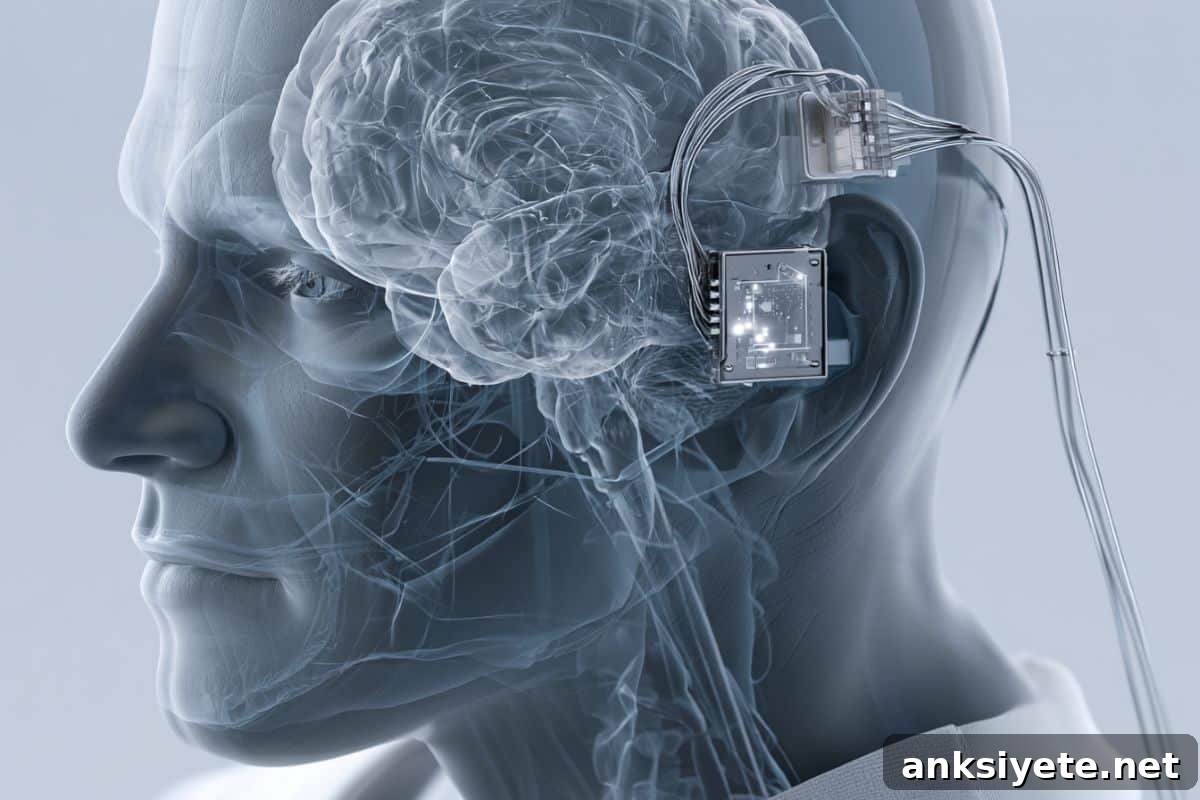
Summary: Neurosurgeons have completed the first-in-human clinical implant of the Paradromics Connexus wireless brain-computer interface (BCI). The procedure seeks to restore natural communication for a woman affected by a severe motor neuron disease, marking an important advance toward practical, fully implantable neuroprosthetics that reduce infection risk and expand daily use outside the clinic.
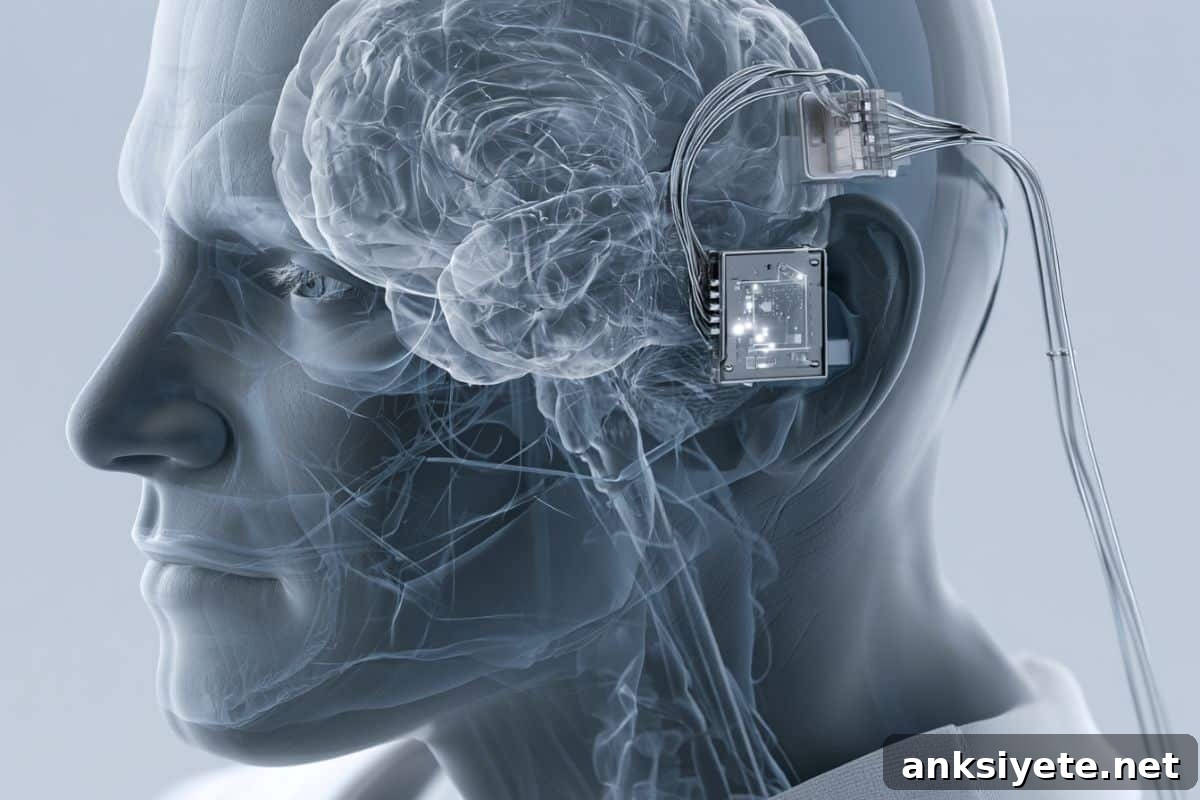
Using a cortical array with 421 microelectrodes linked to an implantable chest transceiver, the Connexus system decodes neuronal activity and wirelessly broadcasts thought-driven text and synthesized speech. This fully implanted, wireless BCI represents a meaningful step toward restoring communication for people with paralysis or progressive motor neuron disorders.
Key Facts
- First-in-human implant: Neurosurgeons at University of Michigan Health completed the inaugural permanent implant of the Paradromics Connexus wireless BCI.
- 421-microelectrode intracortical array: The implant records electrical signals from individual neurons using a high-density microelectrode array.
- Fully wireless design: Recorded cortical signals travel to a chest transceiver and are transmitted wirelessly to external devices, avoiding tethered skull ports and reducing infection risk.
- Six-year safety follow-up: The trial will follow the participant for six years to evaluate long-term durability, biocompatibility, and system performance.
- Focus on motor neuron diseases: The Connect-One Early Feasibility Study targets participants with severe communication loss from conditions like amyotrophic lateral sclerosis (ALS) and primary lateral sclerosis (PLS).
Source: University of Michigan
Neurosurgeons at University of Michigan Health have completed the first-in-human implant of the Paradromics Connexus wireless brain-computer interface as part of a national clinical trial for people with impaired speech.
Matthew Willsey, M.D., Ph.D., a neurosurgeon and biomedical engineer, and Aditya S. Pandey, M.D., Chair of the U-M Health Department of Neurosurgery, implanted the Connexus BCI into a woman from Michigan who is living with a motor neuron disorder and has severe difficulty speaking.
The Connect-One Early Feasibility Study (EFS) will evaluate the device’s long-term safety and determine whether the system can restore communication through decoded text and synthesized speech, and support computer control. The trial operates under an Investigational Device Exemption approved by the U.S. Food and Drug Administration.
“We are incredibly excited to explore this wireless BCI’s potential to restore communication for people who have lost the ability to speak because of neurological disease or injury,” said Dr. Willsey, who led the implant surgery and serves as a site principal investigator for the study. “This could be a major step forward in treating people with paralysis who currently lack effective therapies to preserve communication.”
The Connexus system is among a small number of wireless, fully implantable BCIs under clinical evaluation in the United States. The device’s intracortical array of 421 microelectrodes captures precise neural firing patterns, which the implanted transceiver relays wirelessly to external receivers for real-time decoding into text or synthesized audio.
“Enrolling our first participant at University of Michigan is a defining moment for our company and for the field,” said Matt Angle, Ph.D., CEO and founder of Paradromics. “Our goal is to restore natural communication and help people stay connected with loved ones. Partnering with University of Michigan Health on this first-in-human study helps build the foundation for the next generation of clinical BCIs.”
In June 2025, Dr. Willsey and colleagues temporarily implanted the Connexus device in a patient during epilepsy research, confirming that the system could be safely placed and could record cortical signals. Michigan Medicine is one of three clinical sites participating in the Connect-One study.
Lead Principal Investigator David M. Brandman, M.D., Ph.D., emphasized that this study leverages decades of intracortical BCI research to test whether a fully implanted, wireless system can restore communication safely and reliably over time. The participant will be monitored closely and will continue to receive motor neuron disease care from the Stanford Morris ALS Clinic at U-M Health.
Motor neuron disorders—including ALS and PLS—affect the brain, brainstem, and spinal cord neurons that control movement and speech. Because these conditions severely limit effective communication, wireless and fully implanted BCI technologies represent an important research direction to preserve independence, social connection, and quality of life.
“Preserving communication for people living with motor neuron disease is essential to keep them connected to family, maintain independence, and protect quality of life,” said Stephen Goutman, M.D., M.S., Director of the Stanford Morris ALS Clinic at U-M. “We are fortunate to partner with Dr. Willsey and the neurosurgical team as they translate these devices from research into clinical care.”
Dr. Willsey now leads a Brain-Computer Interface Clinic at U-M Health focused on developing the next generation of BCI technologies. His lab is also the sponsor-investigator of a separate clinical trial testing an investigational BCI intended to restore movement and communication.
“Advances in brain-computer interfaces and neuromodulation are rapidly reshaping what is possible in neurological care,” said Oren Sagher, M.D., Director of Functional Neurosurgery at U-M Health. “Our clinician-scientists are committed to advancing these technologies and ensuring patients have access to innovative, effective therapies. At Michigan Medicine, patients are treated at a center that helps define the future of neuroscience and neurosurgical care.”
Key Questions Answered:
A: When a person imagines speaking, the motor cortex produces electrical patterns similar to those used to move the tongue, lips, and vocal apparatus. The Connexus array’s 421 microelectrodes capture these neural firing patterns. Machine-learning algorithms decode those complex signals in real time, mapping specific neural patterns to words or characters that are output as text or synthesized audio.
A: Earlier intracortical BCIs required a wired connection through a skull port to external laboratory equipment, increasing infection risk and limiting use to clinical settings. A fully implanted, wireless BCI seals the hardware beneath the skin, reducing infection risk and enabling potential everyday use at home and in public.
A: The Connect-One EFS enrolls individuals with severe communication impairment due to motor neuron diseases such as ALS and PLS. As an early-stage human trial, its primary goals are to demonstrate long-term safety, biostability, and recording integrity of the implanted hardware over multiple years.
Editorial Notes:
- This article was edited by a Neuroscience News editor.
- Journal paper reviewed in full.
- Additional context added by staff.
About this ALS and neurotech research news
Author: Noah Fromson
Source: University of Michigan
Contact: Noah Fromson – University of Michigan
Image: Image credited to Neuroscience News