
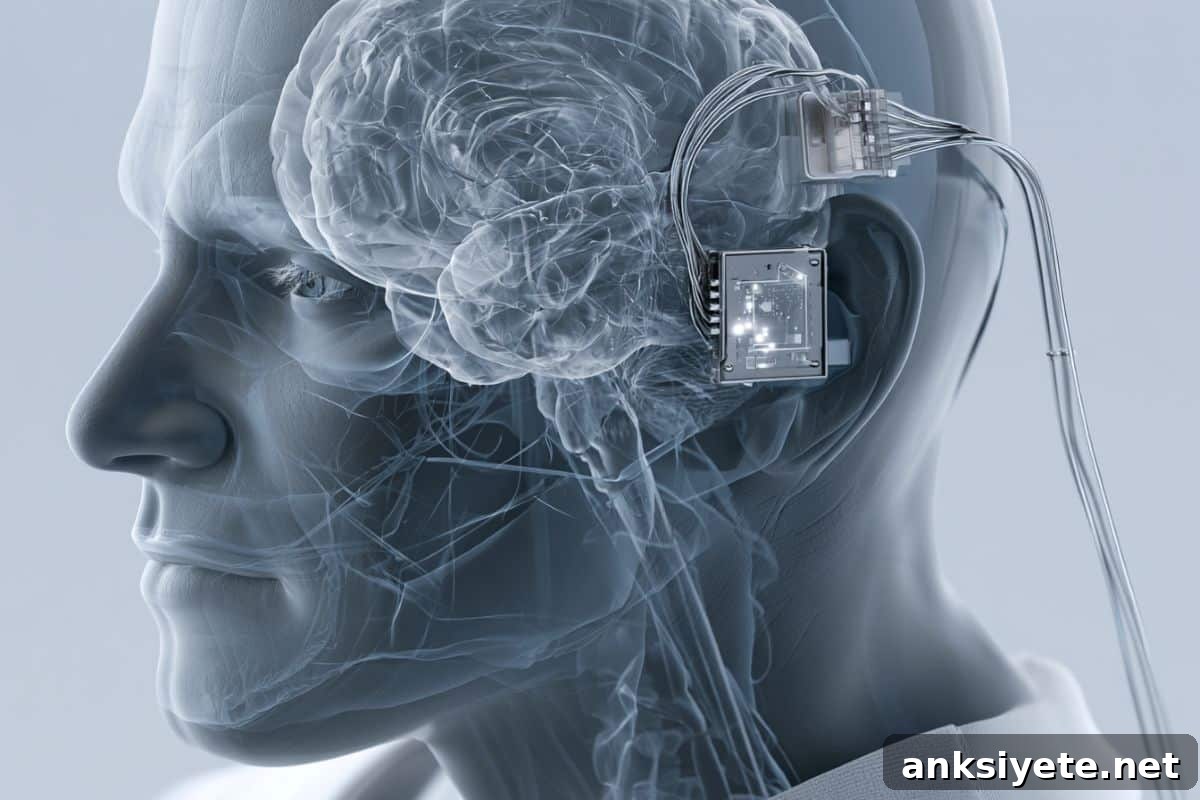
Summary: Neurosurgeons at University of Michigan Health have completed the first-in-human permanent implant of the Paradromics Connexus wireless brain-computer interface (BCI). The procedure aims to restore natural communication for a woman living with a severe motor neuron disease by translating cortical electrical activity into text and synthesized speech.
The Connexus system uses a high-density intracortical array of 421 microelectrodes connected to a fully implantable chest transceiver. Neural signals are decoded by machine-learning algorithms and transmitted wirelessly to external devices, representing a major advance toward practical, infection-resistant neuroprosthetics for people with paralysis and severe speech loss.
Key Facts
- First-in-human permanent implant: Michigan Medicine neurosurgeons completed the inaugural permanent implant of the Paradromics Connexus wireless BCI as part of a national clinical study.
- 421-microelectrode array: The intracortical array records electrical activity from individual neurons to capture the fine-grained patterns associated with imagined speech and movement.
- Fully wireless, fully implanted: Signals from the cortical array are routed to a small chest transceiver and broadcast wirelessly to external receivers, eliminating transcutaneous wires and reducing infection risk.
- Six-year safety follow-up: The participant will be tracked closely for six years to evaluate the device’s long-term durability, biocompatibility, and recording stability.
- Target population: The Connect-One Early Feasibility Study focuses on people with profound communication impairment caused by motor neuron diseases such as amyotrophic lateral sclerosis (ALS) and primary lateral sclerosis (PLS).
Neurosurgeons Matthew Willsey, M.D., Ph.D., and Aditya S. Pandey, M.D., led the implant procedure. The participant, a woman from Michigan, has severely reduced speech ability due to motor neuron disease and will take part in the Connect-One Early Feasibility Study (EFS). The trial’s primary objective is to establish the long-term safety and functional stability of the fully implanted Connexus system while assessing its ability to restore communication through decoded text and synthesized speech and to enable basic computer control.
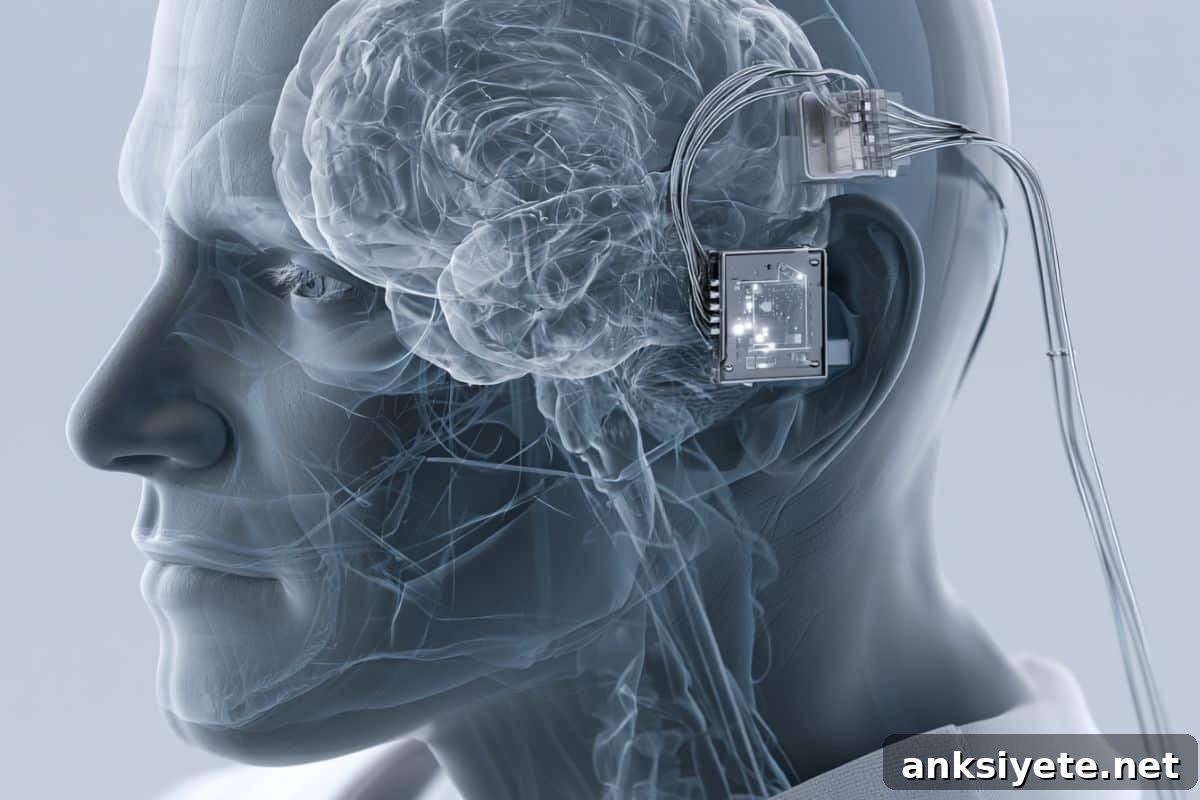
The Connexus device represents one of only a few fully implanted wireless BCIs under human study in the United States. The system captures neural firing patterns when a person imagines speaking or moving, then uses advanced decoding algorithms to map those patterns to specific words, characters, or commands. Because the system is sealed beneath the skin and communicates wirelessly, it reduces the infection risk and frees users from being tethered to laboratory equipment.
Paradromics CEO Matt Angle, Ph.D., described enrollment at University of Michigan as a key milestone in building clinically viable neural interfaces. Prior temporary implantation in 2025 performed by Willsey and Oren Sagher, M.D., confirmed that Connexus can be safely placed and can record cortical signals. The U.S. Food and Drug Administration granted an Investigational Device Exemption (IDE) in November 2025 to begin the Connect-One clinical study, which is enrolling participants across three national sites.
Lead investigators emphasize that the trial is an early feasibility study with a primary focus on safety, hardware stability, and signal integrity over time. If the device maintains reliable recordings and proves safe in long-term follow-up, later trials will explore broader efficacy outcomes and wider clinical use.
Motor neuron disorders such as ALS and PLS affect the brain, brainstem, and spinal cord motor neurons, often causing progressive loss of muscle control and the ability to speak. Preserving communication is essential to maintaining independence, emotional connection, and quality of life for people living with these diseases. Clinicians and researchers involved in the study stress the importance of developing implantable, user-friendly communication technologies that patients can use outside of clinical settings.
Willsey now directs a Brain-Computer Interface Clinic at Michigan Medicine and leads a research lab developing next-generation BCIs. The Connexus trial is one of several studies exploring how implanted neural interfaces and neuromodulation can reshape treatment options for neurological disease and injury.
Key Questions Answered:
A: When someone imagines speaking, the motor cortex generates electrical patterns similar to those produced during actual speech. The Connexus array’s 421 microelectrodes capture these patterns at the single-neuron level. Machine-learning decoders interpret the neural signals in real time, mapping them to words, letters, or commands that are output as digital text or synthesized speech.
A: Earlier intracortical BCIs often used externalized wires exiting the skull, which carried infection risk and confined use to specialized labs. A fully implanted, wireless system seals all hardware beneath the skin and sends data wirelessly, which reduces infection risk and enables more natural, day-to-day use outside the clinic.
A: The Connect-One EFS enrolls people with severe communication deficits due to motor neuron diseases such as ALS and PLS. As an early-stage human trial operating under an IDE, its primary goals are to demonstrate long-term safety, biostability, and sustained recording performance of the implanted hardware over multiple years.
Editorial Notes:
- This article was edited by a Neuroscience News editor.
- Journal paper reviewed in full.
- Additional context added by staff.
About this ALS and neurotech research news
Author: Noah Fromson
Source: University of Michigan
Contact: Noah Fromson – University of Michigan
Image credit: Neuroscience News